 Asia - Philippines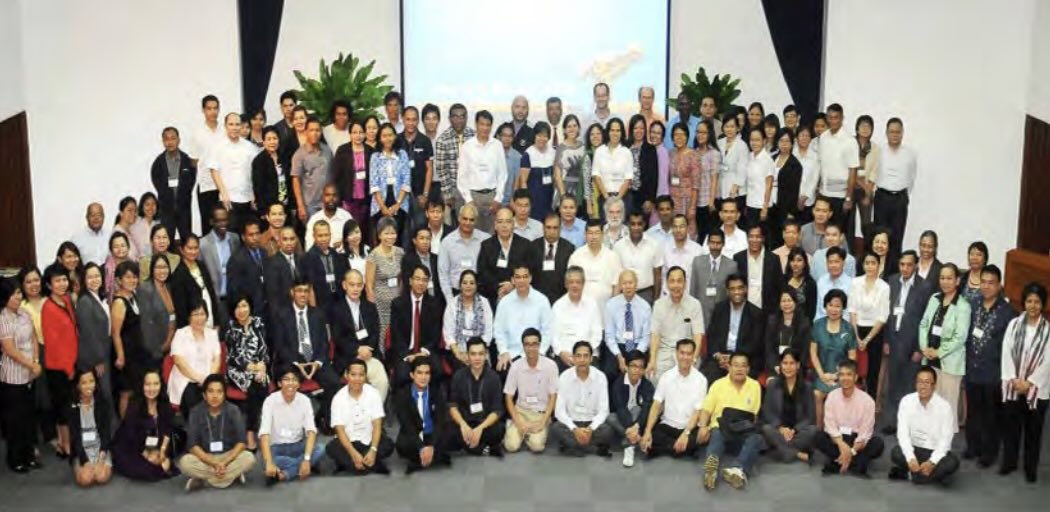
Challenge
Southeast Asia faces climate-related threats to food and environmental security but lacks regionally coordinated platforms for adaptation knowledge sharing.
Solution
A 2012 international conference in the Philippines brought together 150 experts from 21 countries to exchange tools, strategies, and partnerships.
Overview
The International Conference on Climate Change Impacts and Adaptation for Food and Environmental Security (ICCCIAFES) was held November 21–22, 2012, at the Southeast Asian Regional Center for Graduate Study and Research in Agriculture (SEARCA), University of the Philippines Los Baños (UPLB), Philippines. The event, supported by the Asia-Pacific Network for Global Change Research (APN) and regional partners, and led by Felino P. Lansigan (University of the Philippines Los Baños, Philippines), created a dedicated forum for experts to exchange climate change research, experiences, and local knowledge in support of food and environmental security.
Participants included researchers, policymakers, and development professionals from 21 countries. The conference highlighted the need for integrated and locally grounded climate change adaptation strategies. The program, with over 40 technical presentations and seven thematic sessions, promoted regional knowledge sharing and cross-sector collaboration, particularly across agriculture, environmental planning, and disaster risk reduction.
The event also emphasized the importance of combining scientific approaches with indigenous and community-led practices. Key findings and insights from the conference were targeted for publication in regional and international journals to extend the impact of the knowledge shared.
Achievements
Roughly 150 participants attended the two-day conference. The program included three plenary sessions and four parallel sessions on these themes:
- Status, Prospects, and Practices on Climate Change Adaptation in Agriculture
- Climate Change Impacts and Vulnerability
- Climate Change Adaptation and Agriculture
- Institutional and Economic Aspects of Climate Change Impacts and Adaptation
- Systems and Tools for Analysing Climate Change Impacts and Vulnerability
- Regional and South-South Collaboration in Research and Development
- Networking for R&D and Capacity Building on Climate Change and Food and Environmental Security
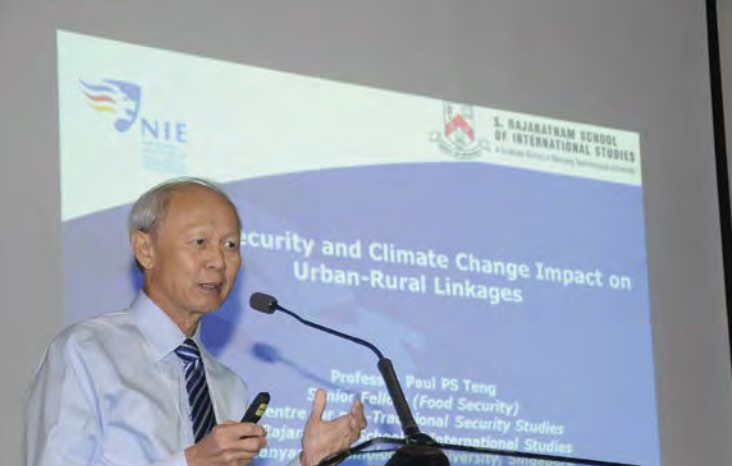
Participants presented 44 papers, including case studies and toolkits for field-level adaptation. Topics included crop simulation modeling, vulnerability mapping, farmer-managed trials, and assessments of institutional readiness. Researchers and practitioners shared approaches grounded in both formal science and local practice. Discussions during and between sessions helped connect institutions working in similar agro-ecological zones.
Capacity development
The event gave early-career researchers, technical officers, and educators a platform to build their knowledge and contacts. Presenters introduced new models and datasets, while field practitioners shared locally adapted farming and water management techniques. Several sessions emphasized the importance of combining formal research with input from communities and indigenous groups.
Two-thirds of participants rated the conference as “excellent,” citing its value in exposure, collaboration, and applied tools. Participants shared program brochures, training materials, and outlines of their local adaptation programs. Several said the event helped them define partnerships and prepare collaborative proposals.
Long-term impact and continuation
The conference led directly to collaborative publication initiatives. The publications aimed to document and distribute the findings more broadly across academic and policy communities.
The event also seeded long-term cooperation among Southeast Asian institutions. Ongoing linkages were encouraged through:
- Shared research on climate impacts and adaptation
- Capacity-building programs and knowledge transfer
- Integration of climate adaptation into local policy and planning systems
- Continued use of SEARCA’s knowledge-sharing platforms, such as KC3
Organizers identified the value of expanding regional conferences like ICCCIAFES to strengthen institutional networks and elevate community-based solutions into national adaptation agendas.
Project details
| Project title | International Conference on Climate Change Impacts and Adaptation for Food and Environmental Security |
|---|---|
| Year started | 2012 |
| Duration | 1 year |
| Countries involved | Philippines, 21 countries represented at conference |
| Funding awarded | US$10,000 (APN contribution) |
| Funded by | Asia‑Pacific Network for Global Change Research (APN) |
| Grant DOI | https://doi.org/10.30852/p.4448 |
| Program | Any other activities (AOA) |
| Project reference number | AOA2012-08NSY-Lansigan |
| Project leader | Felino P. Lansigan (University of the Philippines Los Baños, Philippines) |
Acknowledgements
This case study was made possible thanks to the Asia-Pacific Network for Global Change Research (APN), which funded the original project and collaborated with AP-PLAT in developing it into this published case study. Acknowledgements also go to SEARCA, UPLB, and other regional partners for their work in advancing climate change adaptation across Asia and the Pacific.
Related information
- Project Permalink
- Shaheen, N., Punyawardena, B. V. R., Abdullah, H. M., Fowler, H., Kum, V., & Akbar, G. (2020). Project Final Report: CAF2016‑RR07‑CMY‑Shaheen. Asia‑Pacific Network for Global Change Research. https://www.apn-gcr.org/publication/project-final-report-caf2016-rr07-cmy-shaheen/
- Shaheen, N., Jahandad, A., Goheer, M. A., & Ahmad, Q. A. (2020). Future changes in growing degree days of wheat crop in Pakistan as simulated in CORDEX South Asia experiments. APN Science Bulletin, 10(1), 82‑89. https://doi.org/10.30852/sb.2020.1221
- APN Facebook
- APN LinkedIn
- APN X
 DISCOVER MORE

