 Asia, Oceania - Cambodia, Fiji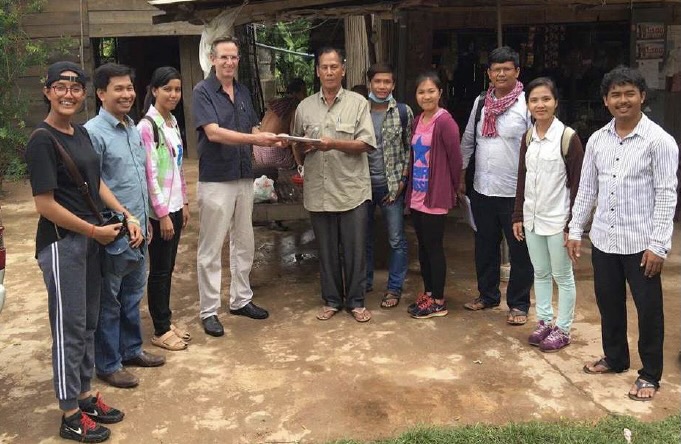
Challenge
Flood-prone communities in Cambodia and Fiji lacked resilient post-disaster recovery methods to adapt to increasing climate-induced hazards.
Solution
Map hazard dynamics, surveyed risk perceptions, and co-developed community-based adaptation strategies to improve recovery and resilience.
Overview
Floods, droughts, and cyclones pose growing threats to rural livelihoods in Cambodia and Fiji. The study focused on Cambodia’s Prek Prasop district and Fiji’s lower Ba River catchment because both areas experienced severe flood events in recent years, suffered infrastructure damage, and relied heavily on agriculture, making them ideal for examining community resilience under climate stress.
From September 2015 to September 2019, the Asia-Pacific Network for Global Change Research funded an integrated, participatory action-research project led by Andreas Neef (of The University of Auckland, New Zealand, at the time of the project, now at Griffith University, Australia) to explore how communities recover from and adapt to such hazards. Researchers were led by lead investigator Andreas Neef, while working with local research assistants and postgraduate students trained in mixed-method approaches.

Community engagement and analysis
The project combined local knowledge with scientific methods. Researchers first worked with villagers to map flood extents, identify vulnerability hotspots, and record community narratives about past disasters. In Cambodia’s Prek Prasop district, focus groups and Q-sort exercises revealed that while seasonal floods offered benefits such as soil renewal, droughts, exacerbated by deforestation, were seen as a rising risk.
In Fiji’s Ba River catchment, participatory mapping and talanoa-style research conversations (an indigenous Fijian method of open, story-based dialogue) documented spatial patterns of flood and cyclone impacts and highlighted the cultural importance of faith and communal labor in recovery.
Data and community working together
Quantitative analyses supported these insights. Hydrological and satellite data clarified flood frequencies and riverbank erosion trends, while drought-forecasting models (using categorical forecasts and artificial neural networks) delivered 1-month-ahead scenarios. This blending of community and scientific data enabled the co-creation of adaptation strategies – raising homes on stilts, diversifying crops, improving hazard communications via local radio, and planning cyclone-resilient infrastructure.
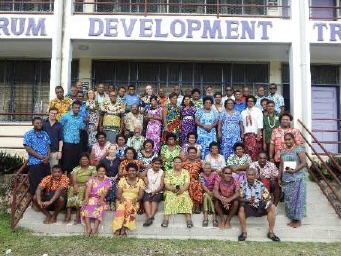
The project engaged more than 700 participants across two countries and trained local research assistants, strengthening capacity at the grassroots and institutional levels. Workshops in Phnom Penh, Kratie, Suva, and Ba returned findings to policymakers, NGOs, and local leaders, fostering ownership of adaptation measures and informing future policy.
Overall, this case study demonstrates that participatory adaptation – grounded in local risk perceptions and supported by scientific evidence – can improve post-disaster recovery and long-term resilience in flood-affected communities across Asia and Oceania.
Results and output
The project produced several key outcomes:
- Training of over 20 local research assistants and postgraduate students in mixed-method data collection and analysis.
- Hazard maps and risk perception profiles for eight villages in Cambodia and Fiji, guiding targeted adaptation measures.
- Development of hydrological models at catchment/sub-catchment levels.
- Testing of flood and drought forecasting models for the Ba River Catchment in Fiji
- Policy briefs and feedback workshops at provincial and national levels in the Kratie and Ba regions, presenting the project findings to a wide range of stakeholders.
- 380+ research participants in the Ba River Catchment, Fiji and 350+ research participants in Prek Prasop District and Kratie Town, Cambodia.
- 14 peer-reviewed journal articles, 4 book chapters, 8 conference presentations, 8 invited talks, 10 policy briefs, 1 documentary movie, and 8 media reports.
- Two peer-reviewed publications, one on climate adaptation strategies in Fiji (with 100 citations) and the other on climate change impacts and disaster resilience among micro businesses in Cambodia (with 38 citations), were cited in the IPCC Sixth Assessment Report.
Future paths
Building on this work, Andreas Neef and the research team recommended:
- Scaling participatory methods to other flood-prone basins in Southeast Asia and the Pacific.
- Integrating hazard maps into government planning platforms for real-time decision support.
- Further research on long-term impacts of adoption rates for the co-designed strategies.
- Continued capacity building through regional training programs led by APN and partner universities.
Project details
| Project title | Climate change adaptation in post-disaster recovery processes: Flood-affected communities in Cambodia and Fiji |
|---|---|
| Year started | 2015 |
| Duration | 3 years |
| Countries involved | Australia, Cambodia, Fiji, New Zealand |
| Funding awarded | US$45,000 (year 1); US$35,000 (year 2); US$40,000 (year 3); total US$120,000 |
| Funded by | Asia‑Pacific Network for Global Change Research (APN) |
| Grant DOI | https://doi.org/10.30852/p.4536 |
| Program | APN Climate Adaptation Framework (CAF) |
| Project reference number | CAF2015-RR10-NMY-Neef CAF2016-RR05-CMY-Neef CAF2017-RR01-CMY-Neef |
| Project leader | Andreas Neef (Griffith University, Australia) |
Acknowledgements
This case study was made possible thanks to the Asia-Pacific Network for Global Change Research (APN), which funded the original project. Acknowledgement is extended to Andreas Neef (The University of Auckland, New Zealand) for leading the project, and to collaborators at The University of Western Australia; The University of Sydney; Ministry of Rural Development, Cambodia; Ministry of Environment, Cambodia; Royal University of Phnom Penh; and The University of the South Pacific, Fiji, for their contributions to data collection, analysis, and capacity building.
Related information
- Asia-Pacific Network for Global Change Research. Climate change adaptation in post-disaster recovery processes: Flood-affected communities in Cambodia and Fiji. https://www.apn-gcr.org/project/climate-change-adaptation-in-post-disaster-recovery-processes-flood-affected-communities-in-cambodia-and-fiji/
- Cox, J., Varea, R., Finau, G., Tarai, J., Kant, R., Titifanue, J., & Neef, A. (2019). Disaster preparedness and the abeyance of agency: Christian responses to Tropical Cyclone Winston in Fiji. Anthropological Forum. https://doi.org/10.1080/00664677.2019.1647833
- Neef, A., Benge, L., Boruff, N., Pauli, N., Weber, E., & Varea, R. (2018). Climate change adaptation strategies in Fiji: The role of social norms and cultural values. World Development, 107, 125–137. https://doi.org/10.1016/j.worlddev.2018.02.024
- Neef, A., Boruff, B., Pauli, N., et al. (2019). Project final report: Climate change adaptation in post-disaster recovery processes: Flood-affected communities in Cambodia and Fiji. Asia-Pacific Network for Global Change Research. https://www.apn-gcr.org/project/climate-change-adaptation-in-post-disaster-recovery-processes-flood-affected-communities-in-cambodia-and-fiji/
- APN Facebook
- APN LinkedIn
- APN X
 DISCOVER MORE

