 Oceania - Australia, Cambodia, Vietnam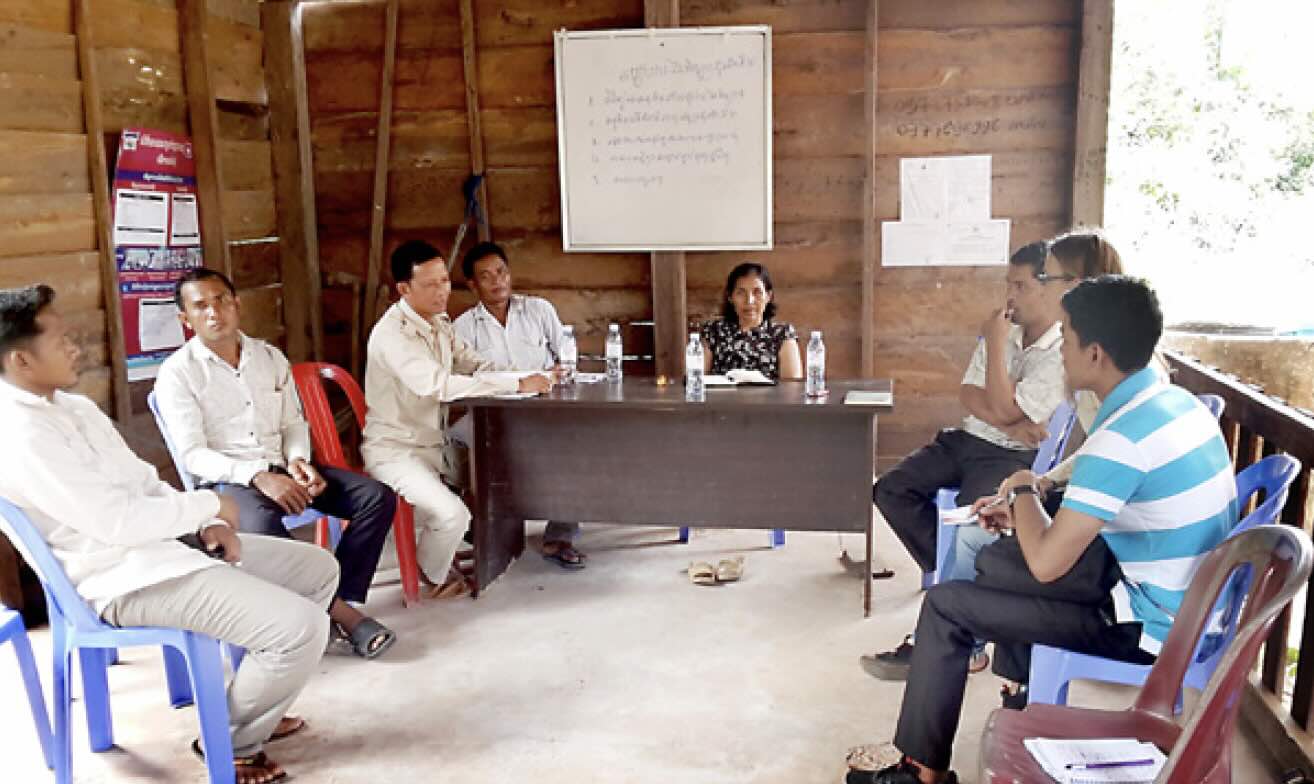
Challenge
Rural communities in Cambodia and Vietnam lacked tailored adaptation plans to address diverse climate hazards, from floods to droughts.
Solution
A structured 39-question resilience assessment was piloted in four communes, revealing local adaptation gaps and guiding cost-effective, community-led planning.
Overview
Communities across Cambodia and Vietnam face escalating risks from extreme weather events, including floods, droughts, and storms that damage homes and livelihoods. Traditional planning often overlooks local perceptions and capacities, leading to maladapted interventions. In response, the Asia-Pacific Network for Global Change Research (APN) supported a participatory resilience assessment to ground adaptation strategies in community needs and strengths.
Study background
Effective adaptation planning needs to reflect community priorities and vulnerabilities. Between 2015 and 2016, the Asia-Pacific Network for Global Change Research funded a US$45,000 pilot (with US$10,000 cofunding‑ from the University of the Sunshine Coast) led by Chris Jacobson (of University of the Sunshine Coast, Australia, at the time of the project, now at The University of Queensland, Australia) to test a community resilience assessment tool. The study focused on two rural Cambodian communes – Lvea Krang and Chamkar Samrong – and two periurban‑ Vietnamese communes – Thuy Thanh and Vinh Hai – selected for their exposure to floods, droughts, storms, and reliance on agriculture and fisheries.

Methodology
Jacobson and research associates adapted the questions from established resilience frameworks. They consulted with provincial planners and local NGOs in Pursat Province (Cambodia) and Thua Thien Hue Province (Vietnam) to ensure regional relevance. Jacobson, Hurlbert, and Lee trained 25 local facilitators in each commune – recruited from commune council members, staff of local NGOs, and postgraduate students at the University of Battambang (Cambodia) and Hue University of Economics (Vietnam) – in survey administration and participatory mapping techniques.
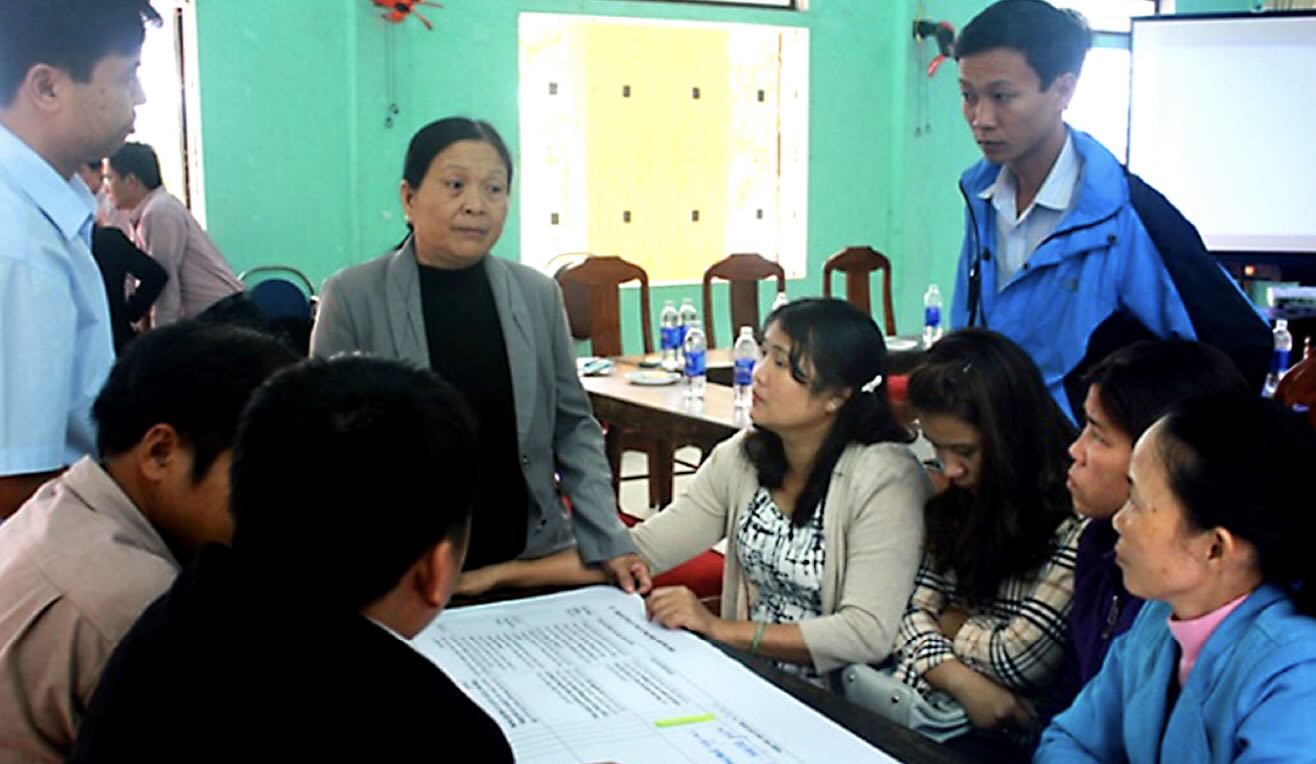
Facilitators then conducted focus groups, mapping workshops, and household surveys with over 120 participants to test question clarity, collect data, and refine the tool before scoring and analyzing results to identify the top adaptation challenges in each location.
Key insights and Capacity building
Results showed that Cambodian communes struggled with coordination between village councils and external aid, while Vietnamese sites faced challenges in communicating climate risks and maintaining infrastructure. Facilitators improved skills in survey administration and data interpretation, and local councils used the resilience profiles to prioritize adaptation actions.
Policy integration and scaling
The project team held workshops with provincial planners in Pursat Province (Cambodia) and Thua Thien Hue Province (Vietnam) to introduce resilience profiles into their annual development plans. Jacobson and his colleagues produced practitioner guidebooks in Khmer and Vietnamese to support wider adoption.
Results/output
– Trained 20+ local facilitators and students in mixed-methods research
– Developed resilience profiles for four communes, guiding targeted interventions
– Introduced resilience scoring into provincial planning guidelines
– Published Cambodian (Khmer) and Vietnamese guidebooks for practitioners
Future paths
The project team recommended expanding deployment of the resilience assessment tool to additional flood and droughtprone communes, integrating digital data platforms for realtime monitoring of community resilience, and conducting longitudinal studies to track the longterm impacts of implemented adaptation measures.
Project details
| Project title | Optimizing climate change adaptation through enhanced community resilience |
|---|---|
| Year started | 2015 |
| Duration | 1 year |
| Countries involved | Australia, Cambodia, and Vietnam |
| Funding awarded | US$45,000 |
| Funded by | Asia-Pacific Network for Global Change Research (APN) |
| Program | APN Climate Adaptation Framework (CAF) |
| Grant DOI | https://doi.org/10.30852/p.4537 |
| Project reference number | CAF2015-RR18-NSY-Jacobson |
| Project leader (organization, country) | Chris Jacobson (The University of Queensland, Australia) |
Acknowledgements
This case study was made possible thanks to the Asia-Pacific Network for Global Change Research (APN), which funded the original project. Acknowledgement is extended to Chris Jacobson for leading the project and to all collaborators: The University of Queensland, University of the Sunshine Coast; University of Battambang; Institute for Social and Environmental Transitions; Ministry of Environment, Cambodia; and commune councils in Cambodia and Vietnam for their contributions.
Related information
- Project Permalink
- Jacobson, C. (2016). Project final report: CAF2015-RR18-NSY-Jacobson. Asia-Pacific Network for Global Change Research. https://www.apn-gcr.org/publication/project-final-report-caf2015-rr18-nsy-jacobson/
- Jacobson, C., & Nguon, C. (2016). Community resilience assessment and climate change adaptation planning: A Cambodian guidebook. University of the Sunshine Coast & University of Battambang. https://www.apn-gcr.org/publication/community-resilience-assessment-and-climate-change-adaptation-planning-a-cambodian-guidebook-2/
- Tran, T. A., Tran, P., Tran, T., & Jacobson, C. (2016). Community resilience assessment and climate change adaptation planning: A Vietnamese guidebook. University of the Sunshine Coast & Hue University of Economics. https://www.apn-gcr.org/publication/community-resilience-assessment-and-climate-change-adaptation-planning-a-vietnamese-guidebook-2/
- Tran, T. V. G., Jacobson, C., Nguyen, T. X., & Nair, S. (2020). When is migration a maladaptive response to climate change? Regional Environmental Change. https://doi.org/10.1007/s10113-020-01661-7
- APN Facebook
- APN LinkedIn
- APN X
 DISCOVER MORE

