 Asia - Australia, Bangladesh, Bhutan, Cambodia, China, Fiji, India, Indonesia, Japan, Laos, Malaysia, Maldives, Mongolia, Myanmar, Nepal, New Zealand, Pakistan, Philippines, Russia, South Korea, Sri Lanka, Thailand, United Kingdom, Vietnam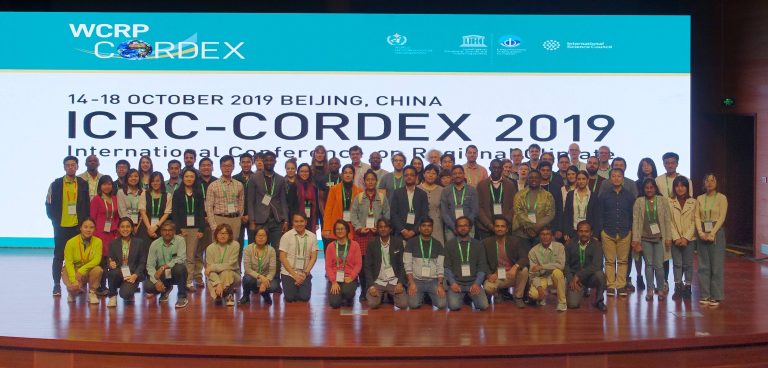
Challenge
Limited international collaboration and engagement opportunities restrict the growth of early-career climate scientists in the Asia-Pacific region.
Solution
APN-funded participation at ICRC-CORDEX 2019 gave Asia-Pacific early-career scientists with valuable international networking and research exposure.
Overview
Climate change increasingly impacts ecosystems, resources, and human well-being globally. Accurate and detailed climate change information at a regional scale is needed for sustainable development. The World Climate Research Programme’s Coordinated Regional Climate Downscaling Experiment (CORDEX) aims to provide this essential information. In collaboration with the Asia-Pacific Network for Global Change Research (APN), CORDEX initiated a project supporting early-career scientists (ECSs) from the Asia-Pacific region.
Key activities and objectives
The APN-supported project aimed to heighten the participation of Asia-Pacific ECSs in regional climate science. In this case, it provides them with the opportunity to attend and engage in the International Science Conference on Regional Climate (ICRC-CORDEX 2019) held in Beijing. The event encouraged ECSs to build international partnerships and promoted communication among climate research teams across regions.
Achievements at ICRC-CORDEX 2019
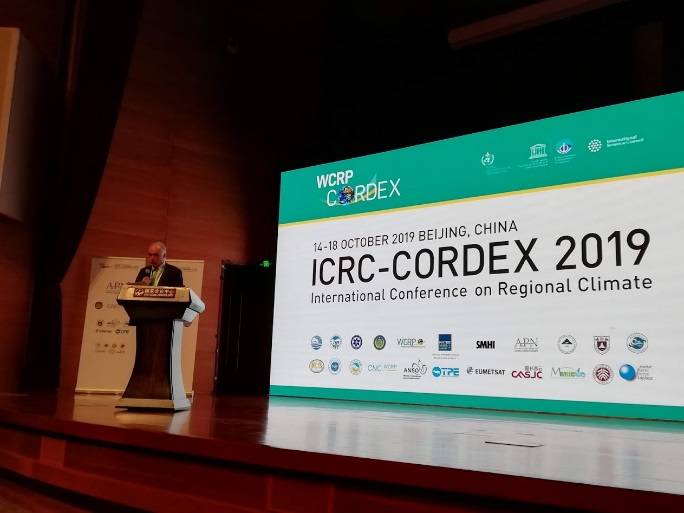
ICRC-CORDEX 2019 attracted more than 300 participants from 44 countries and regions, and included 22 sessions. The conference opened with talks from international climate leaders and featured sessions on advances in downscaling, earth system modeling, and climate impact assessments. Four parallel sessions ran over two days, focusing on technical developments and interdisciplinary applications.
A highlight was the dedicated ECS event, supported by APN, titled “Let’s focus on the users: CORDEX datasets for climate projections and applications.” The event combined expert talks and interactive discussions, allowing ECSs to share ideas and propose solutions around user needs, data accessibility, and regional relevance. It facilitated dialogue between young scientists, established researchers, and end-users of climate information.

Capacity development
APN’s support greatly improves ECSs’ involvement in high-level discussions and offers more networking opportunities. ECS participants presented their perspectives on improving user engagement and climate data accessibility. They emphasized improving interactions with users to refine climate projections, address biases, and better identify user needs. Interactions like reinforced the importance of user-focused climate information and highlighted the need for continued collaboration among ECSs and stakeholders.
Networking and Future Collaborations
The project successfully fostered partnerships among regional teams within the Asia-Pacific CORDEX domains, including East Asia, Southeast Asia, South Asia, Central Asia, and Australasia.
Teams discussed joint initiatives, such as high-resolution modeling of climate extremes and assessing climate impacts on urban environments and human health. Collaboration with global change initiatives and programs, including WCRP Climate and Ocean Variability, Predictability and Change (CLIVAR); WCRP Global Energy and Water Exchanges (GEWEX), and the IPCC, was also strengthened.
Long-term impact and Continuation
The ECSs, through their active involvement in conference activities, expanded their professional networks. Their growth builds a foundation for their continued contribution to climate science. This initiative’s success demonstrated the shared vision of APN and CORDEX – advancing climate research, promoting sustainable development, and supporting regional and interdisciplinary collaboration within Asia-Pacific and beyond.
The project also empowered ECSs to take on visible roles, including acting as assistant session record-keepers and helping coordinate ECS-focused activities. Their involvement contributed to session summaries and final reports, which reinforced their leadership potential. The project supported long-term collaboration and future joint proposals by giving ECSs opportunities to interact with senior scientists, policymakers, and other users of climate data.
Looking ahead, the CORDEX Asia teams and supporting organizations expressed continued commitment to integrating ECSs into regional research and global networks. New initiatives are emerging around extreme climate simulation, urban climate impacts, and regional sustainability, and ECSs are now better positioned to play active roles in shaping the future of applied climate science.
Project Details
| Project title | ICRC CORDEX 2019: Promoting involvement of early career scientists from the Asia-Pacific region in regional integrated and sustainable development through active participation and networking |
|---|---|
| Year started | 2019 |
| Duration | 1 year |
| Countries involved | Australia, Bangladesh, Bhutan, Cambodia, China, Fiji, India, Indonesia, Japan, Lao PDR, Malaysia, Mongolia, Nepal, New Zealand, Pakistan, Philippines, Republic of Korea, Russian Federation, Sri Lanka, Thailand, United States of America, Vietnam, Maldives, Myanmar |
| Funding awarded | USD 42,625 |
| Funded by | AsiaPacific‑ Network for Global Change Research |
| Program | Scientific Capacity Development Programme (CAPaBLE) |
| Grant DOI | https://doi.org/10.30852/p.4619 |
| Project reference number | CBA2019-08SY-Wang |
| Project leader (organization, country) | Shuyu Wang (Nanjing University, China) |
Acknowledgements
This case study was made possible thanks to the Asia-Pacific Network for Global Change Research (APN), which funded the original project and collaborated with AP-PLAT in developing it into this published case study. The project owes to the leadership of Shuyu Wang and the contributions of project partners from many countries for their ongoing efforts to support climate science collaboration in the Asia-Pacific region.
Related Information
- Wang, S., Evans, J., Rixen, M., Gutowski, W., Chen, D., Lake, I., Jayanarayan, S., Gao, X., Langendijk, G., Shrestha, M.L. (2020). ICRC CORDEX 2019: Promoting involvement of early career scientists from the Asia-Pacific region in regional integrated and sustainable development through active participation and networking. Project Final Report. Asia-Pacific Network for Global Change Research.
- Wang, S., Lake, I., Langendijk, G. S., & Yang, Y. (2023). Promoting involvement of early-career scientists from the Asia-Pacific region in regional integrated and sustainable development through active participation and networking. APN Science Bulletin, 13(1), 5–12. https://doi.org/10.30852/sb.2023.2091
- ICRC-CORDEX 2019 conference: https://icrc-cordex2019.cordex.org/
- ICRC-CORDEX 2019 YouTube playlist: https://www.youtube.com/playlist?list=PL8lEZhhEs7Tp937EkkVYWJjTDM_7uaROj
- APN Facebook
- APN LinkedIn
- APN X
 DISCOVER MORE

