 Asia - Japan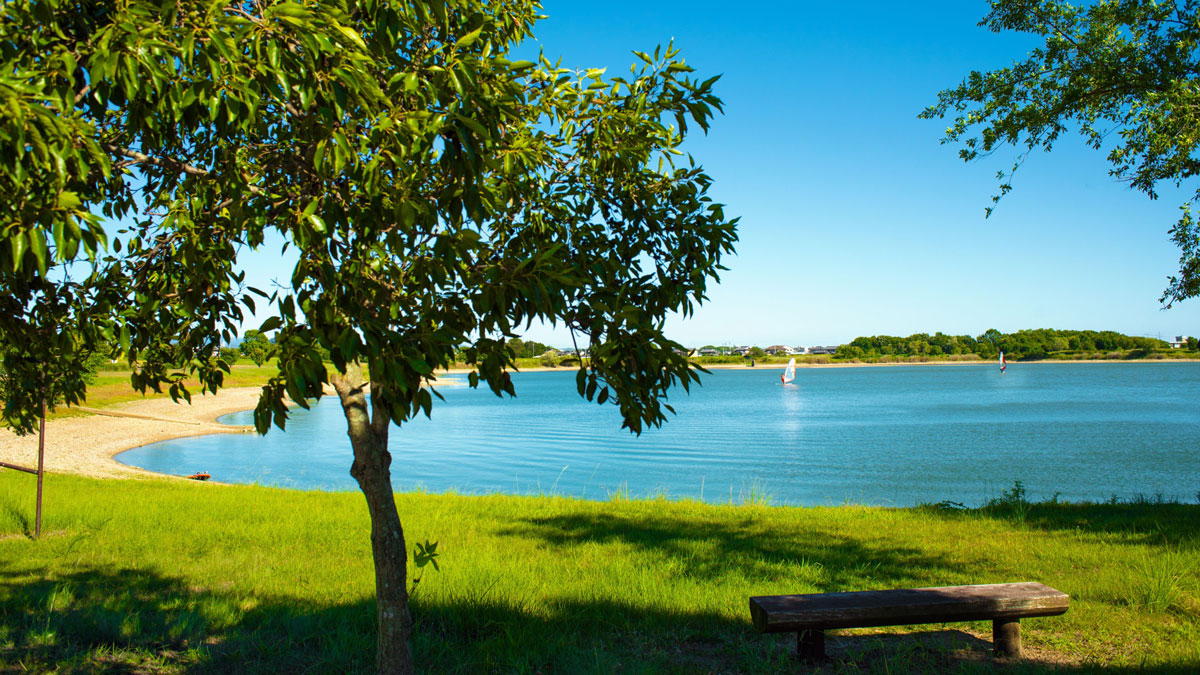
Challenge
A Japanese reservoir network faces degradation from urbanization, an aging farming population, and climate-related drought and flood risks.
Solution
Establish community associations and expert groups to restore and manage reservoirs, preserve their history, and build flood and drought resilience.
Overview
The Inamino Plateau, located downstream from the Kako River in Hyogo Prefecture, Japan, has historically struggled with limited natural water resources due to its geography, climate, and geology. Communities developed sophisticated water management techniques over centuries to address this scarcity. Spring water was used as early as the 6th to 8th centuries to enable rice paddy cultivation through reservoir construction.
Rice cultivation intensified in the 15th and 16th centuries, supported by improved waterway techniques including long, contour-following canals drawing on castle building and mining practices (Hatate, 1980). The 17th and 18th centuries saw new methods for diverting river water into reservoirs, further improving water security. This increased availability, however, also drove greater water use, fueled by higher rice taxes and crop sales, which led to more frequent water disputes (MITA (a)).
Today, 557 reservoirs dot the Higashi Harima region, reflecting generations of farmers’ efforts. Beyond irrigation, these reservoirs – known as tameike – play a central part in flood control, mitigating flood risk and damage (Kojima et al., 2021; Uchida, 1999). However, 20th-century urbanization, an aging farming population, and changing land use patterns have led to reservoir degradation through pollution, neglect, and inadequate maintenance (MITA (a)). Climate change is anticipated to worsen these challenges through increased drought risk and more extreme rainfall events that could overwhelm degraded reservoirs.
Community associations and expert groups
A total of 75 Tameike Associations have been established across five municipalities in Higashi Harima as of February 2025, aimed at protecting reservoirs as valuable regional assets and revitalizing the area through community collaboration (MITA (b)). These associations work to preserve the reservoirs’ historical character, agricultural irrigation functions, and flood risk mitigation roles.
Eleven expert groups, each specializing in a different aspect of reservoir management, support these efforts. Their expertise ranges from improving reservoir ecosystems and protecting local flora and fauna to preserving historically notable water facilities.
A multi-layered organizational network underpins this work. Reservoir management associations, composed of reservoir managers and local residents, operated in 50 districts as of 2006. These connect through city and town-level liaison committees in all five municipalities, which in turn feed into the regional Higashi Harima Reservoir Management Association Liaison Committee (MITA (b)).
Awareness and knowledge sharing
The Museum of Inamino Tameike (MITA), launched in 2005, serves as a central resource on reservoir history, culture, ecosystems, biodiversity, agricultural uses, and flood control functions. Events such as the Inamino Tameike Expo (2018) and the Inamino Tameike Olympics (2020) have raised public awareness and promoted dialogue among local stakeholders.
These activities and research initiatives are building the foundation for addressing reservoir conservation, utilization, and intergenerational stewardship (MITA (d)).
Outlook
The organizational structure established across Higashi Harima provides a solid basis for long-term regional collaboration. Ensuring sustainability will require a clear understanding of stakeholder motivations and a shared vision for the future. Continued community engagement and research will be central to managing these reservoirs effectively at a time when rising temperatures and extreme weather events, including droughts and heavy rainfall, are anticipated to place additional pressure on the region’s water infrastructure.
Acknowledgements
This report is based on publicly available information from The Museum of Inamino Tameike. Acknowledgement is given to Kaoru Moriwaki, Counselor of the Inamino Tameike Museum Secretariat, for permission to publish this case study. Reported by IGES, edited and updated by AP-PLAT.
Related Links / References
All resources listed below are in Japanese.
- Hatate, I. (1980) The Establishing Process of the Ogo and Yamada Canals, Passing on “The Japanese Experience”: Technology Transfer, Transformation, and Development, United Nations University Human and Social Development Program Research Report, Digital Archives, IDE-JETRO
https://d-arch.ide.go.jp/je_archive/society/wp_unu_jpn44.html - Kojima, H., Matsuda, S., Hirose, Y., Takemura, T., Lee, S., and Yoshisako, H. (2021) Relationship between Water Management of an Irrigation Pond During Heavy Rains and Flood Storage, Journal of Japan Society of Civil Engineers, Ser. B1 (Hydraulic Engineering), 77(2), I_433-I_438
https://doi.org/10.2208/jscejhe.77.2_I_433 - MITA(a): The Museum of Inamino Tameike, History of reservoirs (tameike)
https://www.inamino-tameike-museum.com/what-is-a-pond/pond-history.html. - MITA(b): The Museum of Inamino Tameike, Practical activity groups
https://www.inamino-tameike-museum.com/activity-group.html. - MITA(c): The Museum of Inamino Tameike, Tameike Museum
https://www.inamino-tameike-museum.com/pond-museum.html. - MITA(d): The Museum of Inamino Tameike, MITA’s activities
https://www.inamino-tameike-museum.com/mita-topic.html. - Uchida, K. (1999) A Geographical Study on Conversion of Irrigation Ponds into Flood Retarding Ponds at Tomoe River Basin in Shizuoka Prefecture, Water Science, 43(4), 46-66
https://doi.org/10.20820/suirikagaku.43.4_46
 DISCOVER MORE

