 Asia - Japan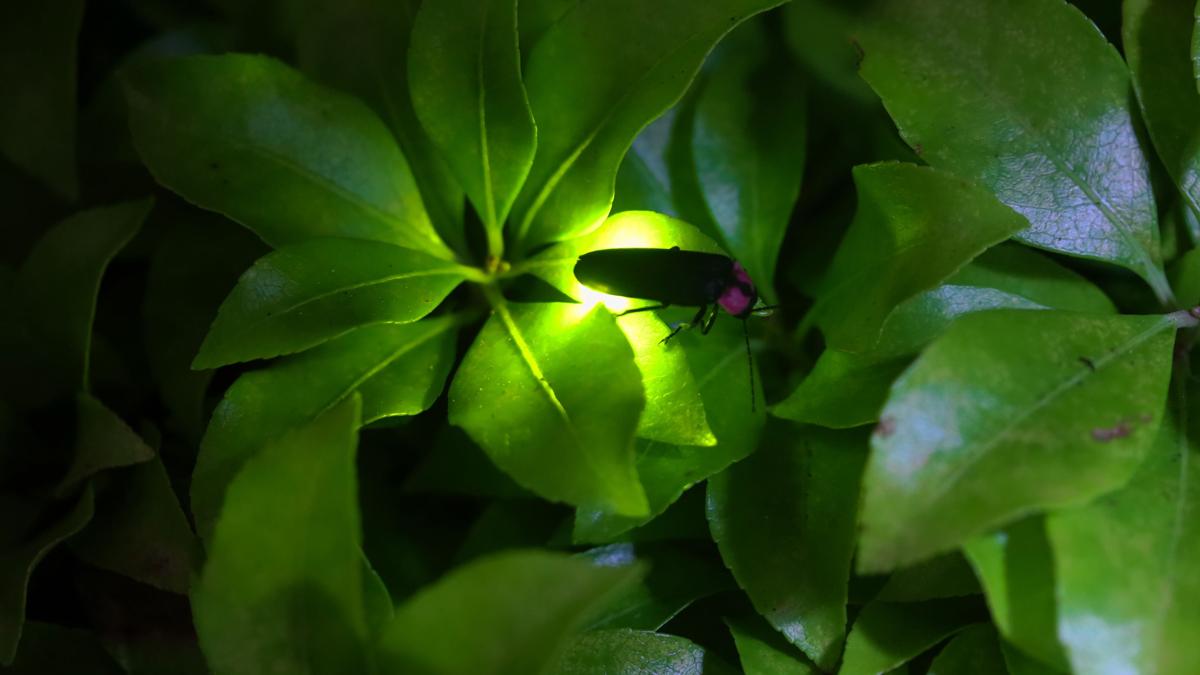
Challenge
Pollution drove down Genji firefly numbers in Japan, then restored populations drew tourists whose behavior created new environmental pressures.
Solution
Restore firefly habitats through ecological research, water quality monitoring, a model river project, and eco-friendly tourism management.
Overview
The city of Moriyama in Shiga Prefecture, Japan, was once renowned for its abundant Genji firefly populations. Industrialization and water pollution caused a drastic decline in firefly numbers, prompting non-profit organization (NPO) Hojo-no-Sato to spearhead restoration efforts in the rivers and Akanoi Bay in Lake Biwa.
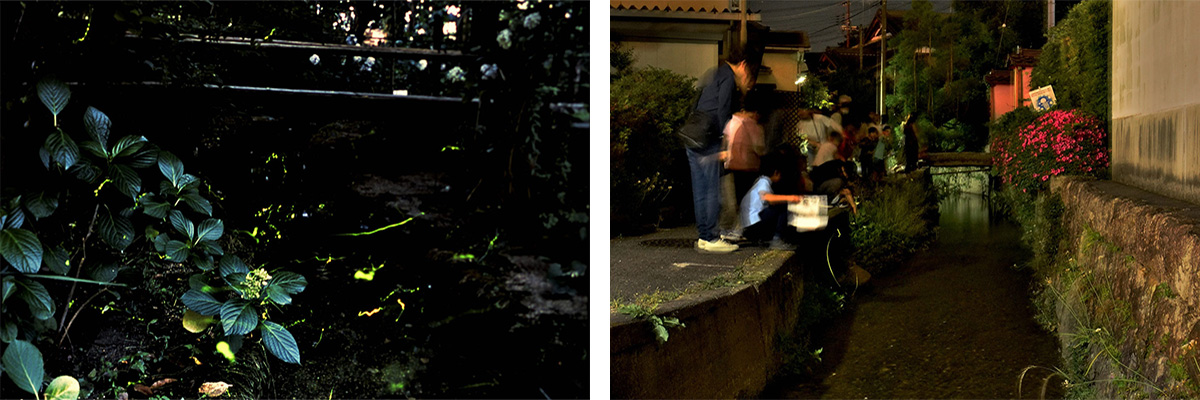
Those efforts brought firefly numbers back and drew a surge of tourists – who promptly created new problems. Parking violations, noise, and littering degraded the environment the NPO had worked to restore. More recently, firefly populations have plateaued or slightly decreased, raising concerns among NPO members and residents about the potential impacts of climate change and extreme weather events.
The NPO built its response around four activities: ecological research on the Genji firefly, water quality monitoring, a model river project, and the Hotaru (Firefly) Park-and-Walk initiative.
Ecological research and water quality monitoring
A dedicated breeding facility allowed for in-depth studies of firefly ecology. Regular water quality surveys produced results that were mapped and made publicly accessible, providing information to support habitat improvement. These two activities formed the scientific basis for the NPO’s broader restoration work.
Model river project
The model river project transformed a section of a local river into an ecosystem suited to both fireflies and people. The site serves as a venue for environmental education, opening up opportunities for the public to engage directly with the conservation effort and to understand the conditions that allow firefly populations to thrive.
Park-and-Walk initiative
The NPO launched the Park-and-Ride initiative in 2004 to address the environmental costs of increased tourism, encouraging the use of public transportation to reduce traffic congestion and pollution during the firefly viewing season (late May to early June). The program later evolved into Park-and-Walk, promoting more leisurely exploration of the area on foot.
The initiative raised public awareness about environmental conservation and the role of fireflies as indicators of ecological health. It also brought together diverse stakeholders, including the municipality, local businesses, and residents, supporting community participation in conservation and cultural activities. This collaborative foundation has been described as a base for building a resilient society (Kimura et al., 2019).
Outlook
The NPO’s work has earned recognition and accolades from funding agencies and ministries. The recent plateau or slight decline in firefly populations underscores the challenges posed by climate change and extreme weather.
The NPO plans to continue studying firefly ecology and monitoring water quality to better understand and mitigate these impacts. It also plans to expand its educational outreach, particularly programs targeting younger generations, to deepen understanding of fireflies, water quality, and the health of rivers and Lake Biwa.
Acknowledgements
This report is based on publicly available information and research on firefly conservation in Moriyama. Acknowledgement is given to NPO Hojo-no-Sato, especially Akiko Naka, Secretary General, for kind permission to publish this case study, and to Yoshiharu Shimoda for his coordination efforts. Reported by IGES, edited and updated by AP-PLAT.
Related Links / References
- Hojo-no-Sato https://lake-biwa.net/akanoi/
- Furukawa, M. (2018). Twenty years history of water quality research which is implemented by citizens’ initiative in rivers flowing into Akanoi Bay of Lake Biwa, Water Science, 62(3), 42-51
https://doi.org/10.20820/suirikagaku.62.3_42 (in Japanese) - Kimura, N., Hoshino, S., and Onitsuka, K. (2019). Analyzing the Association Between Disaster Risk Preparedness and Environmental Consciousness of Small and Medium-Sized Enterprises: The Case of Sukagawa City, Fukushima Prefecture, Japan, Journal of Disaster Research, 14(8), 1047-1058
https://doi.org/10.20965/jdr.2019.p1047 - Nakajima, K.(2006). Moriyama Hotaru Park-and-Ride, Firefly Research Journal, 39, 19-24
https://zenhoken-std.sakura.ne.jp/ZHJ_pdf31-40/ZHJ39_19-24.pdf (in Japanese)
 DISCOVER MORE

