 Asia - Japan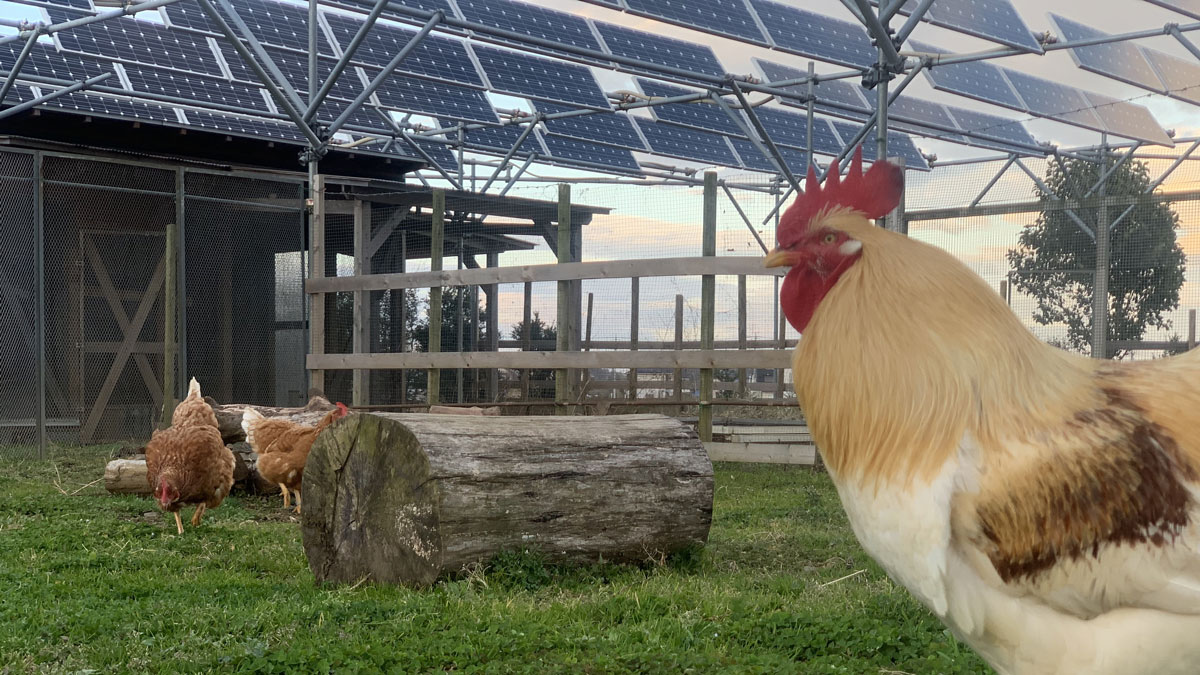
Challenge
Agrivoltaics, called solar sharing in Japan, faces low awareness, high costs, regulatory hurdles, and limited market access for farmers using solar panels.
Solution
Promote agrivoltaics through digital tools, consulting, distribution matching, research, and community engagement.
Overview
Agrivoltaics, also called solar sharing in Japan, involves installing photovoltaic (PV) solar panels above farmland to produce electricity and cultivate crops at the same time. Conventional solar farms require large tracts of land that could otherwise support agriculture; agrivolatics lets both energy production and food cultivation take place on the same plot.
Japan has been a pioneer in this approach. The Solar Sharing Academy in Chiba Prefecture and the Integrated Research Institute for Solar Sharing (IRISS) in Tokyo are among the organizations promoting wider adoption. Their work covers technology improvement, farmer and stakeholder education, and demonstrating the economic and environmental case for the system.
What agrivoltaics offers
Agrivoltaics addressestwo problems simultaneously – land competition between energy and agriculture, and farm income instability. Traditional solar installations take over farmland, sometimes contributing to deforestation or reduced farming capacity. The solar sharing approach avoids this trade-off by layering both uses on the same land.
The partial shading that solar panels provide can also reduce heat stress on crops and limit soil moisture loss. Certain crops, particularly leafy greens, can perform well under shaded conditions, achieving improved yields and lower water consumption. Farmers also gain an additional revenue stream through energy sales. Japan’s government-supported feed-in tariffs allow farmers to sell surplus solar electricity back to the grid, stabilizing income and reducing reliance on unpredictable agricultural yields.
Solar sharing contributes to renewable energy generation and helps reduce greenhouse gas emissions at a broader level. It also supports biodiversity by reducing the need for land clearing and encouraging eco-friendly agricultural practices.
IRISS and its services
IRISS was established in 2022 to combat climate change and revitalize agriculture by integrating PV solar panels with farming. One problem the institute addresses directly is low awareness of solar sharing in Japan. By March 2021, there were only 3,474 approved agrivoltaics projects in the country, compared with more than 650,000 general solar installations. That gap reflects how much scope there is for expansion, and addressing it is central to IRISS’s work.
IRISS provides several services to support adoption. The institute is developing digital tools, including cultivation simulations and digital field management systems, to help farmers make informed decisions and optimize their operations. Consulting services assist stakeholders with feasibility assessments, system design, and regulatory compliance. IRISS also connects producers with markets through distribution matching, helping farmers expand sales channels and supporting the economic viability of solar sharing. Research, workshops, and knowledge-sharing activities build a community focused on sustainable agriculture and energy solutions.
Remaining challenges
Agrivoltaics still faces real obstacles, including high initial investment costs, regulatory requirements, and the technical expertise needed to design and run a viable system. Limited market access for agricultural products grown under solar panels is another barrier, as buyers and distribution channels for these products are not always straightforward to find. IRISS is working to address all of these issues through research, policy advocacy, and training programs for farmers.
The gap between the approved projects and far greater number of general solar installations shows how much ground there is still to cover. Clearer regulation, more accessible financing, and stronger coordination between agricultural and energy sectors are also needed to close it.
Agrivoltaics (solar sharing) offers an approach that serves both food security and climate goals on the same piece of land. The model has scope to become a more standard part of Japan’s agricultural and energy systems, given continued technological development and supportive policy.
Acknowledgements
This report is based on publicly available information from the Solar Sharing Academy and the Integrated Research Institute for Solar Sharing (IRISS). Acknowledgement is given to the organizations that made this knowledge accessible. Reported by IGES, edited and updated by AP-PLAT.
Related Links / References
- The Solar Sharing Academy (in Japanese)
- The Integrated Research Institute for Solar Sharing Inc. – IRISS (in Japanese)
 DISCOVER MORE

