 Asia - Japan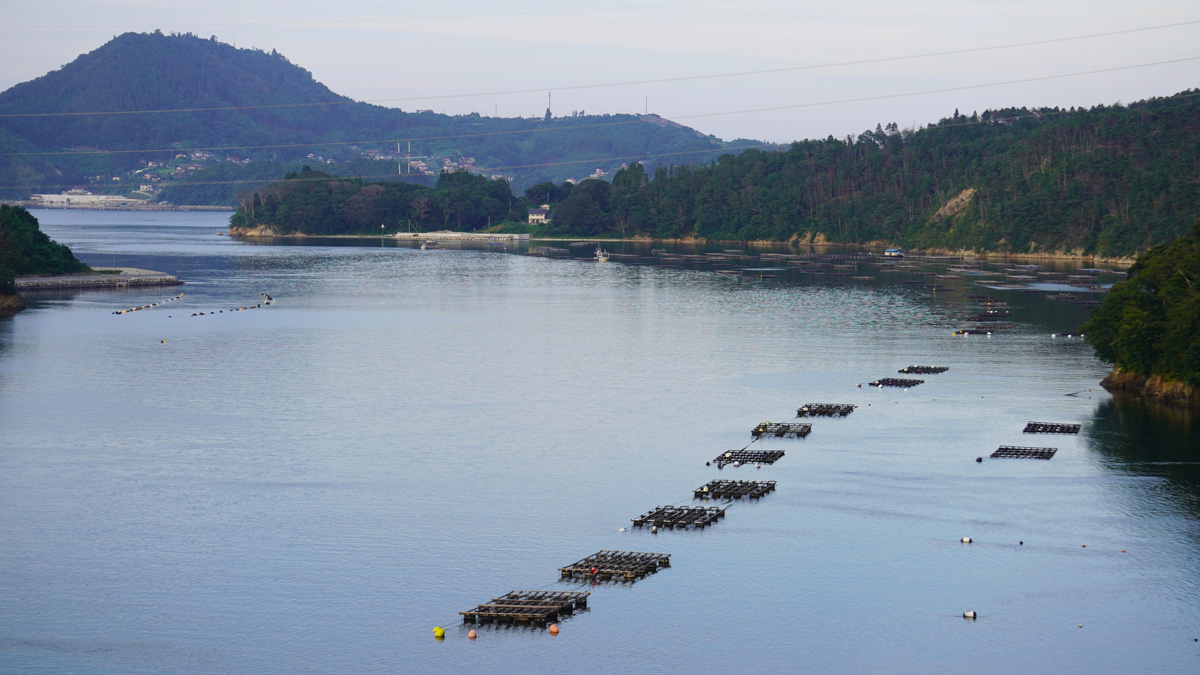
Challenge
Pollution and the 2011 tsunami devastated oyster farming in Japan’s Kesennuma, exposing the consequences of neglecting river basin ecology.
Solution
Local communities combined reforestation efforts with traditional ecological knowledge to restore the forest–river–sea connection that sustains oyster farming.
Overview
Kesennuma Bay, a fishing and aquaculture hub in Miyagi Prefecture in northeastern Japan, faced severe environmental degradation between 1965 and 1975. Pollution from industrial waste, human sewage, pesticides, and deforestation led to red tides that devastated oyster farming. Land reclamation by the seaside and construction along the river also greatly impacted oysters, which need brackish waters containing phytoplankton to flourish.
The failure to understand sustainability, which relies on the ecological health of the river basin, was at the core of the problem.
Mori wa Umi no Koibito movement
Recognizing the interdependence of forests, rivers, and seas, the Mori wa Umi no Koibito (literally, “The forest is the sea’s lover,” but more poetically, “The forest is longing for the sea, the sea is longing for the forest”) movement was founded in 1989 to restore ecological balance through reforestation and environmental education. The movement later evolved into a non-profit organization (NPO), continuing its work in reforestation, conservation, and environmental education.
Reforestation
The initiative has planted more than 30,000 trees in mountain areas upstream. Japan’s geographical characteristics, with over 67% mountain–forest coverage, mean that forests cover the uppermost streams. Nutrients the river transports from upstream forests promote the growth of phytoplankton, which serve as food for oysters.
The NPO’s reforestation activities brought back healthy nutrients flowing into the bay, making the oysters grow better in quality. Reforestation also benefited the mountains’ function of storing water in the soil, which helps prevent landslides or debris flow.
Traditional knowledge and education
Oyster farming in this region passes down traditional knowledge about maintaining biodiversity in forest, agricultural, and marine areas through satoyama (sustainable management of rural land use) and satoumi (management of coastal areas) across generations. The approach involves building shared values with people living in the upstream watershed, as well as intergenerational transfer of knowledge, conservation of nature and agrobiodiversity, and education, so that people can observe and experience the close connection between humans and nature. The NPO has invited more than 10,000 children to the actual sites and provided environmental education, including on local traditional knowledge, through hands-on experience.
Oyster farmers recognize and appreciate the efforts of farmers and foresters upstream who take care of the river basin and its ecology. Monitoring changes in the river basin from the forest to the sea in an integrated manner is a vital aspect of this, including through academic research, to educate people about the human–nature connection.
Post-tsunami recovery
This system’s resilience became evident after the devastating March 11, 2011, Great East Japan Earthquake and Tsunami, which severely impacted oyster farming and damaged agricultural lands. Local communities, guided by traditional knowledge and a deep understanding of ecosystem interconnections, worked to restore both industries. They integrated reforestation efforts, sustainable land use practices, and revitalization of the coastal ecosystem to successfully revive oyster farming and strengthen agricultural recovery.
The restoration process demonstrated the long-term benefits of a balanced relationship between forests, rivers, and the sea, reinforcing the value of traditional ecological knowledge in building resilience against future environmental challenges.
Acknowledgements
This report is based on publicly available information from the sources listed below. Acknowledgement is given to the organizations and researchers that made this knowledge accessible. Reported by IGES, edited and updated by AP-PLAT.
Related Information
Barrett, B.F.D., Brand, K. and McDonald, A. (2012). From Mountain to Sea: a Vision for the Rebuilding of Tohoku, available at https://ourworld.unu.edu/en/from-mountain-to-sea-a-vision-for-the-rebuilding-of-tohoku.
Hatakeyama, M. and Nishi, M. (2022). Exploring the human-nature connection through oyster farming, In: Blue dot, 15, 76-85, (plurilingual, English and Japanese), available at
https://unesdoc.unesco.org/ark:/48223/pf0000381609.
NPO Mori wa Umi no Koibito, https://mori-umi.org/
Saijo, K. (2023). Bamboo circulation in Satoyama and Satoumi: Japan’s hilly and coastal areas, Government. doi: 10.56367/OAG-039-10885 or available at
https://www.openaccessgovernment.org/article/bamboo-circulation-satoyama-satoumi-japans-hilly-coastal-areas/162606/.
 DISCOVER MORE

