 Asia - Japan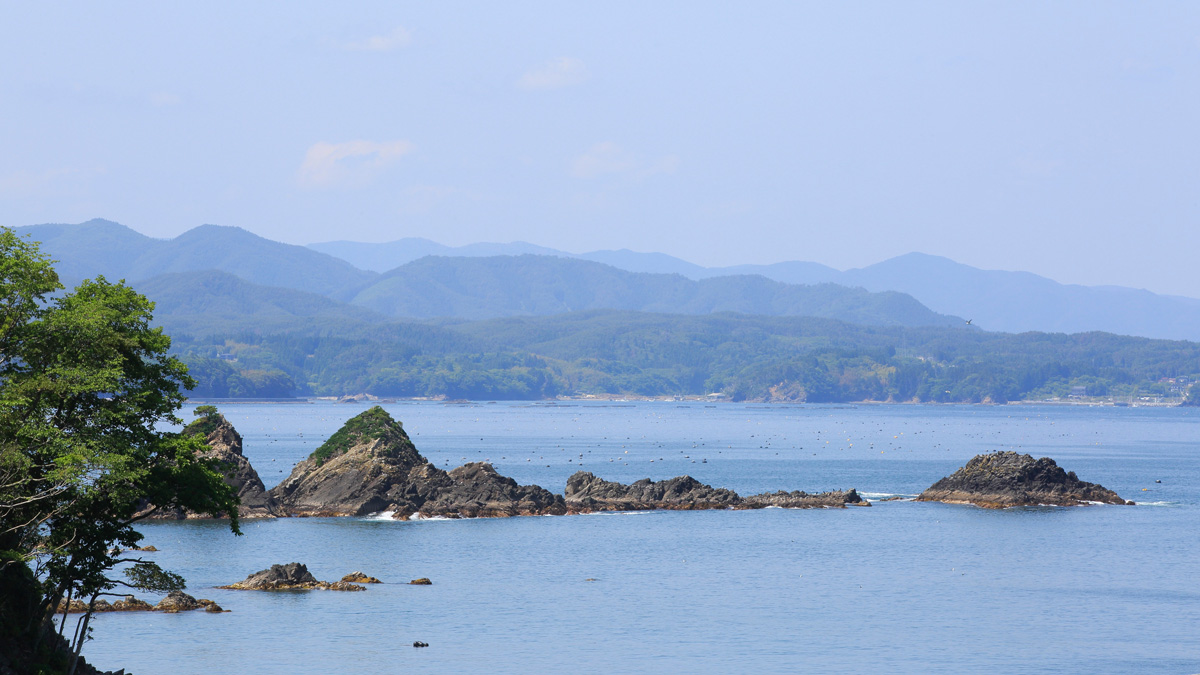
Challenge
The Great East Japan Earthquake and tsunami devastated Minamisanriku’s coastal ecosystems, disrupting marine habitats, aquaculture, and livelihoods.
Solution
Restore marine habitats for biodiversity and blue carbon, alongside sustainable forestry, responsible aquaculture, and circular resource management.
Overview
Minamisanriku, a town located in northeastern Miyagi Prefecture along Japan’s southern Sanriku coast, has approximately 12,000 residents and lies within a rich natural environment, supporting both aquaculture and tourism. Its landscape extends from river headwaters to the sea, and the town’s watersheds are connected to the ecological health of Shizugawa Bay. Rainfall flows through these streams into the bay, meaning land-based activities directly influence the marine ecosystem and local fishing industries.
Shizugawa Bay, which Minamisanriku faces, is home to more than 200 species of seaweed and seagrass, contributing to its distinct biodiversity (Sakamoto et al., 2012). The bay also serves as a habitat for the endangered brant goose (kokugan), which winters there. The bay was designated a Ramsar Convention wetland in 2018 in recognition of its ecological importance. Eelgrass beds serve as a carbon sink, absorbing CO₂ through photosynthesis and contributing to blue carbon initiatives. However, seaweed beds in the area have been declining in quantity and quality as a result of earthquake damage and widespread rocky shore denudation.
Having overcome the devastation caused by the Great East Japan Earthquake, Minamisanriku is committed to becoming a sustainable, self-sufficient, and decentralized community via a set of interconnected initiatives spanning marine restoration, forestry, aquaculture, and resource management.
Seaweed bed restoration
The Minamisanriku Nature Center, in partnership with the Center for Sustainable Society and a private enterprise, is actively working to restore and expand seaweed beds in Shizugawa Bay (Amanuma et al., 2023). The goal is not only to preserve biodiversity but also to utilize eelgrass and seaweed as CO₂ sinks, ultimately converting them into blue carbon credits. Collaborative research with Tohoku University is analyzing ways to improve biodiversity through these restoration efforts.
Sustainable forestry
With 70% of Minamisanriku covered in forest, proper management plays a role in maintaining CO₂ sinks. The town adopts biodiversity-conscious forestry practices, ensuring a balanced mix of cedar, red pine, and cypress alongside subvegetation. Riparian forests are also zoned to support ecological sustainability.
In 2015, the Minamisanriku Forest Stewardship Council (FSC) earned its FSC certification, affirming the town’s commitment to responsible forestry. Sakyu Co., Ltd., a member of the council, collaborates with the World Wildlife Fund to evaluate how FSC efforts align with the Taskforce on Nature-related Financial Disclosures, aiming to encourage the use of certified wood and promote environmental conservation and sustainable forestry.
Responsible aquaculture
In 2016, the Shizugawa Branch of the Miyagi Prefecture Fisheries Cooperative became Japan’s first organization to obtain Aquaculture Stewardship Council (ASC) certification for environmentally responsible oyster farming. Before the earthquake, excessive cultivation led to poor-quality oysters that took three years to mature. Post-disaster, the cultivated area was reduced to one-third, resulting in improved water quality and nutrition. Oysters matured within a year, increasing farmers’ income by 1.5 times while reducing labor hours by 40%.
Circular resource management
Minamisanriku has implemented a circular resource management system that processes organic waste from homes and businesses into biogas and liquid fertilizer. The biogas generates electricity, while the fertilizer supports local agriculture, creating a self-sustaining cycle of resources, energy, and food.
Minamisanriku is restoring its natural ecosystems and pioneering sustainable economic and environmental solutions through these interconnected efforts, serving as a model for resilience and sustainability.
Acknowledgements
This report is based on publicly available information from the sources listed below. Acknowledgement is given to the organizations and researchers that made this knowledge accessible. Reported by IGES, edited and updated by AP-PLAT.
Related Information
Amanuma, N., Onoda, S., and Fujino, J. (2023) Synergistic actions on climate change, biodiversity and the SDGs – three cases from Japan, available at https://www.iges.or.jp/en/publication_documents/pub/workingpaper/en/13039/Case+Studies+of+Synergies+in+Japn+EN.pdf
Sakamoto, S.X., Sasaa, S., Sawayama, S., Tsujimotob, R., Terauchi, G., Yagi, H., Komatsu, T. (2012). Impact of huge tsunami in March 2011 on seaweed bed distributions in Shizugawa Bay, Sanriku Coast, revealed by remote sensing, Proc. of SPIE, 8525 85251B-1-7, doi: 10.1117/12.999308.
 DISCOVER MORE

