 Asia - Bhutan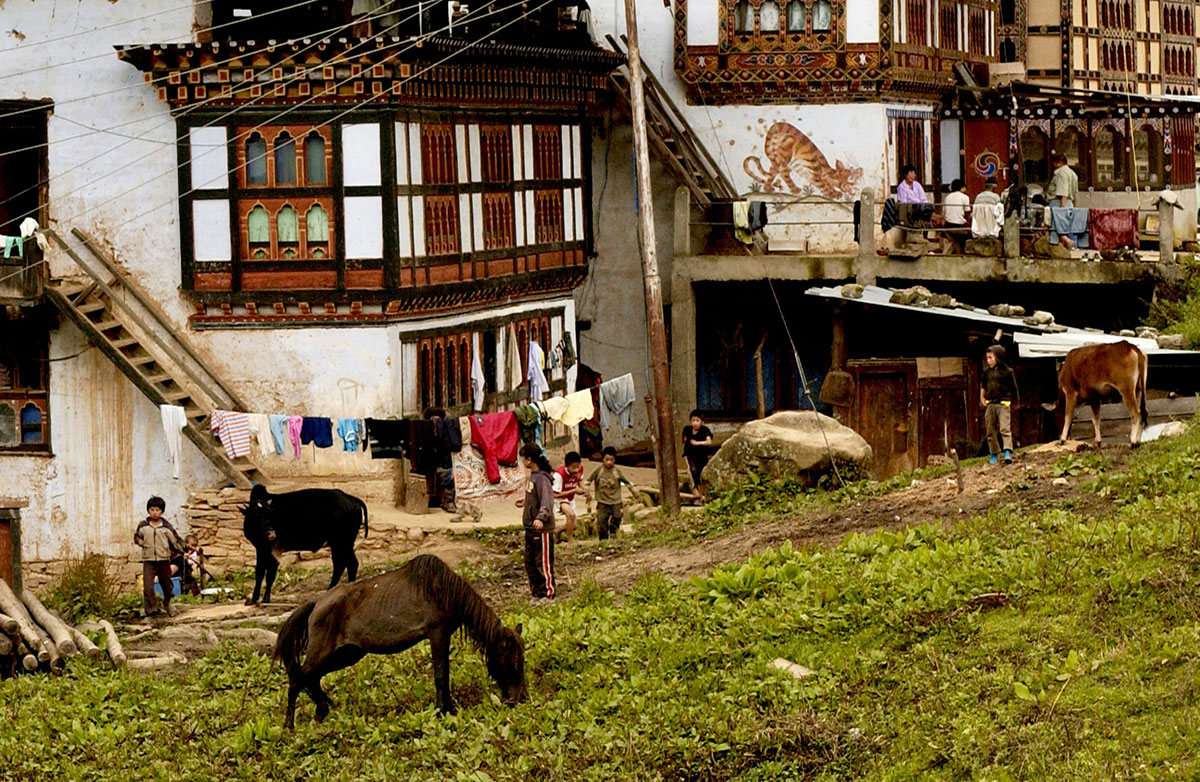
Challenge
Erratic rainfall and prolonged dry seasons leave Mongar, Bhutan with severe seasonal water shortages affecting households and services.
Solution
Introduce gravitational monsoon supply, dry-season pumping, and rainwater harvesting to secure year-round water access.
Overview
Mongar municipality in Bhutan faces recurring water scarcity due to erratic rainfall and prolonged dry seasons. Although the region receives heavy rainfall during the monsoon, water shortages intensify during the dry months. These seasonal extremes affect agriculture, health, and services such as schools and hospitals. Water stress also drives migration from rural areas into urban centers, increasing pressure on the municipal water supply.
The National Adaptation Program of Action (NAPA II) was launched to strengthen climate resilience across Bhutan, including Mongar. The program aimed to reduce water resource vulnerabilities and disaster risks by strengthening institutional capacity and introducing climate adaptation technologies suited to local conditions.
Seasonal variability and its impacts
Mongar receives substantial rainfall during the monsoon season. However, during dry months, water availability declines sharply. Agriculture, which depends on a consistent water supply, suffers when water becomes scarce. Reduced access to safe water also affects hygiene and sanitation, contributing to the spread of communicable diseases.
Essential services such as schools and hospitals experience disruptions during prolonged dry periods. At the same time, rural residents migrate toward the urban center in search of more reliable water access, placing additional strain on municipal infrastructure.
Dual water supply system
To address persistent seasonal shortages, the project introduced a dual water supply system for monsoon and dry-season conditions.
During the monsoon season, a gravitational water supply system directs rainwater from higher elevations to lower-lying villages and urban areas. This system uses natural elevation differences to move water without pumps or electricity, providing a way to distribute water without requiring energy input.
For the dry season, the project installed a pump supply system. The pump draws water from storage facilities replenished during the rainy months, ensuring continuity of supply when natural sources decline. While the pump system strengthens dry-season reliability, it depends on energy input, which presents long-term considerations related to operating costs and maintenance.
Rainwater harvesting in rural areas
The project also introduced rainwater harvesting technologies in rural communities. The rainwater harvesting technologies enabled households to collect and store rainwater during the wet season and improved resilience for 420 rural households that had previously faced prolonged water shortages. Rainwater harvesting systems were installed in 20 villages.
Scale and service improvements
The dual water supply system provided water to 1,122 households in Mongar and neighboring districts of Samtse, Tsirang, and Pemagatshel. Gravitational flow during monsoon months, combined with pumped supply during dry periods, supported year-round water availability.
The intervention also produced community-level effects. Schools reported fewer absences as students gained more consistent access to clean water. Hospitals and businesses experienced fewer service disruptions during dry months as access to clean water improved.
Ongoing considerations
Although the system improved seasonal water access, limitations remain. The pump system relies on energy, which can affect long-term financial and maintenance sustainability. In addition, increasing frequency of extreme weather events could overwhelm these systems in the future. Addressing these issues will require ongoing investment in infrastructure and capacity building, as well as further innovations to tackle emerging climate threats.
Acknowledgements
This report draws from work by Dr. John Vong and Yeshi Dorji, detailed in Addressing the Risks of Climate Induced Disasters in Bhutan through Enhanced National and Local Capacity for Effective Actions (Terminal Evaluation) (Vong and Dorji, 2019). Acknowledgement is given to the original authors. Reported by IGES, edited and updated by AP-PLAT.
Related Information
Addressing the Risks of Climate Induced Disasters in Bhutan through Enhanced National and Local Capacity for Effective Actions
https://www.adaptation-undp.org/projects/ldcf-enhanced–capacity-bhutan
Addressing the Risk of Climate-induced Disasters through Enhanced National and Local Capacity for Effective Actions
https://www.thegef.org/projects-operations/projects/4976
Infographic summarising results of the project ‘Addressing the Risks of Climate Induced Disasters in Bhutan through Enhanced National and Local Capacity for Effective Actions’ (NAPA-II)
https://www.adaptation-undp.org/resources/communications-products/infographic-summarising-results-project-addressing-risks-climate
Vong, J. Dorji, Y. 2019. Addressing the Risks of Climate Induced Disasters in Bhutan through Enhanced National and Local Capacity for Effective Actions (Terminal Evaluation). Report.
https://weadapt.org/wp-content/uploads/2023/05/terminal_evaluation_bhutan_napa_2.pdf
 DISCOVER MORE

