 Oceania - Solomon Islands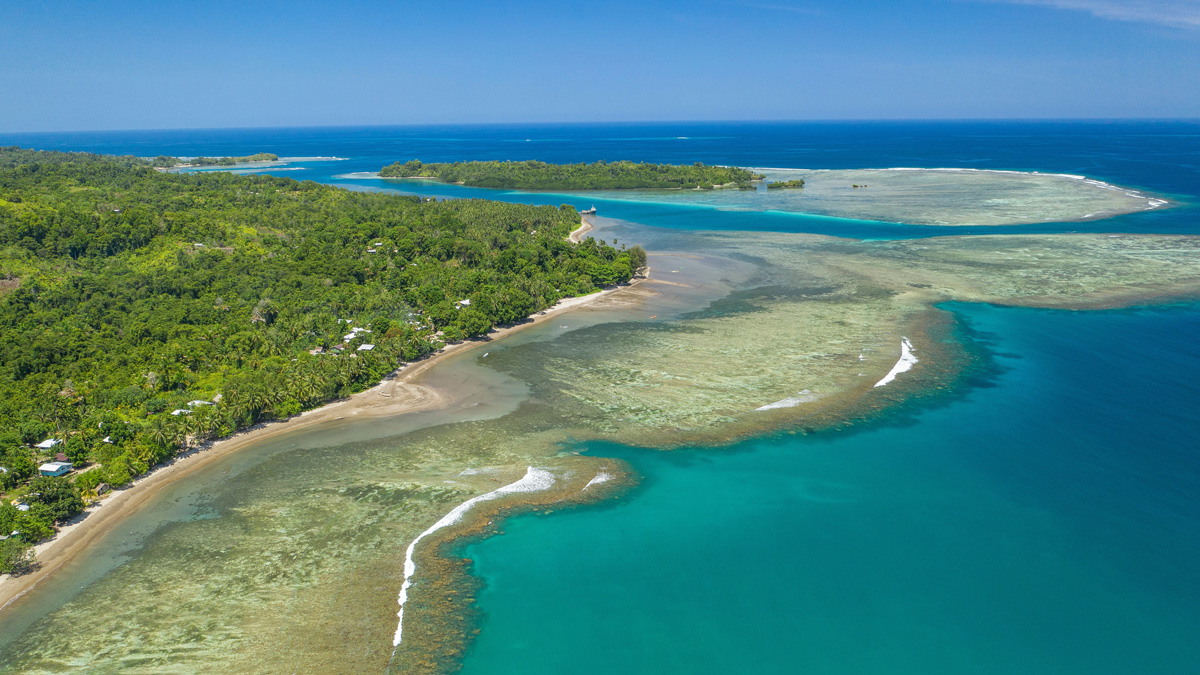
Challenge
Sea-level rise, drought, and volcanic ash contaminate freshwater in Solomon Islands, leaving the Tuwo village vulnerable to water shortages.
Solution
The project installed a solar-powered desalination system and improved rainwater harvesting to secure drinking water during droughts and disasters.
Overview
Tuwo (Tuo) village is part of the Reef Islands, a remote and low-lying area in Temotu Province, Solomon Islands, that is highly exposed to sea-level rise, saltwater intrusion, drought, and volcanic activity. The island faces recurring pressure on freshwater availability and quality. Sea-level rise contaminates groundwater through saltwater intrusion, prolonged dry periods reduce rainfall-dependent supplies, and volcanic ashfall can render local water sources unusable. These combined pressures have made water security a persistent adaptation challenge for a population of around 500 people.
The Solomon Islands Water Sector Adaptation Project (SIWSAP) responded to growing climate-related risks to water security across the country. In Tuwo, interventions focused on installing adaptive water management systems that could function under worsening climate conditions and during sudden shocks. The approach combined desalination, filtration, improved rainwater harvesting, and community-based management.
Climate and water stress in Tuwo
Like many low-lying communities in the Solomon Islands, Tuwo experiences multiple climate-related stressors. Sea-level rise drives saltwater intrusion into groundwater supplies, contaminating wells and reducing access to potable water. As intrusion increases, freshwater becomes progressively more difficult to access.
Drought adds further strain. The village relies heavily on seasonal rainfall for water collection. During prolonged dry periods, water availability declines sharply. The 1997/1998 drought led to a 30–40% reduction in freshwater availability in some parts of the Solomon Islands (Raaymakers and Parairato, 2019). Reduced freshwater availability also affects agricultural production, as crops depend on reliable water supplies.
Volcanic activity also threatens water security. The 2017 eruption of the nearby Tinakula Volcano contaminated water sources with volcanic ash across several islands, including the Tuwo village. This event exposed the fragility of existing water systems and underscored the need for infrastructure capable of operating during compound climate and disaster risks.
Desalination and filtration systems
SIWSAP installed a desalination and filtration system powered by solar energy to convert seawater into clean drinking water. Desalination removes salt from seawater, making it safe for human consumption. The plant is designed to produce 5,000 liters of clean water per day, enough to meet the needs of approximately 150 households. For Tuwo’s population of around 500 people, this represents a substantial increase in reliable water supply.
The solar-powered design reduces reliance on imported fuel and lowers operating costs. The system provides an alternative source of freshwater that does not depend on rainfall or groundwater quality, directly addressing the risks posed by sea-level rise and drought.
The desalination plant became critical during the 2017 Tinakula Volcano eruption. When ash contamination disrupted other water sources, the plant provided clean water not only for Tuwo but also for nearby islands. Its ability to operate during a disaster demonstrated its role in strengthening resilience to multiple hazards.
Rainwater harvesting improvements
The project also improved rainwater harvesting through the provision of rainwater tanks and better storage facilities. Expanded storage capacity enables the island to capture more rainwater during the wet season and retain reserves for use during prolonged dry periods. These measures complement desalination by diversifying water sources and reducing sole reliance on groundwater.
Together, desalination and improved rainwater harvesting create a layered approach to water security that responds to both gradual climate pressures and sudden shocks.
Community management and sustainability
Community engagement formed part of implementation. The project trained local stakeholders to operate and maintain the desalination plant and rainwater tanks. It also established a community-based management system to oversee plant operations and basic maintenance tasks.
To support financial sustainability, households contribute SBD (Solomon Island dollars) 5 per month, while nearby communities that also rely on the plant contribute SBD 250 annually. These funds are intended to cover repairs and ongoing maintenance.
The system also requires regular technical maintenance. Solar panels need cleaning and occasional repairs, and more complex technical issues may require external assistance. Long-term sustainability, therefore, depends on continued technical capacity and financial management within the community.
Acknowledgements
This report draws from work by Steve Raaymakers and William Parairato, detailed in “Solomon Islands Water Sector Adaptation Project (SIWSAP) Terminal Evaluation Report” (Raaymakers and Parairato, 2019). Acknowledgement is given to the original authors. Reported by IGES, edited and updated by AP-PLAT.
Related Information
Solomon Islands Water Sector Adaptation Project (SIWSAP) Terminal Evaluation Report
https://erc.undp.org/evaluation/documents/download/15179
Solomon Islands Water Sector Adaptation Project (SIWSAP)
https://www.thegef.org/projects-operations/projects/4725
Solomon Islands Water Sector Adaptation Project (SIWSAP)
http://www.mecdm.gov.sb/projects/donor-funded/115-solomon-islands-water-sector-adaptation-project-siwsap.html
Raaymakers, S. Parairato, W. 2019. UNDP-GEF Solomon Islands Water Sector Adaptation Project (SIWSAP) Terminal Evaluation. Report.
https://erc.undp.org/evaluation/evaluations/detail/9883
 DISCOVER MORE

