 Oceania - Solomon Islands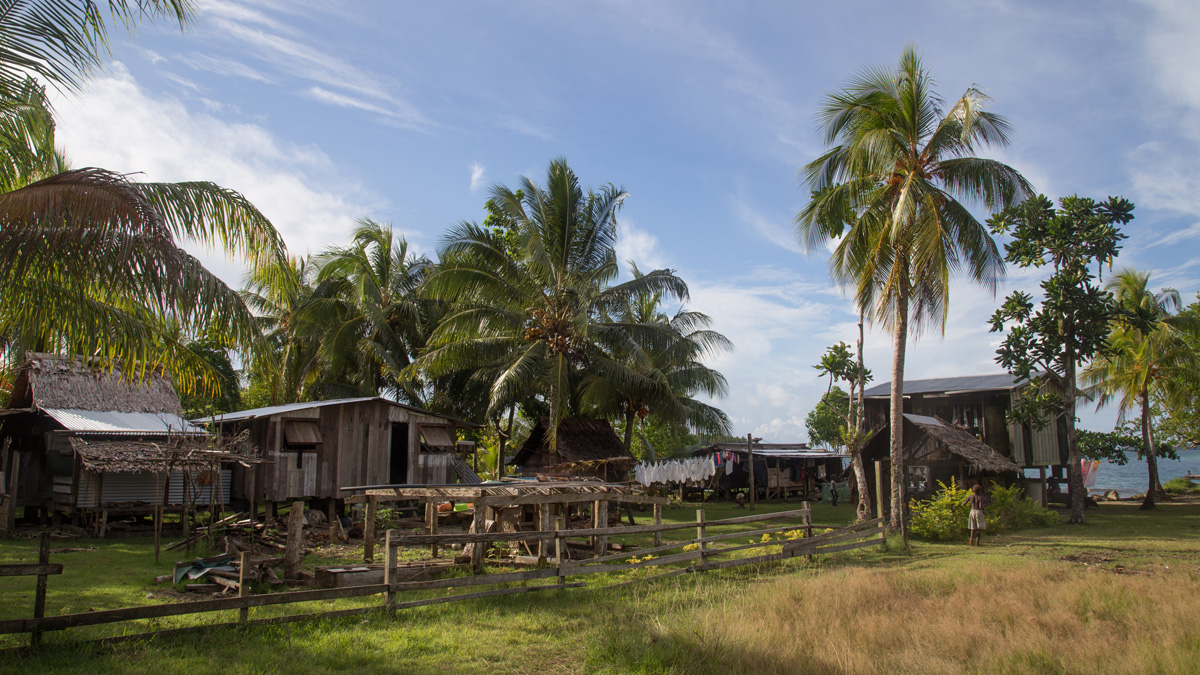
Challenge
Droughts, sea-level rise, and disasters strain safe water access in the Solomon Islands, especially on remote islands.
Solution
Installed community-led rainwater harvesting, gravity-fed pipelines, and pumped boreholes to secure water during droughts.
Overview
The Solomon Islands, located in the Pacific Ring of Fire, are vulnerable to tropical cyclones, earthquakes, tsunamis, volcanic eruptions, and landslides. Climate change intensifies these pressures through rising sea levels, prolonged droughts, and increased storm intensity, which affect water availability and food security (World Bank, 2020). Periods of extreme rainfall cause floods, while prolonged dry seasons lead to severe droughts, particularly in remote islands such as Temotu, Rennell, and Bellona. Rising sea levels increase saltwater intrusion, contaminating wells and streams that rural communities rely on for drinking water and agriculture.
Many rural communities face difficulties accessing safe, clean water. Droughts alone have affected nearly 26,000 people, with consequences for food production, hygiene, and overall well-being. The Community Resilience to Climate and Disaster Risk in Solomon Islands Project addressed these challenges through climate-resilient water systems designed to function during droughts and other extreme weather events, supporting more than 68,000 people across five provinces (World Bank, 2020).
Water systems and drought resilience
The project increased access to safe drinking water, strengthened community-based management systems, and developed infrastructure able to withstand climate change impacts.
A total of 55 community water systems were installed, benefiting around 50,600 people. Rainwater harvesting was the most common approach, with 30 projects completed across several provinces, including remote islands. In this process, rainwater was collected and stored, providing a dependable source of drinking water even during prolonged dry spells. These systems provided, on average, 4–5 liters of water per capita per day for drinking and cooking, which was a threefold increase from previous water consumption levels (World Bank, 2020).
Another 25 projects focused on installing gravity-fed systems and pumped boreholes and springs. Gravity-fed systems used water sources in higher altitudes to deliver water to villages through pipelines, while boreholes and springs were equipped with pumps to provide water to communities. These systems provided 20–30 liters of water per capita per day for all uses.
Community involvement and capacity building
Communities participated in managing and maintaining the water systems, supported by training that built skills for upkeep and repair.
Women comprised 38% of members in Sub-project Implementation Committees at the village level. Community members reported time savings averaging 83 minutes per day because they no longer needed to walk long distances to fetch water. The time savings allowed families to spend more time on activities such as gardening and fishing (World Bank, 2020). Access to clean water during the dry season reduced the risk of waterborne diseases and supported health and hygiene. The project serves as a model for future efforts to address climate change and disaster risk in the Solomon Islands and other vulnerable regions around the world.
Acknowledgements
This report draws from work by the World Bank, detailed in “Community Resilience to Climate and Disaster Risk in Solomon Islands Project” (World Bank, 2020). Acknowledgement is given to the original authors. Reported by IGES, edited and updated by AP-PLAT.
Related Information
Community Resilience to Climate and Disaster Risk in Solomon Islands Project
https://projects.worldbank.org/en/projects-operations/project-detail/P112613
Community Resilience to Climate and Disaster Risk in Solomon Islands Project
https://www.thegef.org/projects-operations/projects/5581
World Bank Group. (2021, March 9). Rural Communities Build Resilience to Climate Change in Solomon Islands. World Bank.
https://www.worldbank.org/en/results/2021/02/11/rural-communities-build-resilience-to-climate-change-in-solomon-islands
The World Bank. 2020. Community Resilience to Climate and Disaster Risk in Solomon Islands Project. [Report]. World Bank.
http://documents.worldbank.org/curated/en/552741604948511868/Solomon-Islands-Community-Resilience-to-Climate-and-Disaster-Risk-Project
 DISCOVER MORE

