 Asia - Cambodia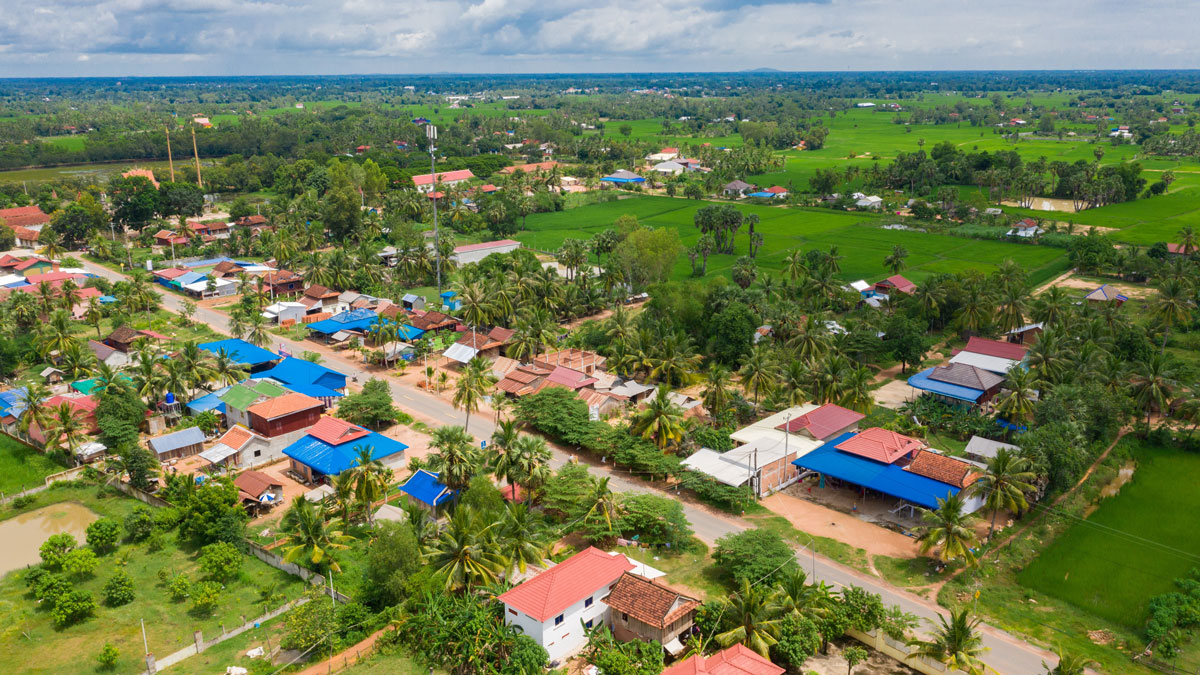
Challenge
Cambodia faces drought, irregular rainfall, and seasonal flooding that threaten rain-fed farming, rural livelihoods, and food security.
Solution
Support community-led water management, crop and livelihood diversification, and local planning integration to reduce flood and drought risks.
Overview
Cambodia’s floodplains and river basins support an economy in which agriculture, particularly rice production, underpins many rural livelihoods. Around 75% of the population lives in rural areas and relies on subsistence farming, small-scale fishing, and rain-fed agriculture (UNDP, 2010). Climate variability and climate change increase exposure to drought, irregular rainfall, and seasonal flooding, which can reduce yields, disrupt infrastructure such as canals and irrigation systems, and increase poverty and food insecurity. Saltwater intrusion, soil erosion, and ecosystem degradation are also related challenges (UNDP, 2011; UNDP, 2013).
In response, Cambodia has pursued community-based climate change adaptation approaches that place local planning and implementation at the center. The Cambodian Community-Based Adaptation Programme (CCBAP) ran from 2010 to 2015 and addressed water management, crop and livelihood diversification, and integration of community-based adaptation activities into local development planning.
Program background and scope
CCBAP was established in 2010 in partnership with the Global Environment Facility’s Small Grants Programme (GEF SGP), the United Nations Development Programme (UNDP), and several international donors. Project funding included the Global Environment Facility (GEF), Sweden (SIDA), and AusAID. The program ran for five years, from 2010 to 2015, and covered 21 provinces across Cambodia.
Main adaptation approaches
CCBAP introduced improved water resource management and ecosystem restoration, crop diversification using climate-smart techniques, livelihood diversification, and awareness raising on disaster preparedness and climate change.
Water management investments
CCBAP invested in water management through rehabilitation and construction of local infrastructure. The program rehabilitated over 76 km of water canals, built nine dams, and restored 16 water gates and four spillways. These measures increased irrigation capacity across 35,878 hectares of rice fields during the rainy season and an additional 13,267 hectares during the dry season (UNDP, 2013).
In 2011, catastrophic flooding submerged farmland, destroyed homes, and displaced tens of thousands of people, and floods can disrupt rural infrastructure and damage canals, irrigation systems, and seed stocks (UNDP, 2013).
Crop and livelihood diversification
CCBAP introduced changes in agricultural practice, including crops with shorter growing cycles in response to erratic weather conditions. It also set up five seed and rice banks, benefiting 3,086 farmers and strengthening seed and rice storage for future climate uncertainty.
Livelihood diversification activities included the formation of 401 community savings groups with 7,057 members. Women accounted for 65% of members. These groups supported small-scale business activities within communities.
Integration into local and national planning
The program integrated community-based adaptation activities into national and local development plans. It worked with the Ministry of Interior and the Ministry of Planning to include adaptation strategies in the 2014 Commune Development Plans and Commune Investment Plans. Around 74% of the 113 targeted communes integrated climate adaptation measures into their official development plans. The program also created 86 farmer water groups.
Outcomes and results
CCBAP combined water management investments with crop and livelihood diversification to address flood and drought risks in rural areas. The program strengthened the resilience of over 22,000 families across Cambodia. It demonstrates how locally driven initiatives can strengthen climate resilience in vulnerable communities. Its outcomes show the role of community participation in addressing climate risks.
Cambodia integrated climate adaptation into local and national development plans, creating a basis for sustained resilience efforts. As climate risks intensify, Cambodia’s experience offers practical guidance for strengthening adaptation strategies and protecting vulnerable communities.
Acknowledgements
This report draws from work under the Cambodian Community-Based Adaptation Programme, as detailed in the report “Enhancing Climate Resilience: Experiences from the SGP’s Community-Based Adaptation Programme” (UNDP Adaptation). Acknowledgement is given to the original author. Reported by IGES, edited and updated by AP-PLAT.
Related Information
Enhancing Climate Resilience: Experiences from the SGP’s Community-Based Adaptation Programme
https://www.adaptation-undp.org/resources/enhancing-climate-resilience-experiences-sgps-community-based-adaptation-programme
[UNDP]. 2010. “Cambodia Community Based Adaptation”. Project Document Report: Phnom Penh.
[UNDP]. 2011. “Building Resilience: The Future for Rural Livelihoods in the Face of Climate Change”. Cambodia Human Development Report: Phnom Penh.
[UNDP] UNDP Cambodia. 2013. Case Study in Cambodia Community Based Adaptation: Two Examples from Rural Affected Communities.
https://www.undp.org/cambodia/publications/ccbap-case-study-report.
 DISCOVER MORE

