 Asia - Philippines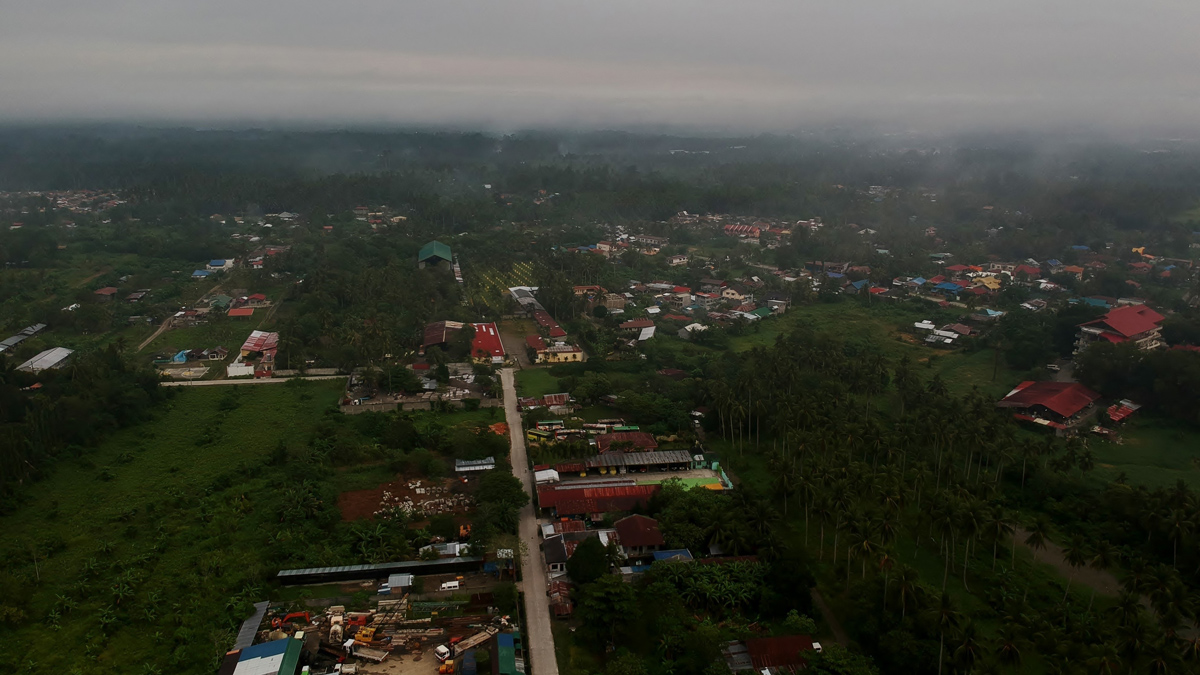
Challenge
Tagum City in the Philippines faces flood risk and urban heat stress as heavy rainfall, flat terrain, and low tree cover strain drainage and raise temperatures.
Solution
Tagum is redesigning public spaces with water retention areas and green infrastructure to reduce flooding and urban heat stress.
Overview
Tagum is an inland city in the Davao region of the Philippines, covering 195.8 square kilometers and characterized by predominantly flat terrain. Two major rivers, the Hijo to the west and the Tagum-Liboganon to the east, shape drainage patterns and flood exposure. With a population of 296,202 as of 2020, Tagum has an economy linked to agriculture and commerce.
Recurring flooding and rising urban heat are central adaptation challenges. Flat terrain, river overflow during heavy rainfall, and reduced vegetation cover in built-up areas increase exposure, and climate projections indicate slightly higher rainfall during the amihan season (the October/November to March/April Northeast Monsoon typically characterized by cool, dry air) by 2050 and a temperature increase of 1.1–2.3°C between 2036 and 2065 (UN-Habitat, 2022).
Tagum is responding through city planning frameworks and site-level public space interventions, including Tagumpay Citywalk.
Adaptation approach
Tagum implements its Local Climate Change Action Plan (LCCAP) and the Tagum City Adaptation Strategy, developed with UN-Habitat under the Building Climate Resiliency through Urban Plans and Design initiative, to guide adaptation measures in urban planning and public space design. These planning instruments incorporate nature-based solutions (NbS) to address flooding and urban heat.
The approach emphasizes blue-green networks, particularly waterways and vegetated public spaces, to support flood prevention and urban cooling. The plans also look to expand tree cover and permeable surfaces in public areas as part of climate-informed land-use planning and urban infrastructure.
Tagumpay Citywalk interventions
Tagumpay Citywalk applies integrated urban design to address flood management and urban heat in everyday urban areas. The interventions focus on parks, creek-side settlements, and the commercial district.
Garciaville Park and Magugpo Creek Park are being transformed into water retention areas, functional open spaces, and emergency facilities during disasters. These spaces are intended to temporarily store excess water during heavy rainfall while also providing cooling functions.
Informal settlements along Magugpo Creek will be upgraded, and the design includes additional space for small businesses and socioeconomic activities. These upgrades are expected to directly benefit 739 informal settler families, improving their living conditions and resilience against extreme weather events.
The Commercial Business District will be redeveloped to include green roofs, urban gardens, permeable ground, and pedestrian-centric streets. These measures are linked to reducing the urban heat island effect, and around 3,300 ambulant vendors are expected to benefit through improved trading spaces.
There are also plans to develop the Provincial Environment and Natural Resources Office (PENRO) area into a water retention basin and urban forest area to support flood management.
Supporting climate resilience
These measures illustrate how Tagum integrates climate change adaptation into planning and public space design. Flood risk is addressed through water retention and runoff management, while urban heat stress is reduced through greening and cooling measures. The approach links climate risk reduction with everyday urban use in parks, creek-side areas, and commercial corridors.
Acknowledgements
This report draws from work by the City Government of Tagum and UN-Habitat, including the Building Climate Resiliency through Urban Plans and Design initiative, detailed in “Path to Climate Resiliency: Case Studies of Cities in the Philippines” (UN-Habitat, 2022) and “Case Study on the Path to Climate Resiliency – Tagum City” (International Climate Initiative). Acknowledgement is given to the original authors. Reported by IGES, edited and updated by AP-PLAT.
Related Information
UN-Habitat, 2022: Path to Climate Resiliency: Case Studies of Cities in Philippines
https://unhabitat.org/path-to-climate-resiliency-case-studies-of-cities-in-the-philippines
Case Study on the Path to Climate Resiliency – Tagum City
https://www.international-climate-initiative.com/en/iki-media/publication/case-study-on-the-path-to-climate-resiliency-tagum-city/
Philippine Statistics Authority: 2015 Philippine Statistical Yearbook
https://psa.gov.ph/system/files/psy/2015%20PSY%20PDF_0.pdf.
 DISCOVER MORE

