 Asia - Philippines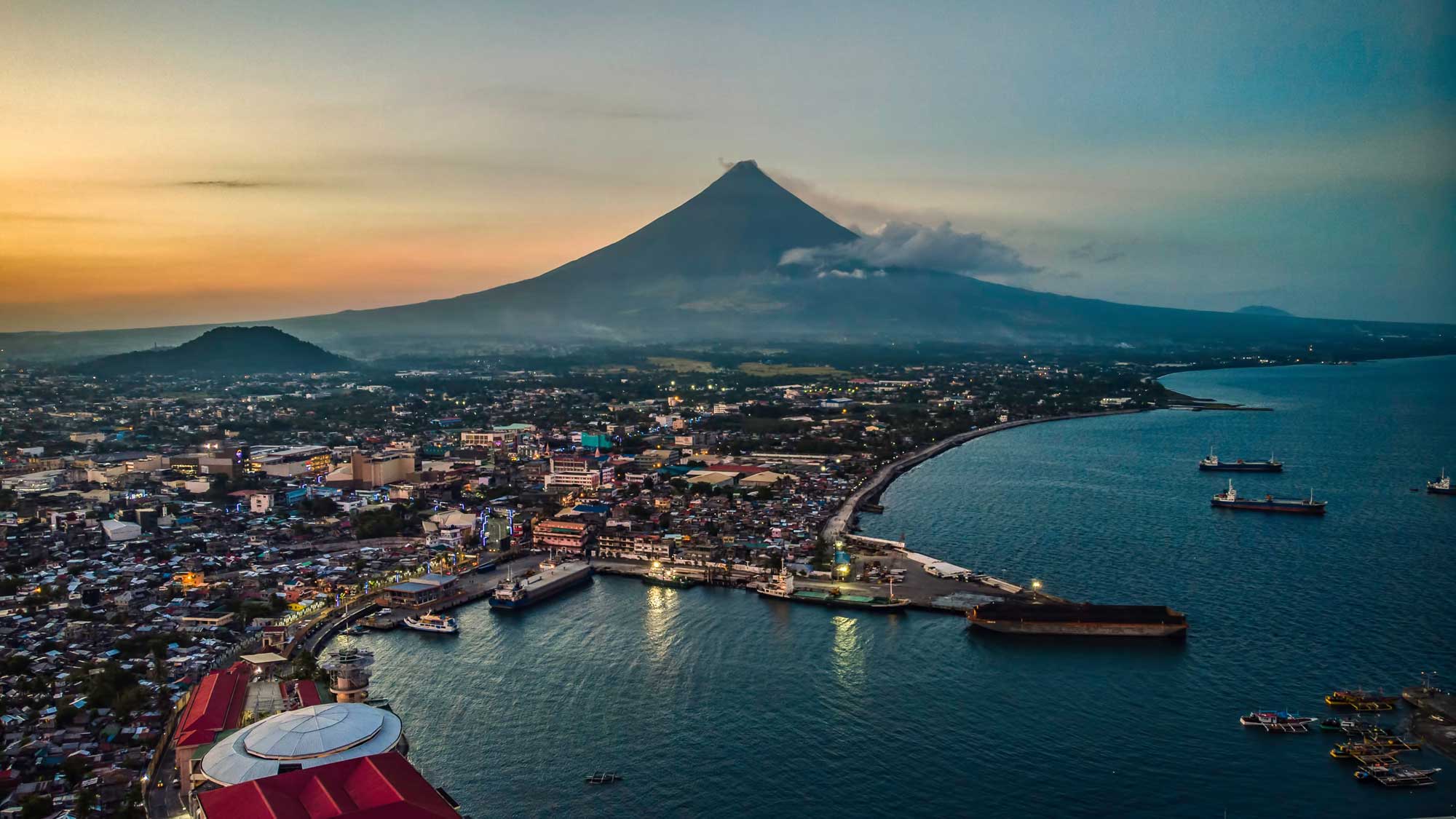
Challenge
Legazpi, Philippines faces typhoons, floods, storm surges, lahar flows, and sea-level rise, with 79 hectares of urban land threatened by 2100.
Solution
Climate-responsive streetscape design uses greenbelts and parks as natural buffers against floods and storms while reducing urban heat stress.
Overview
Legazpi City (population 209,533 as of 2020) is located on the eastern seaboard of Luzon, Philippines, within the Pacific typhoon belt and near Mayon Volcano. The city faces frequent typhoons, floods, storm surges, and volcanic activity, and a projected sea-level rise of 1.1 m by 2100 threatens 79 hectares of urban land, mostly commercial and residential zones (UN-Habitat, 2022). Extreme rainfall events are expected to trigger disastrous flooding, while lahar (violent mud or debris) flows from Mayon Volcano, particularly after heavy rains, pose a threat to communities and infrastructure in low-lying areas.
The Building Climate Resiliency through Urban Plans and Designs (BCRUPD) project, developed in partnership with UN-Habitat, is a pivotal initiative in Legazpi’s climate adaptation efforts, alongside building resilient infrastructure, climate-resilient farming, and rainwater harvesting. The project focuses on improving the local communities’ and city government’s understanding of climate risks and on strengthening urban design for long-term resilience. The Climate-Resilient Urban Streetscape (CRUS) pilot demonstration project, a major outcome of BCRUPD, addresses both urban heat stress and flooding.
Climate risks
The Philippine Atmospheric, Geophysical and Astronomical Services Administration (PAGASA) projects that temperatures in Legazpi could rise by as much as 3.9°C by the end of the 21st century, with June, July, and August being the hottest months (DOST-PAGASA, 2021). This has a direct impact on the city’s energy consumption, as more households and businesses rely on air conditioning, leading to higher greenhouse gas (GHG) emissions (UN-Habitat, 2022).
The CRUS project
The CRUS project introduces a shift in the city’s approach to climate adaptation. Rather than relying solely on infrastructure-heavy solutions, it promotes nature-based and integrated solutions, which are more economical and sustainable over the long term. Instead of building concrete flood barriers, the city is expanding greenbelts and parks to serve as natural buffers against storm surges and floods. This approach reduces the immediate risks of flooding and helps cool the urban environment and lower GHG emissions.
The CRUS project has also involved consultations with local stakeholders, including the Department of Human Settlements and Urban Development (DHSUD), United Architects of the Philippines, and local business owners. This participatory approach has helped ensure that the project is technically feasible, socially acceptable, and aligned with the city’s long-term development goals.
Institutional integration
The BCRUPD project has also provided technical training for city personnel, enabling them to better understand climate science and urban design principles. As a result, Legazpi has incorporated climate-resilient urban design into its Comprehensive Land Use Plan (CLUP) and Zoning Ordinance, with specific regulations to reduce heat stress, manage floods, and encourage non-motorized transportation. The city has also committed to reducing GHG emissions by 61% by 2028.
Acknowledgements
This report draws from the work of the City Government of Legazpi and UN-Habitat Philippines in the study “Building Climate Resiliency through Urban Plans and Designs Project.” Reported by IGES, edited and updated by AP-PLAT.
Related Information
- Case Study on the Path to Climate Resiliency – Legazpi
https://www.international-climate-initiative.com/en/iki-media/publication/case-study-on-the-path-to-climate-resiliency-legazpi-city/ - [UN-Habitat]. 2022. Path to Climate Resiliency: Case Studies of Cities in the Philippines. https://unhabitat.org/path-to-climate-resiliency-case-studies-of-cities-in-the-philippines
- DOST-PAGASA, Manila Observatory and Ateneo de Manila University, 2021. Philippine Climate Extremes Report 2020: Observed and Projected Climate Extremes in the Philippines to Support Informed Decisions on Climate Change Adaptation and Risk Management. Philippine Atmospheric, Geophysical and Astronomical Services Administration, Quezon City, Philippines.
 DISCOVER MORE

