 Asia - Philippines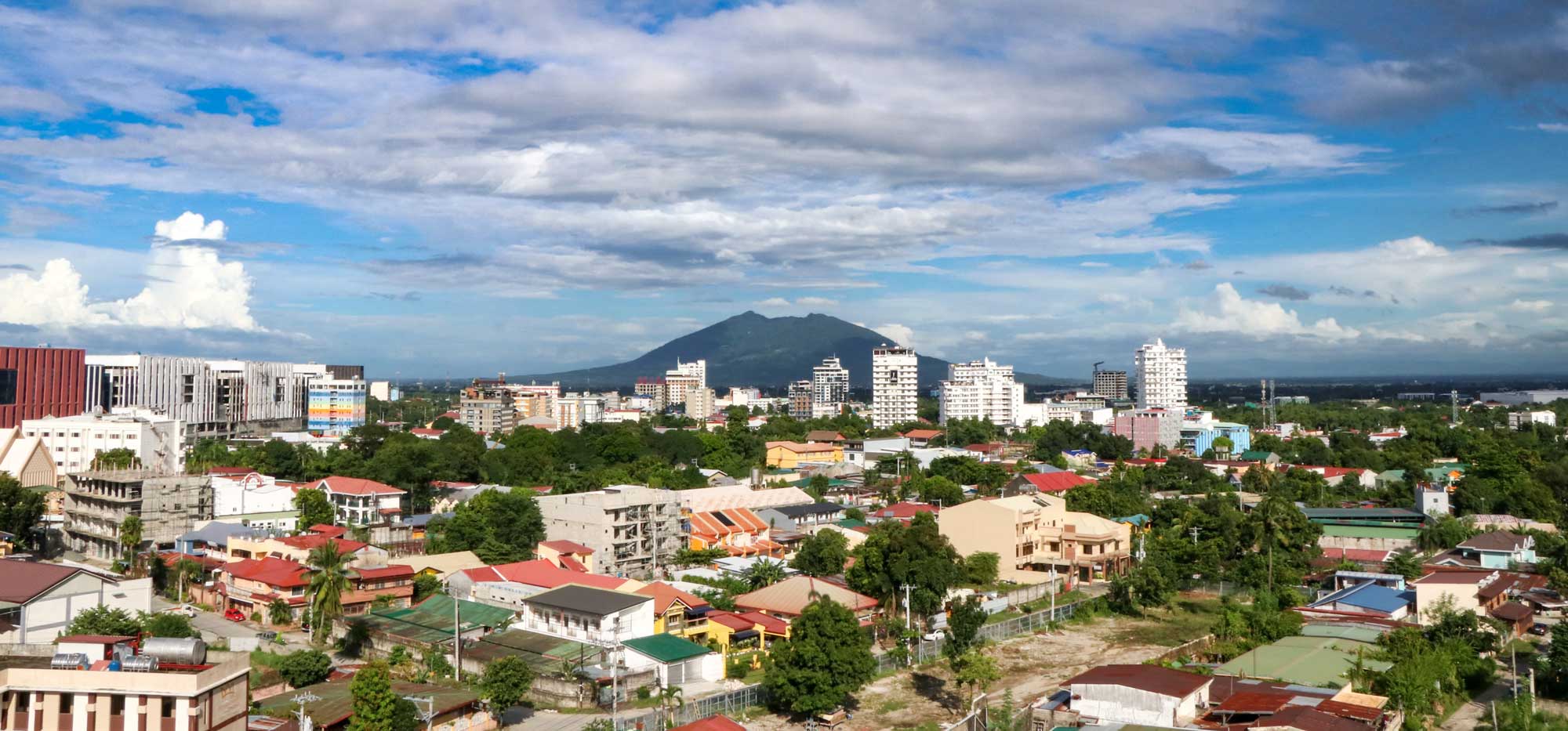
Challenge
Angeles City, Philippines, faces higher temperatures, less rainfall, and groundwater stress, threatening water supply and endangering residents.
Solution
The Aquipark integrates water collection, groundwater recharge, urban cooling, and public green space along the Abacan River in Angeles.
Overview
Angeles City, an urbanized region in Central Luzon, Philippines, serves as a regional economic hub with a population of more than 500,000 that doubles during the day. Rapid development since the 1990s has led to substantial land conversion, with nearly 415 hectares repurposed for developments between 2010 and 2020. This expansion exacerbated climate-related issues, including urban heat and water stress.
Projections indicated that groundwater recharge would fail to meet demand by 2025 (NWRB and JICA, 2008). To address these threats, the city is implementing the Mákayámang Ángeles strategy and the Aquipark pilot project, which uses green and blue infrastructure to secure water and cool the urban environment.
Climate vulnerabilities and projections
The city now experiences hotter and drier conditions than in previous decades, and climate models suggest this trend will worsen. Projections by the Philippine Atmospheric, Geophysical, and Astronomical Services Administration (PAGASA, 2022) under a high-emissions scenario (RCP 8.5) indicate the region may see temperature increases of 1.6–3.9°C by the mid- to end-century. Rainfall during the wet season is expected to decrease by as much as 28% by 2100, which will intensify water scarcity. These changes threaten domestic water supplies and leave 45% of the population vulnerable to extreme heat, particularly in densely populated barangays (the smallest administrative units in the Philippines), such as Malabanias, Balibago, and Santa Teresita.
The Aquipark pilot project
The Aquipark is a water-focused public space situated along a 2.4-km section of the Abacan River and a 1.4-km tributary. The project, covering approximately 40 hectares in the Sapangbato and Margot barangays integrates water resource management, urban cooling, and community recreation into a single design.
This pilot demonstration project is a central measure of the Mákayámang Ángeles climate adaptation strategy (Angeles City Draft Hydrological Report 2020, UN-Habitat 2022). It functions as a model for how urban planning can use nature-based solutions to address environmental stress caused by land conversion (Henson, 1948) and climate change.
Water management and urban cooling
A network of ponds, low dams, and waterways allows the Aquipark to collect, filter, and store surface water for agricultural irrigation and groundwater recharge. The facility can accommodate approximately 80,000 cubic meters of water at a depth of 2 m. These ponds are expected to hold an average of 38,400 liters annually to supplement the city’s supply during dry seasons. To mitigate the urban heat island effect, the park uses trees, vegetation, and water bodies. Shading from tree canopies and evapotranspiration lowers temperatures in surrounding areas by an estimated 1–5°C (UN-Habitat, 2022).
Resilience and future implementation
The Aquipark serves as a multi-use hub that supports social and economic resilience through community spaces. A main walkway and bikeway connect different sections, while spaces for weekend markets, amphitheaters, and farming activities provide livelihood opportunities. While the city secured initial financing through the Green Green Green Program, scaling the intervention across the Abacan River requires more resources.
Sustained collaboration between government agencies, private sector stakeholders, and the local community is essential for the long-term success of the Mákayámang Ángeles strategy.
Acknowledgements
This report draws from the work of the Angeles City Planning and Development Office, supported by UN-Habitat Philippines and the Climate Change Commission. The research was funded by the Building Climate Resiliency through Urban Plans and Design (BCRUPD) program of UN-Habitat. Reported by IGES, edited and updated by AP-PLAT.
Related Information
- Path to Climate Resiliency: Case Studies of Cities in Philippines (https://unhabitat.org/path-to-climate-resiliency-case-studies-of-cities-in-the-philippines).
- Case Study on the Path to Climate Resiliency – Angeles City (https://www.international-climate-initiative.com/en/iki-media/publication/case-study-on-the-path-to-climate-resiliency-angeles-city/).
- Henson, Mariano. (1948). A brief history of the town of Angeles : in the province of Pampanga Philippines / by Mariano Henson. Pampanga : Henson
- [UN-Habitat]. 2022. Path to Climate Resiliency: Case Studies of Cities in the Philippines. https://unhabitat.org/path-to-climate-resiliency-case-studies-of-cities-in-the-philippines
 DISCOVER MORE

