 Asia - Thailand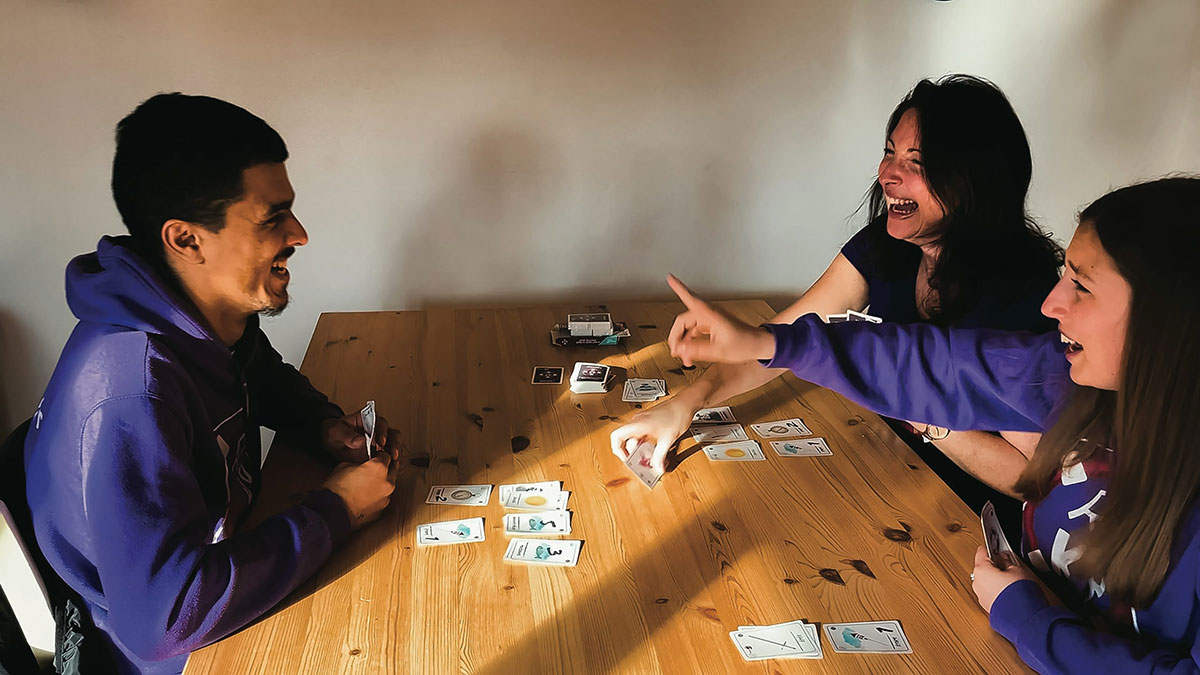
Challenge
Low-income communities in Thailand face climate risks such as flooding and drought but lack the resources or knowledge to respond effectively.
Solution
The Kin Dee You Dee toolkit uses serious games to engage communities in identifying risks, raising awareness, and developing strategic plans.
Overview
Community-level resilience has become a central concern in sustainable development (Dale et al., 2010). Low-income communities in Thailand’s Bangkok Metropolitan Region (BMR) and Udon Thani Province face flooding, drought, and other climate-related risks, yet they often lack the resources or knowledge to respond effectively. Traditional methods of engagement and education can be ineffective and fail to capture interest, which makes it difficult to mobilize communities and promote proactive resilience strategies.
Serious games have been recognized as effective tools for engagement, learning, and strategic thinking (Jabbar & Felicia, 2015). The Kin Dee You Dee (Thai for “eat well, live well”) toolkit is a set of board-based so-called serious games developed for low-income communities in Thailand as part of the PEACE-BMR research project, in collaboration with community architect collective OpenSpace. A 2021 study, “Examining the Use of Serious Games for Enhancing Community Resilience to Climate Risks in Thailand“ (Marome et al., 2021), examined the toolkit’s design, use, and effectiveness.
How the toolkit works
The toolkit comprises three stages of interrelated games designed for facilitated workshops of at least three hours.
The first stage introduces concepts such as community assets, risk, resilience, and climate change through vocabulary-matching and card-based activities. The second stage asks participants to map their community’s individual and collective assets onto a satellite map, then respond to random event cards showing crises such as flooding, energy shortages, and economic disruptions. The third stage requires participants to produce a strategic plan based on those assets and risks, using a crisis planning diagram.
The board game format was chosen so the toolkit could be transported and used in places without electricity or Internet access.
Application in Bangkok and Udon Thani
The final version of the toolkit was used at a workshop in 2019 with members of three low-income BMR communities affected by the 2011 floods: Sirin and Friends (Bang Chak District, Bangkok), Roi Krong (Bang Kaen District, Bangkok), and Sangsan Nakhon Rangsit (Rangsit District, Pathum Thani Province).
Each gaming circle was led by a trained facilitator and joined by a representative from the Bangkok Metropolitan Administration and a community architect from the Community Organization Development Institute (CODI). All three groups produced a strategic plan for their community by the end of the session.
The toolkit was used again in Amphoe Mueang Udon Thani, a growing urban area in northeastern Thailand that faces flooding, drought, and water-management challenges. Participants were mostly members of four local communities, joined by public and private sector representatives. All four communities produced strategic plans during the workshop, including actions such as waste sorting and creating shared public spaces.
Participant response
Participants responded positively to the approach. Many said the games were more enjoyable than conventional workshops or meetings and that the format introduced them to new concepts such as community assets, risk, and resilience.
The study also identified areas for improvement. Some participants found the games hard to understand in the early stages, before they became familiar with the terminology and concepts being introduced. Others tended to defer to more outspoken community leaders, which may have limited the inclusivity of discussions. These observations point to the need for skilled facilitation to ensure all voices are heard and the learning process remains accessible to everyone. Despite these challenges, the study found that the toolkit was “somewhat effective” in raising awareness about climate risk resilience, and the majority of participants became more expressive over the course of the games.
Outcomes and applicability
The strategic plans produced during game sessions gave communities a concrete set of strategies they can implement to protect against future risks. The toolkit’s flexible design also allows it to be adapted to different contexts and communities, supporting broader use across Thailand. CODI has received the toolkit and training on facilitation, and the Udon Thani municipal authority expressed interest in using it for their own planning activities.
Acknowledgements
This report draws from “Examining the Use of Serious Games for Enhancing Community Resilience to Climate Risks in Thailand,” by Wijitbusaba Marome, Boonanan Natakun, and Diane Archer, published in Sustainability (2021). Acknowledgement is given to the authors and the Urban Futures & Policy Lab, Faculty of Architecture and Planning, Thammasat University. The research was funded by Newton Institutional Links (IL) grants, Thailand Science Research and Innovation (TSRI), and German International Cooperation (GIZ). Reported by IGES, edited and updated by AP-PLAT.
Related Information
- Marome, W., Natakun, B., & Archer, D. (2021). Examining the use of serious games for enhancing community resilience to climate risks in Thailand. Sustainability, 13(8), 4420. https://doi.org/10.3390/su13084420.
- Dale, A., Ling, C., & Newman, L. (2010). Community Vitality: The Role of Community-Level Resilience Adaptation and Innovation in Sustainable Development. Sustainability, 2(1), 215–231. https://doi.org/10.3390/su2010215.
- Jabbar, A. I. A., & Felicia, P. (2015). Gameplay Engagement and Learning in Game-Based Learning. Review of Educational Research, 85(4), 740–779. https://doi.org/10.3102/0034654315577210.
 DISCOVER MORE

