 Asia - Pakistan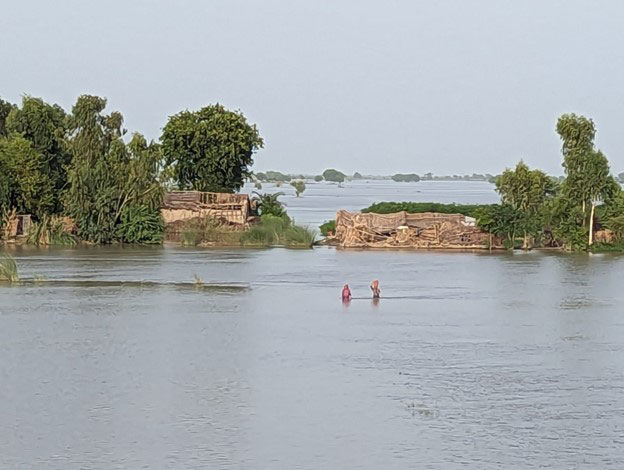
Challenge
Farmers in South Punjab, Pakistan, face floods, droughts, and pest outbreaks that threaten crops and livelihoods.
Solution
Researchers documented household adaptation strategies including flood-resistant crops, diversification, and pest management.
Overview
South Punjab, Pakistan, is heavily dependent on agriculture, with a majority of the population engaged in farming. The region’s geography and climatic conditions, characterized by intense seasonal variations, make it susceptible to floods, droughts, and pest and disease outbreaks. These challenges have increasingly threatened farming livelihoods, exacerbating poverty and food insecurity. Recent extreme weather events, including the catastrophic floods in 2022, highlighted the urgent need for effective adaptation measures.
Aqib et al. (2023) assessed the adaptive capacity of farming households in flood-prone areas of South Punjab through a household survey. The study documented how farmers cope with climate-related challenges, though their adaptive capacity remains constrained by socio-economic and environmental factors. These communities’ resilience is further compromised by inadequate infrastructure, limited access to resources, and insufficient institutional support.
Climate-related challenges
Three primary climate-related challenges pose severe risks to farming communities in South Punjab: flooding, drought, and pest and disease outbreaks (Aqib et al., 2023). Flooding is a frequent and devastating occurrence, often resulting in crop losses, soil erosion, and damage to infrastructure. Drought affects water availability, leading to reduced agricultural productivity and heightened food insecurity. Pest and disease outbreaks have become more prevalent, driven by changing climate conditions that create favorable environments for pests and diseases, threatening crop yields and livestock health.
These challenges are interconnected, with the impact of one often compounding the effects of another. Floods can lead to the spread of pests and diseases, while drought can weaken crops, making them more susceptible to infestations. These climate-related challenges threaten the livelihoods of millions and undermine regional food security. The cumulative impact underscores the need for comprehensive and context-specific adaptation strategies that can address the unique vulnerabilities of South Punjab’s farming households.
Adaptation strategies for flooding
Farming households employ several strategies for mitigating flood impacts. Elevating plinths – raising the foundations of homes and storage facilities – helps prevent floodwaters from entering and protects household assets and stored produce (Aftab et al., 2021). Farmers have also invested in improved grain storage techniques, including airtight containers and elevated storage platforms, to safeguard food supplies from water damage.
Flood-resistant crop varieties, bred to withstand temporary waterlogging, allow farmers to salvage part of their harvest even after flood events (Qazlbash et al., 2020). Irrigation systems that divert excess water away from fields also help reduce crop losses.
Adaptation strategies for drought
Farmers adjust planting dates to align sowing and harvesting with water availability and favorable weather conditions, maximizing water use efficiency and reducing the risk of crop failure due to insufficient rainfall. Crop diversification spreads the risk associated with water scarcity, as some crops may be more drought-resistant than others. Advanced irrigation techniques such as drip irrigation help conserve water and maintain crop health during prolonged dry spells.
Adaptation strategies for pest and disease outbreaks
Integrated Pest Management (IPM) combines biological, cultural, and chemical methods to control pest populations while minimizing environmental impacts. This includes introducing natural predators and using targeted chemical treatments (Aqib et al., 2023). Disease-resistant crop varieties, bred to resist common pests and diseases, reduce the need for chemical interventions and lower the risk of crop loss. Monitoring and early warning systems for pest and disease outbreaks allow farmers to take timely action to protect their crops and livestock.
While these strategies offer hope for improving resilience, the adaptive capacity of farming communities remains limited. Continued investment in sustainable practices, capacity building, and infrastructure development is needed to help South Punjab farming households cope with the continually increasing challenges posed by climate change.
Acknowledgements
This report draws from research by Sohaib Aqib, Mehdi Seraj, Huseyin Ozdeser, Sidra Khalid, Muhammad Haseeb Raza, and Taimoor Ahmad, as presented in the study, “Assessing adaptive capacity of climate-vulnerable farming communities in flood-prone areas: Insights from a household survey in South Punjab, Pakistan.” Reported by IGES, edited and updated by AP-PLAT.
Related Information
- Aqib, S., Seraj, M., Ozdeser, H., Khalid, S., Raza, M. H., & Ahmad, T. (2023). Assessing adaptive capacity of climate-vulnerable farming communities in flood-prone areas: Insights from a household survey in South Punjab, Pakistan. Climate Services, 33, 100444. https://doi.org/10.1016/j.cliser.2023.100444.
- Aftab, A., Ahmed, A., & Scarpa, R. (2021). Farm households’ perception of weather change and flood adaptations in northern Pakistan. Ecological Economics, 182, 106882. https://doi.org/10.1016/j.ecolecon.2020.106882
- Qazlbash, S. K., Zubair, M., Manzoor, S. A., Haq, A. U., & Baloch, M. S. (2020). Socioeconomic determinants of climate change adaptations in the flood-prone rural community of Indus Basin, Pakistan. Environmental Development, 37, 100603. https://doi.org/10.1016/j.envdev.2020.100603.
 DISCOVER MORE

