 Asia - Indonesia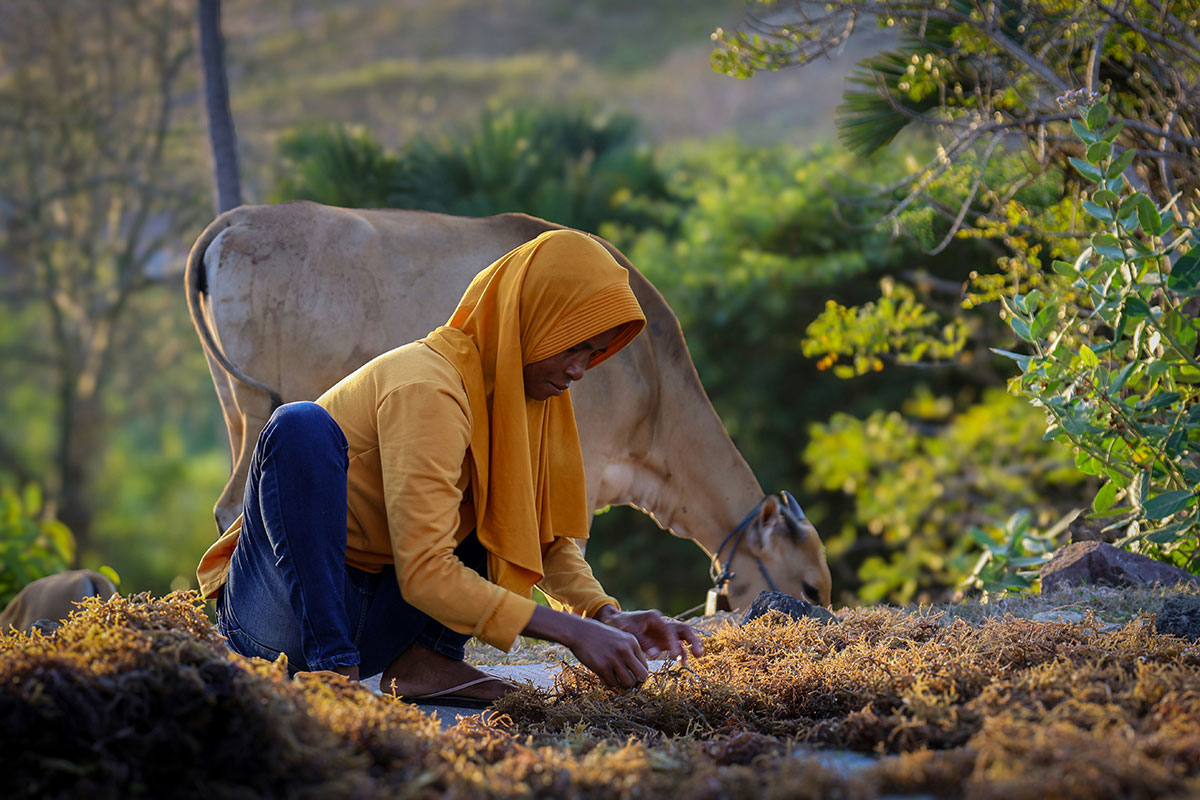
Challenge
Women and girls on Lombok Island, Indonesia, face disproportionate climate impacts, yet gender and climate policies remain disconnected.
Solution
Islamic Relief and partners identified gender-specific climate vulnerabilities and recommended integrating gender into adaptation policy.
Overview
Climate change threatens agriculture, water resources, and health on Lombok Island in West Nusa Tenggara (NTB), Indonesia. A project by Islamic Relief, KONSEPSI (Consortiums for Study and Development of Participation), and IPB University identified how these threats affected women and girls differently and highlighted gaps in current policy frameworks.
Climate threats to livelihoods and health
The project identified three main climate-related threats. First, agriculture faces heightened risks, particularly rice cultivation in rain-fed paddy fields. Extreme weather events – strong winds, heavy rainfall, and drought – threaten harvests, with crop failure affecting the social and economic vulnerability of farming families.
Second, water availability is under pressure. Communities on Lombok rely on rainwater, surface water, and groundwater. Rising temperatures and changing rainfall patterns are drying up springs and reservoirs, increasing both flood and drought risks. Women and girls in rural areas, who are often responsible for collecting water, may have to travel farther through difficult terrain as resources diminish.
Third, health risks are growing. High temperatures and moderate humidity in NTB intensify the spread of diarrhea and vector-borne diseases such as dengue and malaria. Droughts and floods worsen water quality. Rising temperatures accelerate mosquito metabolism, leading to quicker maturation, shorter lifecycles, and more frequent breeding.
Disproportionate impacts on women and girls
Climate change compounds existing gender inequalities. Harvest failures make it harder for women to maintain their roles as primary nutrition providers and can lead to job losses in agriculture. Water shortages reduce access to safe drinking water and sanitation, posing particular risks for pregnant women.
Women respondents in the project reported financial, physical, and psychological challenges. Over half of the women surveyed reported reduced incomes, with 41% experiencing difficulty meeting their needs. Women also reported increased fatigue, illness, and decreased immunity. Nearly all unmarried women surveyed described psychological impacts including anxiety, insecurity, and mood disturbances linked to unpredictable weather.
Children, especially girls, also experience heightened vulnerability. Some have missed school because of disasters and extreme weather, and some have had to work to support their families after disaster events.
Policy gaps and recommendations
Indonesia requires all government agencies to mainstream gender into policies and programs under Presidential Instruction No. 9/2000. On Lombok, regional organizations have working groups to manage gender inclusion, and the Regional Action Plan for Climate Change Adaptation (RAD-API) acknowledges that climate change disproportionately affects women.
However, policy frameworks for climate change and gender mainstreaming often function as separate systems. Data collection is limited – agencies disaggregate data by sex for some socio-economic factors but lack information on gender-specific climate impacts, children’s rights, and how adaptation measures affect women differently.
The project recommended that the national government adopt a climate change financing framework that integrates gender mainstreaming into annual planning and budgeting. It also suggested that national and local governments recognize participatory tools alongside scientific data for assessing climate vulnerability, helping to formulate more effective adaptation policies at national and sub-national levels.
Acknowledgements
This report draws from work by Islamic Relief, KONSEPSI (Consortiums for Study and Development of Participation), and IPB University, detailed in the report “Gender-based Approach to Climate Change Adaptation.” Acknowledgement is given to the original authors. Reported by IGES, edited and updated by AP-PLAT.
Related Information
- Islamic Relief. 2022. Gender-based Approach to Climate Change Adaptation, A Research Paper from Lombok, West Nusa Tenggara, Indonesia. Birmingham (UK): Islamic Relief Worldwide. https://islamic-relief.org/publications/gender-based-approach-to-climate-change-adaptation/
- Islamic Relief Indonesia. 2022. Laporan Tahun 2022. Islamic Relief Indonesia. https://islamic-relief.or.id/wp-content/uploads/2024/05/FINAL_Islamic-Relief-Indonesia-Laporan-Tahun-2022.pdf.
 DISCOVER MORE

