 Asia - Japan
| Date of interview | July 1, 2025 |
|---|---|
| Interviewees | ・Shinji Kubota, Corporate Executive Officer (Football) & Football Division Manager, Japan Professional Football League (J.LEAGUE) ・Tomoko Irie, General Manager, Sustainability Department, Japan Professional Football League (J.LEAGUE) |
Climate Change Is Impacting Even Professional Sports in Various Aspects
How has recent climate change impacted football games?
Kubota: There are many cases in which transportation is disrupted by sudden, intense rainfall accompanied by lightning. Even if it is raining in the Kanto region, a match may still be held if it is sunny in Kyushu, requiring the away team to travel regardless of local weather. Players usually travel the day before the match, but in such cases, we prompt them to travel to the area around the stadium two days in advance. Public transportation operators now decide on service cancellations earlier than before, so we take proactive measures while keeping updated.
When it comes to intense heat, players feel the same way as everyone else does. The hottest months used to be July and August, but now they also include June and September. High temperatures drain players’ stamina for running. Players prepare for the season and play at a high intensity during the first few months. Their performance then begins to wane around June, reaches its lowest point in July or August, gradually recovers around September, and their running intensity increases again toward the end of the season in November and December.
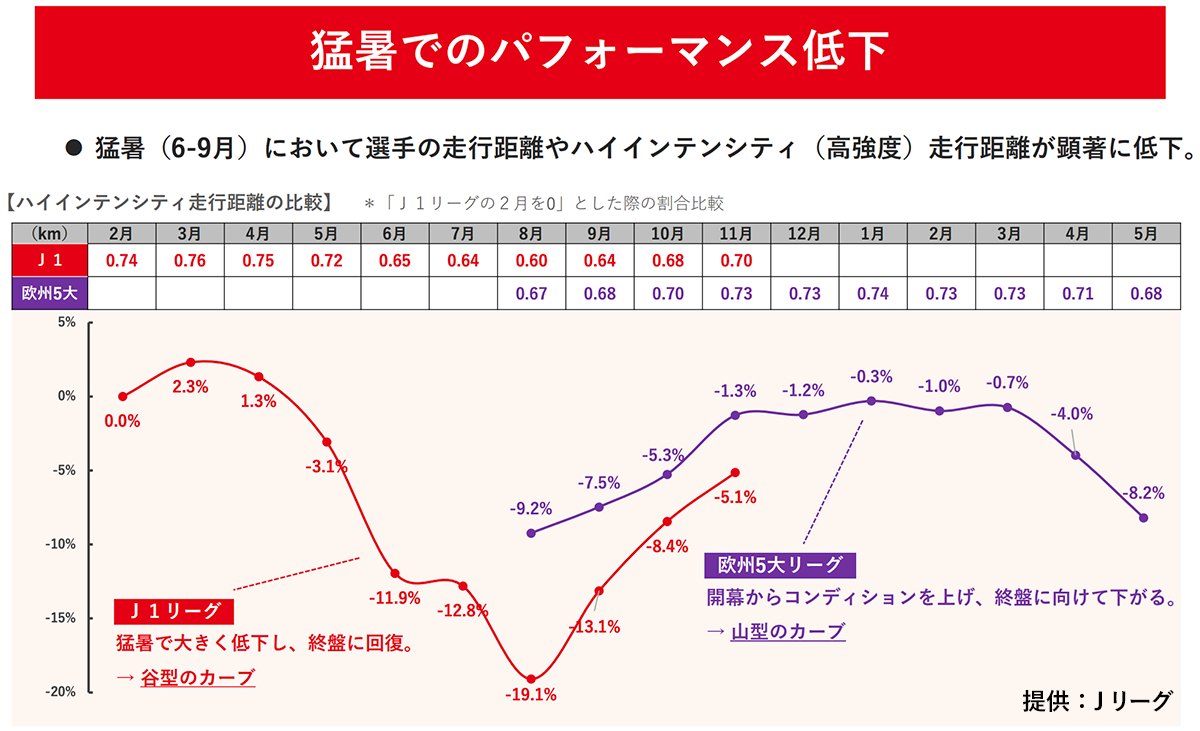
This is calculated based on players who played more than 60 minutes in each game.
-Source: SkillCorner. The big five European leagues: Data from the 2021–22 season, and average across the five major European leagues (England, Spain, Germany, Italy, and France). J1 league: Data from the 2022 season
For example, stadiums should ideally be equipped with lighting for night matches, air-conditioned locker rooms, a medical system, and concession stands. However, two years ago, in an environment without such facilities, a senior player lost consciousness under extreme heat during an official over-40s match and later died. In light of this incident, we have implemented summer heat countermeasures through an industry–wide effort, including scheduling matches to avoid July and August when it would be unsafe to play, or improving the playing environment for summer.
Could you provide more details about your summer heat countermeasures?
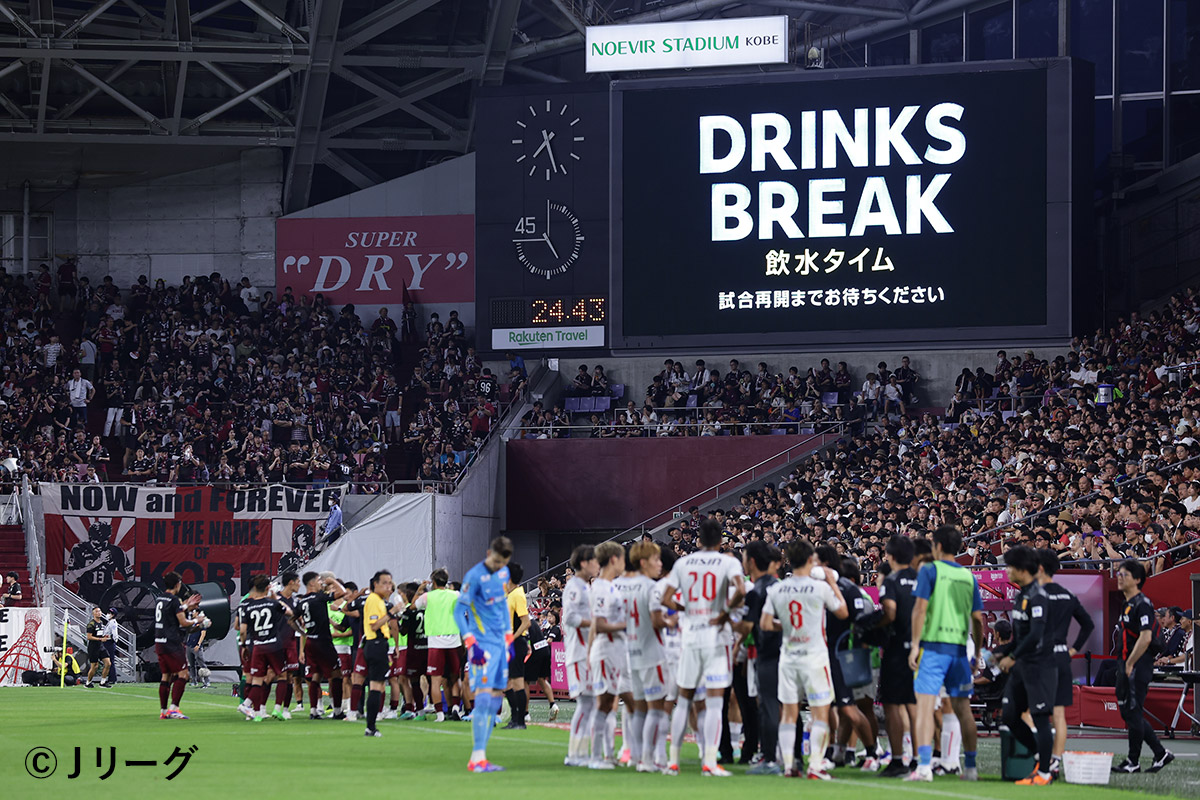
Kubota: We are taking some specific industry-wide approach to heat countermeasures. One of them is hydration breaks. A hydration break of about one minute is provided in each half of every match.
In addition, cooling breaks have been introduced for daytime matches. During these breaks, players can cool their bodies for three minutes at their benches using ice-cold towels or similar methods. Players are sometimes allowed to return to their air-conditioned locker rooms to take a break. However, this is subject to the predetermined rules, and we take appropriate action based on notifications from the Japan Football Association.
Do players adjust flexibly to matches with breaks?
Kubota: Yes. In addition to hydration breaks, water bottles can now be placed outside the pitch so that players can consume water whenever possible, when play is stopped, or during a player substitution.
Hydration breaks are also provided to referees. When a player is injured and requires a medical check, the team doctor gives water to the referees. This is based on the concept of creating a safe environment not only for players but for everyone involved in the match.
You have implemented various measures, including finer details.
Kubota: Right. There was a time when sports drinks were prohibited on the pitch because spilling them could damage the turf due to their high sugar content. However, recognizing the importance of heatstroke prevention, many stadiums now allow the consumption of sugar-containing beverages on the turf.
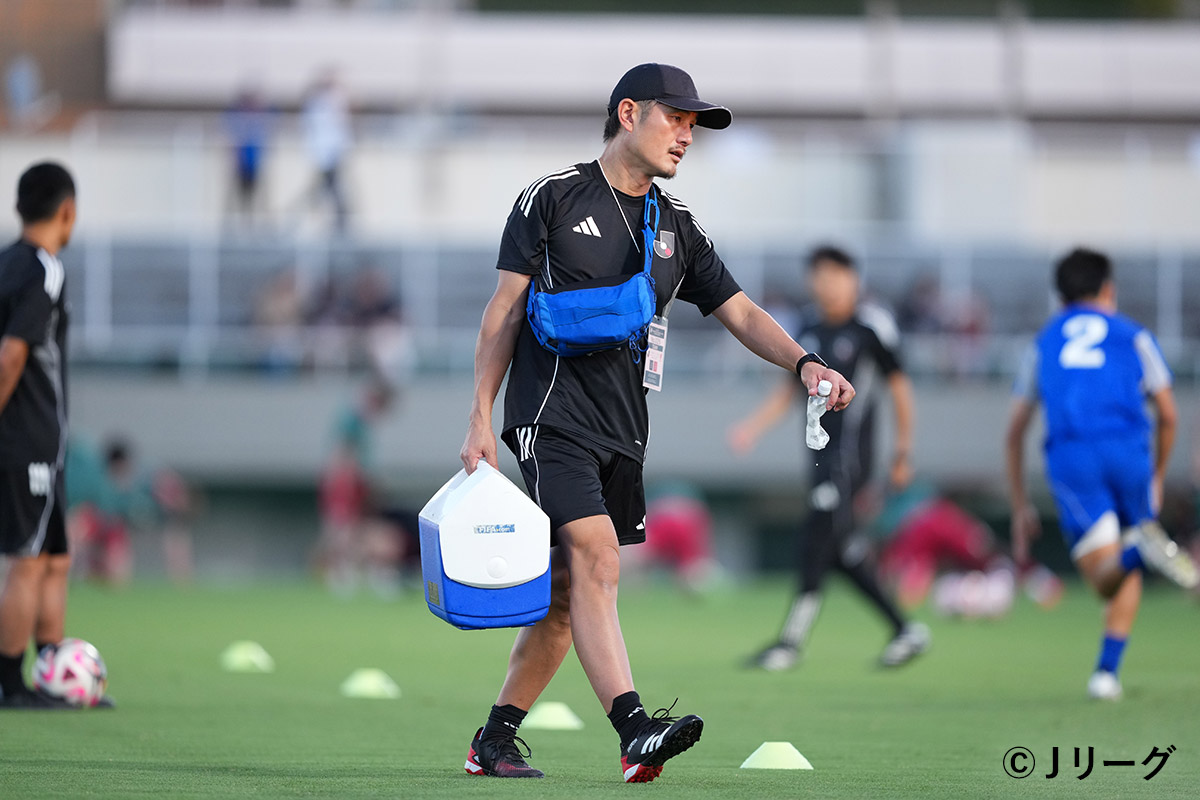
More specifically, tucking shirts into shorts used to be considered good manners, but now many players intentionally wear their shirts untucked. This allows air ventilation inside the shirt, helping to lower perceived temperature. Based on this premise, uniform designs have been changed so that players can move comfortably even with their shirts untucked.
Management staff, who used to wear suits, ties, and leather shoes, now also wear casual outfits, such as T-shirts or polo shirts and cool-style pants. They often wear clothing that is acceptable to the spectators, such as standardized team shirts.
Creating Opportunities for Many People to Engage with Sports throughout the Year
How do you ensure supporters’ safety and raise their awareness of heatstroke prevention?
Kubota: At most, 50,000 to 60,000 supporters gather at the venue. In particular, loyal fans arrive early to secure good seats to watch the match. We used to give priority in the seat lottery to enthusiastic people who could arrive as early as 7 a.m. However, the lottery is now held online. This allows us to issue numbered tickets online, which were previously distributed at 7 a.m., and to automatically select winners. This eliminated the need for supporters to wait in line for hours under the sun. Even when there is a line for numbered tickets, we make arrangements to keep it in the shade whenever possible.
Regarding the stadiums, we have made various efforts, including setting up rest areas in the stadium concourse, ensuring that cold beverages do not run out at food kiosks, installing water dispensers, providing crushed ice, and spraying mist at the entrances. At facilities without mist systems, staff walk around the stadium with equipment to spray water as a mist. This does not completely prevent heatstroke, but it should help encourage preventive behavior.
When general park-type stadiums are used for matches, there are many trees outside, so we allow supporters to re-enter the stadium so that they can wait in the shade until the match starts.
At venues with big screens, we play videos about heatstroke prevention and make frequent announcements encouraging supporters to drink water during the players’ drinks breaks.
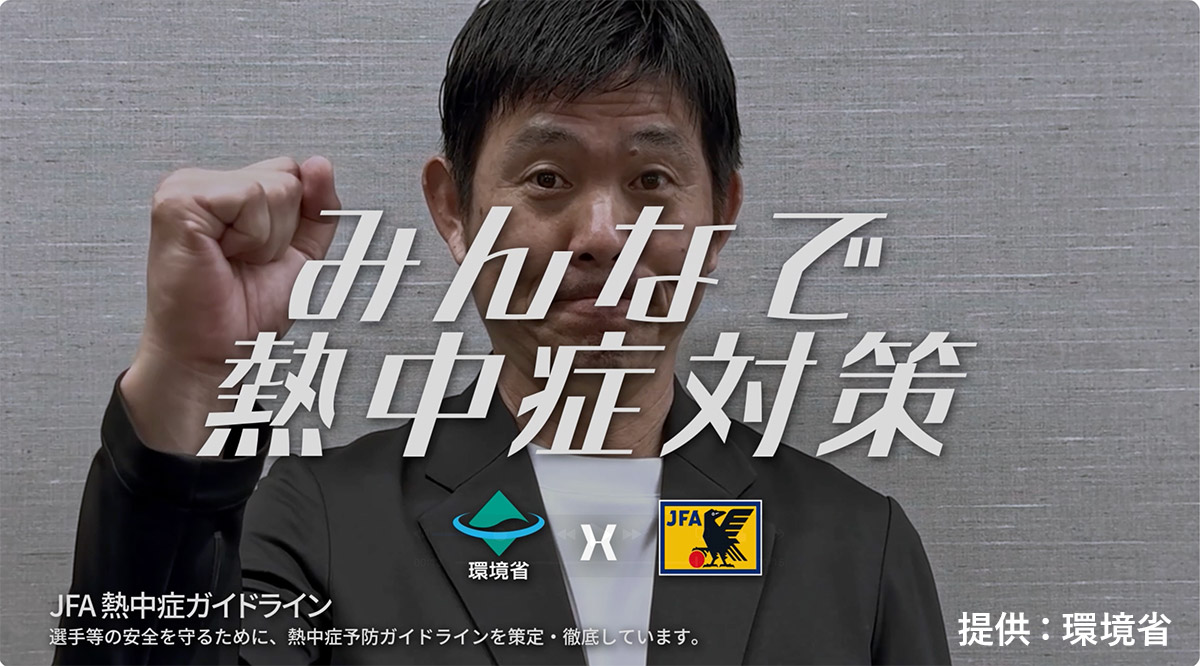
In cooperation with partners, club teams have also implemented various effective measures, such as distributing paper fans to all spectators and increasing the limit of bottled beverages each person is allowed to bring into the venue from the previous 500 ml or less—which was set to prevent bottles from being thrown onto the pitch—to 600 to 700 ml.
We were surprised to hear that you have implemented every possible measure, even down to small details.We understand that you are planning to change the of season’s schedule starting in 2026. This seems to be closely related to climate change. Could you tell us the details and the expected benefits?
Kubota: J.LEAGUE currently starts its season around the third week of February and ends in the first week of December. As I mentioned earlier, players’ performance tends to decline around June due to high temperatures, but it ideally should improve steadily from the start of the season toward the end. If their performance lowers during the season, I do not think that Japan is yet prepared to be globally competitive.
European leagues start their seasons in August, when the climate begins to become cooler, and end in early June. There is an off-season break from mid-June to July. Accordingly, we have decided to introduce a similar schedule for the 2026–27 season in Japan.
The pre-season period falls at the height of summer, so some teams may hold training camps in cooler locations. On the other hand, teams in cooler regions, such as Hokkaido and the Tohoku region, may not need to travel for training camps. Anyway, some municipalities have already stepped forward to host camps, viewing this change as an opportunity.
Even after changing the season’s schedule, matches are generally not held from mid-December to mid-February as a winter break.
You seem to have devised ways to keep teams across the country aligned.
Kubota: With the aim of providing opportunities for people to engage in sports throughout the year, we have adopted a philosophy of creating community-based sports clubs. This is not limited to football but extends to other sports as well, creating an environment where people can participate whenever they wish.
In the case of football, roofed facilities allow people to play even in the snow and to play comfortably at appropriate temperatures during the summer. Although this may not be easy to achieve, as it requires a significant amount of money and the cooperation of many people, we would like to focus on creating such an environment.
Mitigation Measures to Be Introduced by Clubs Across the Country toward 2030
Meanwhile, the J.League has also been working on environmental mitigation measures.
Irie: In 2023, we established the Sustainability Department, which consists of the Social Engagement Group – a successor to the social cooperation activities SHAREN! – and the Climate Action Group, which addresses climate change issues. In 2024, we introduced a three-step roadmap – awareness raising, behavioral change, and systemic change – to illustrate the path of climate action through sports.
With the theme “awareness raising” from 2024 to 2025, we conducted activities that help participants understand the relationship between football and climate change and be aware of their responsibility for the solution. These initiatives include producing the video “The Day When Football Is No Longer Played?!,” which highlights the climate change issues related to J.LEAGUE, and holding football clinics through the J.LEAGUE x Shinji Ono Smile Football Tour for a Sustainable Future, supported by Meiji Yasuda Life Insurance Company, to share information on climate change phenomena and the importance of climate actions.
We will work on “behavioral change” through 2027 so that it becomes common for people involved in football to choose an environmentally friendly option whenever multiple choices are available.
We then aim to achieve “systemic change” by 2030. Solutions to environmental issues tend to rely on individual efforts. Even in World Wide Views discussions, many responses from Japan indicate concerns that such efforts could threaten quality of life. For example, it is still not easy for people facing diverse challenges to actively choose environmentally friendly options. To live sustainably without relying solely on individual efforts, systemic change is required. We are working to expand initiatives that trigger this change across the 60 club hometowns.
What exactly have you done?
Irie: In 2024, we launched a J.LEAGUE regional renewable energy grant program to support the promotion of renewable energy in J.LEAGUE club hometowns. Through this program, several clubs have implemented a variety of initiatives together with their stakeholders.
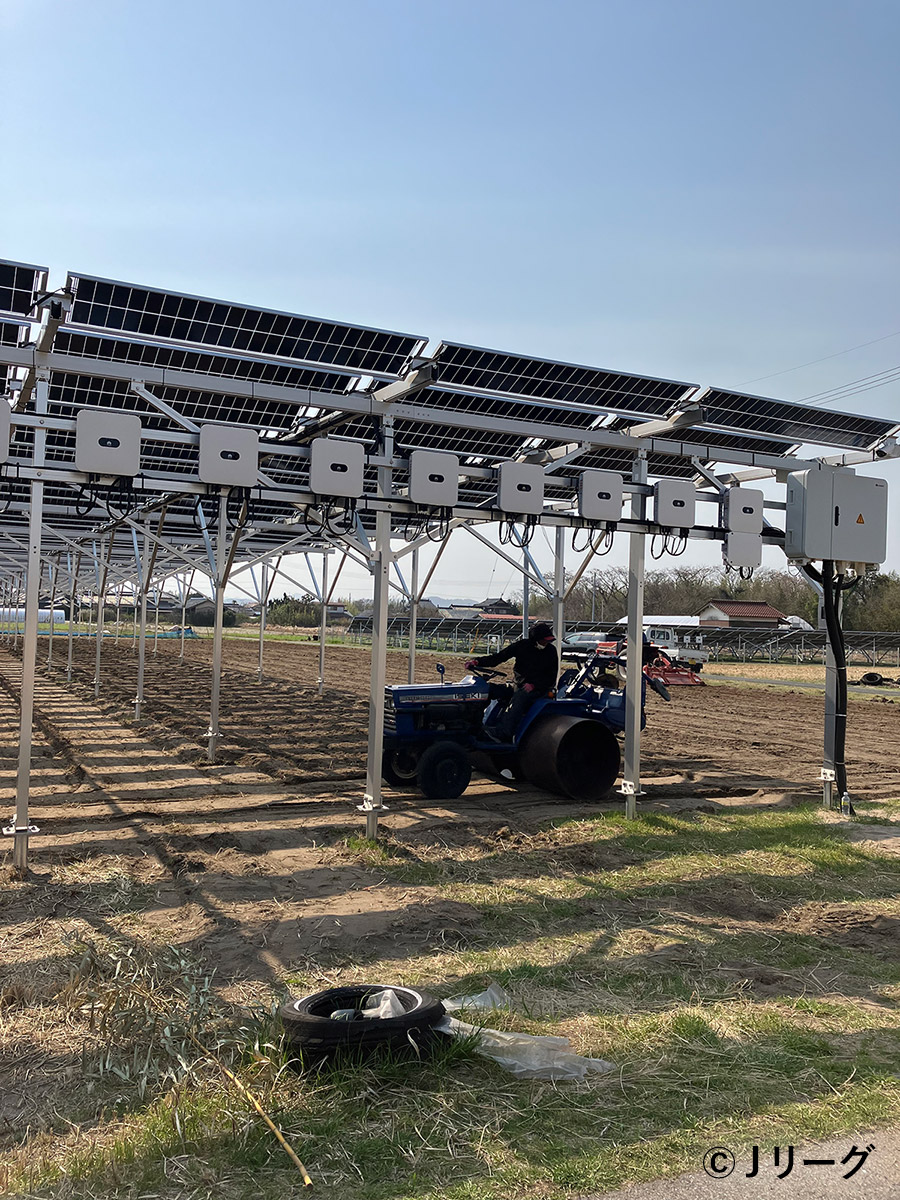
For example, Gainare Tottori is running a solar-sharing facility called the Shibafuru Solar Power Plant, where solar panels are installed on abandoned farmland while growing grass. This initiative contributes both to addressing the issue of abandoned farmland and to generating renewable energy for the local community.
Mito Hollyhock has also launched a solar-sharing project called the Grass Roots Farm Solar Power Plant, using abandoned farmland. By cultivating vegetables without using chemical substances while increasing regional renewable energy generation, the club aims to obtain an Organic JAS certification in the future and address the regional issue of a lack of successors, contributing more widely to the local community.
In 2026, J.LEAGUE will become the first Asian league to join the Sport Positive League (SPL), which involves four European football leagues (as of 2025), including the English Premier League. The SPL is a framework that quantitatively visualizes soccer clubs’ climate actions and clearly shows their progress and strategic direction. This initiative helps promote decarbonization activities by leveraging regional resources, with the aim of increasing the trust that J.LEAGUE clubs receive from their communities as regional hubs that support the preservation and regeneration of the natural environment.
We understand that you have introduced both mitigation and adaptation measures to address climate change. As climate change continues to progress, what kind of approach do you think J.LEAGUE and the sports industry should take?
Kubota: As a basic principle, sports require a peaceful, safe, and secure society. To help maintain that environment, we are willingly committed to doing everything we can.
Irie: What people expect most from us is to clearly convey through sports that a healthy and sustainable natural environment should not be taken for granted.
By leveraging the ability of athletes and club teams to communicate messages to the public, we hope to proceed with climate actions together with local communities.
This article was written based on an interview conducted on July 1, 2025.
(Posted on September 24, 2025)
 DISCOVER MORE

