 Asia - Japan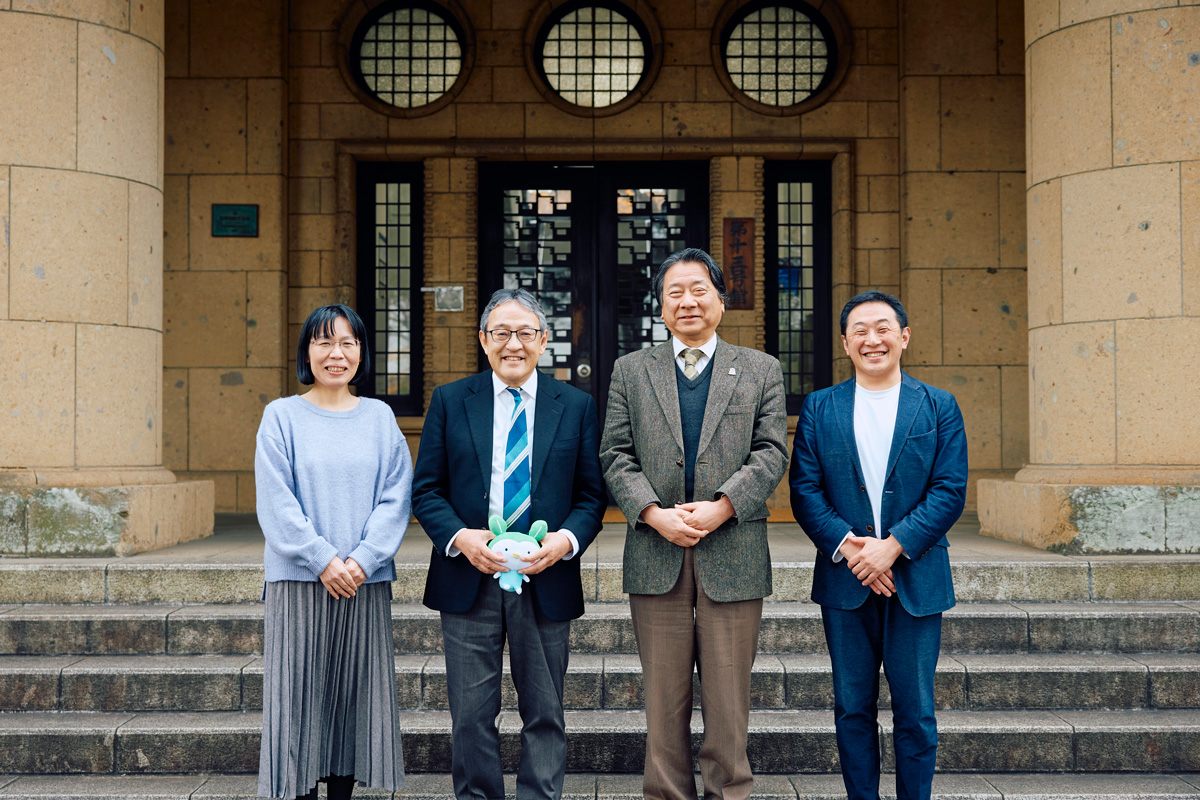
| Date of interview | December 25, 2024 |
|---|---|
| Interviewee | ・Hisashi Nakamura, Professor, Research Center for Advanced Science and Technology, the University of Tokyo ・Makoto Iida, Project Associate Professor, Research Center for Advanced Science and Technology, the University of Tokyo ・Noriko Ishizaki, Senior Researcher, Climate Change Impacts Assessment Research Section, Center for Climate Change Adaptation, National Institute for Environmental Studies ・Komei Shirabe, Director, Yamaguchi Local Climate Change Adaptation Center |
ClimCORE: Organizing Past Climate Data and Using It for Future Predictions
How does the Research Center for Advanced Science and Technology (RCAST) at the University of Tokyo collaborate with the Center for Climate Change Adaptation at the National Institute for Environmental Studies?
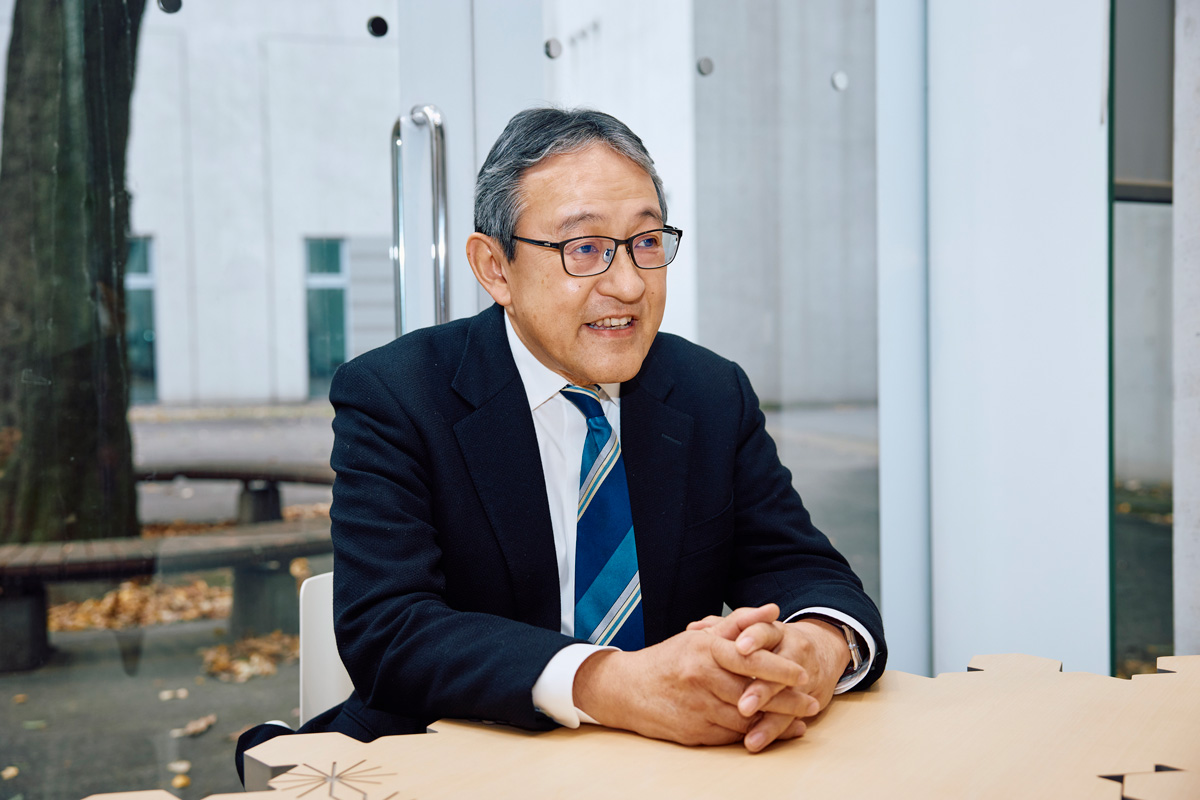
Ishizaki: I originally studied how topography influences regional climate. More recently, I have been working not only on understanding these mechanisms but also on developing future climate scenarios, which can be used to support regional climate change adaptation.
Climate scenarios developed in CCCA are provided through the Climate Change Adaptation Information Platform (A‑PLAT) so that they can be widely used to explore future regional climate changes and to assess climate change impacts on areas such as health and agriculture. However, the current climate scenarios still have some limitations. One of the main issues is that the ground observation data used for scenario development are unevenly distributed and not spatially homogeneous.
Although Japan has a well-established meteorological observation network operated by the Japan Meteorological Agency, observation sites remain sparse in mountainous areas. This issue is sometimes underestimated because most of the population live in lowland regions. However, mountainous areas are highly important, as they support tourism such as skiing and autumn foliage viewing, alpine ecosystems, and serve as critical sources of water resources through snowfall.
To address the issue of gaps in observational coverage, we are working to integrate regional reanalysis data developed under the ClimCORE project, which we are currently conducting in collaboration with RCAST. By effectively combining observational data with reanalysis data, we aim to improve the quality of both historical and future climate scenarios.

Center for Climate Change Adaptation, National Institute for Environmental Studies
What is ClimCORE? Could you tell us in more detail, including its background?
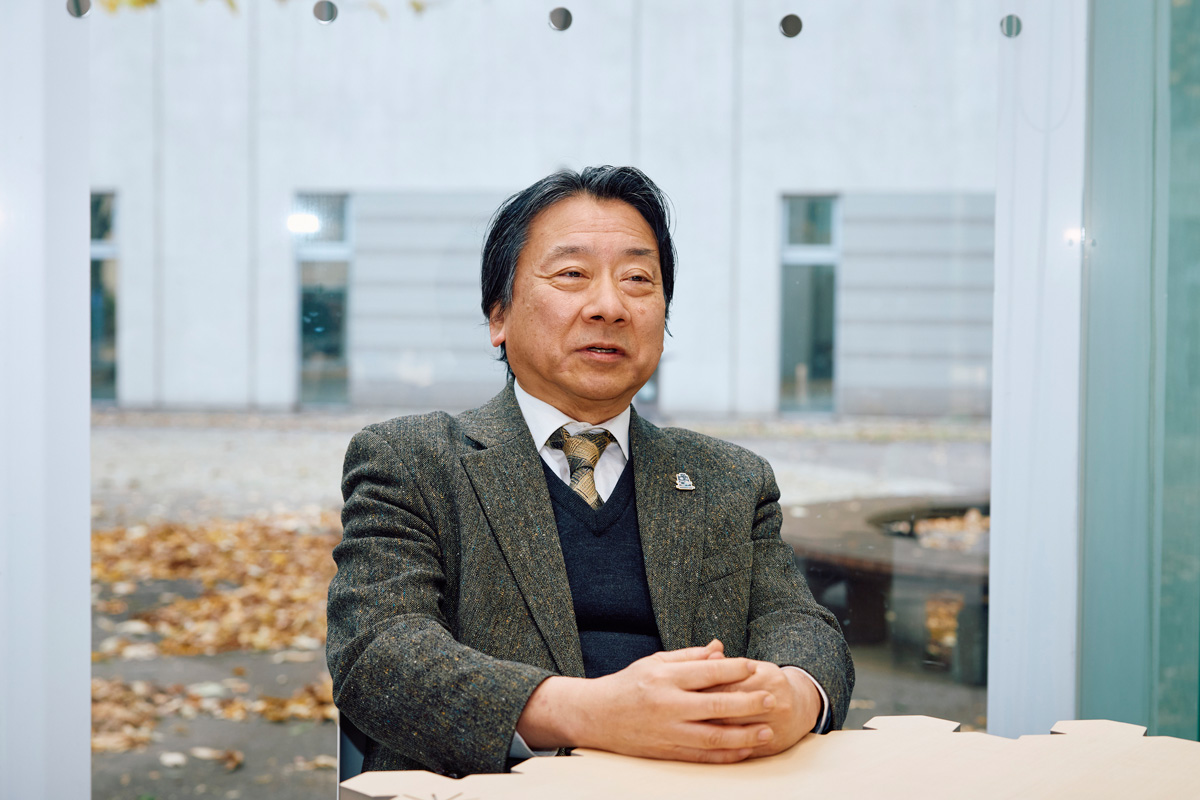
Nakamura: ClimCORE stands for “Climate change actions with CO-creation powered by Regional weather information and E-technology”. It is a collaborative project involving universities, research institutes, private companies, and local governments, aimed at establishing a framework that enables the strategic and integrated use of meteorological data centered on a high-resolution “Japan regional reanalysis”, in order to support decision-making and climate-related actions.
The Japanese archipelago is surrounded by the ocean and characterized by complex topography with many high mountains. As a result, weather and climate in Japan are strongly influenced by local topography.
To implement effective measures against global warming, it is essential to understand how the atmosphere and oceans have changed from the past to the present. Without this perspective, it is difficult to properly understand the present climate. By examining why extreme weather events have occurred, how their characteristics differ by region, and how conditions may evolve as warming continues, we can better assess future risks. This understanding forms the basis for developing effective adaptation strategies.
Renewable energy, which plays a significant role in climate change mitigation, is also strongly dependent on meteorological conditions such as wind and solar radiation. By understanding the regional potential, we can determine where to install which types of facilities and how to operate them efficiently. This, too, requires a solid understanding of past and present meteorological and climatic conditions.
While the Automated Meteorological Data Acquisition System (AMeDAS) is a world-class system, it has limitations in accurately capturing regional characteristics, as Dr. Ishizaki mentioned. The observation points are sparse in mountainous areas, and because it is a ground-based observation system, it cannot observe conditions over the ocean. Moreover, it has the disadvantage that it is not possible to conduct retrospective simulations of past heavy rainfall events or typhoons that have caused disasters in the past.
In addition, there had been no platform that allowed people from various fields to easily access the data online. To address this gap, the ClimCORE project was launched with the aim of systematically organizing regional weather data from the past to the present, establishing a foundation for future climate projections, and developing an online platform that can be widely used by many users.
RCAST: Working with Local Communities to Promote the Development of Young People Who Study Climate Change
We understand that RCAST is also collaborating with the Yamaguchi Climate Change Adaptation Center on human resource development. Could you tell us more about this collaboration?
Shirabe: In August 2022, Yamaguchi Prefecture and RCAST signed a Partnership Agreement on Human Resource Development for a New Era in Yamaguchi. Based on this agreement, prefectural departments have been organizing seminars and related initiatives under themes such as “fostering pride and attachment to Yamaguchi” and “establishing a framework for promoting new forms of human resource development”. Through these efforts, initiatives aimed at advancing future education and human resource development across various fields are being promoted.
Within this framework, collaboration was established between RCAST, which conducts advanced research on climate change, and the Yamaguchi Climate Change Adaptation Center.
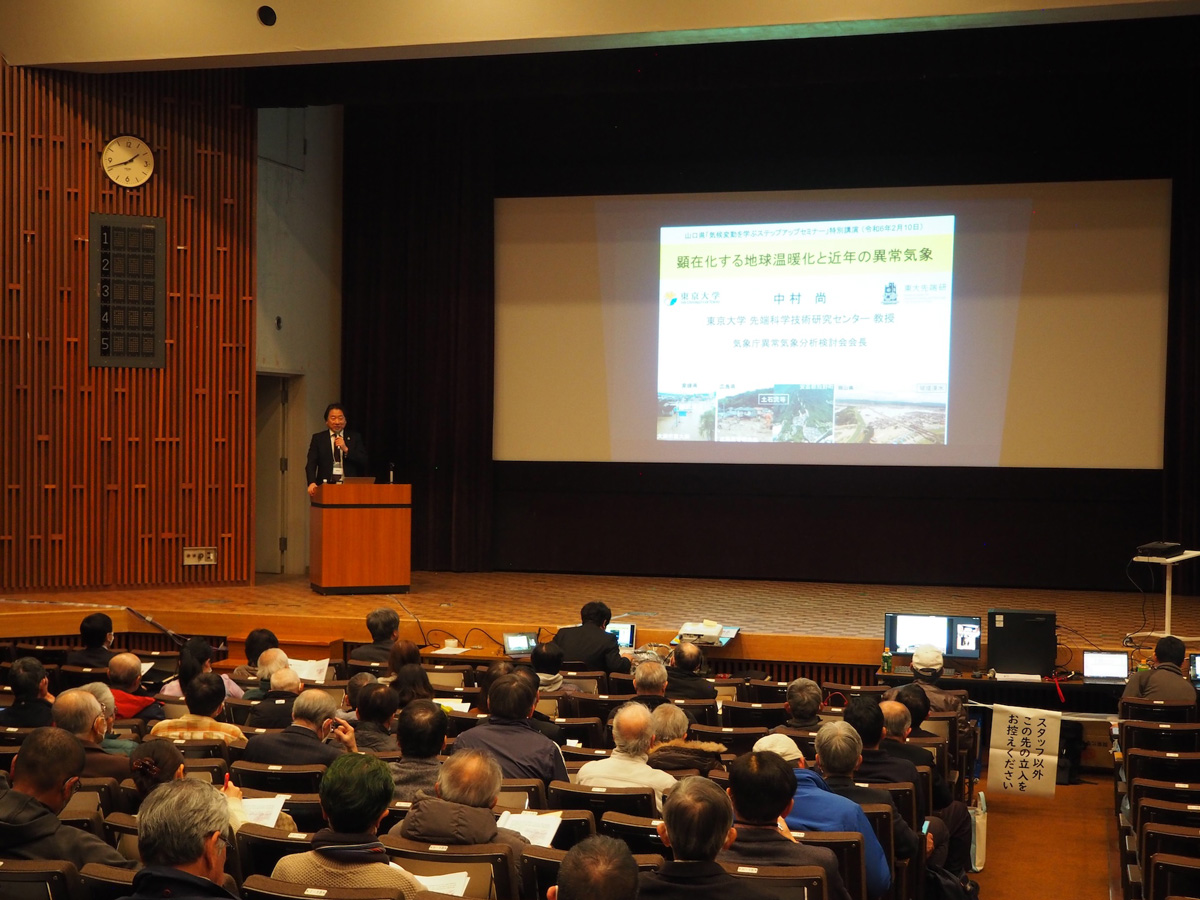
In February 2024, a “Step-Up Seminar on Climate Change” was held, with Professor Nakamura and Professor Iida invited as speakers. The event also included presentations by local community groups and high school students engaged in environmental activities, as well as panel discussions incorporating graphic recording. The post-seminar survey showed a very positive response, indicating that the seminar was highly valuable. We will continue to provide accurate information on climate change to younger generations and promote sustained understanding and engagement.
How did you find the seminar after actually participating in it?
Nakamura: First, in the keynote lecture, I introduced the current global climate situation, the types of extreme weather occurring in Japan, and the extent to which climate change is influencing these events. Since the summer of 2023 was exceptionally hot, it served as a relatable example for participants to understand global warming as a personal and immediate issue. I explained the mechanism behind phenomena such as the meandering of the jet stream, which brings extreme heat to Japan, and how marine heatwaves around Japan have intensified extreme heat events. Through these explanations, I believe that participants were able to gain a clear understanding that disasters and extreme weather arise from the combined effects of multiple climate-related factors.
High school students and members of local organizations gave presentations on what they can do in response to climate change and shat actions are possible in their own communities. It was clear that everyone had a strong sense of awareness, and the discussions were very lively. This event left a strong impression on me because it was highly interactive, with active two-way communication among participants.
Iida: I often have opportunities to take part in discussions with various local governments, and in many cases, younger participants tend to focus mainly on listening. However, at this seminar, it was really impressive to see young people actively expressing their own opinions and ideas. I think this is largely because Yamaguchi Prefecture has been steadily promoting a wide range of initiatives related to climate change. I hope these efforts will continue, and if possible, I would also like to see opportunities for collaboration with other local governments in the future.

Steering Climate Change Countermeasures into Practice through Industry–Academia–Government Collaboration
There may be climate change impacts that we have not yet fully recognized and that could emerge in the future. In light of this, how do you think universities and research institutions should position themselves and what role should they play?
Nakamura: To implement effective adaptation and mitigation measures, universities and research institutions need to take a leading role. As industry, academia, and government work together, it will become increasingly important for academia to act as a bridge between the private and public sectors to help translate knowledge into real-world applications. In this sense, I feel a strong sense of responsibility to ensure the success of the ClimCORE project as a key test case for such collaboration.
Ishizaki: Collaboration among academia, industry, and government is essential for advancing climate change measures based on scientific knowledge. Today, Regional Centers for Climate Change Adaptation have been established across Japan, and adaptation plans are being developed. However, it is often pointed out that it is difficult to recognize potential impacts that have not yet occurred and to design appropriate adaptation measures in advance. In this context, when looking at initiatives in different regions, efforts that involve young people, such as high school and university students, seem to be working particularly well as a first step toward driving societal change. As seen in the example from Yamaguchi Prefecture, initiatives that engage young people from an educational and human resource development perspective are becoming increasingly important, and I believe this represents an ideal approach for the future.
Iida: In our own research, discussions often focus on questions such as how to reduce carbon dioxide emissions. However, as both Prof. Nakamura and Dr. Ishizaki have pointed out, education often does not go far enough to help people think about what they themselves can actually do based on a proper understanding of the real situation. This is certainly a difficult challenge, but one that I believe we need to think through together. I hope that we can move from simply recognizing the fact that “temperatures are rising” to discussion more concretely what this means for our own lives and how it will affect us in practical terms.
Shirabe: From the perspective of local governments, this is extremely important. Yamaguchi will also need to continue initiatives that engage young people through industry–academia–government collaboration to promote climate change adaptation measures.
Looking ahead, what areas would you like to focus on more strongly in the future?
Shirabe: Since the establishment of the Yamaguchi Local Climate Change Adaptation Center in 2021, we have undertaken various initiatives, including the development of a web application that helps people understand climate change as a personal issue, as well as organizing seminars in collaboration with related organizations, with guidance from the National Institute for Environmental Studies. Through these efforts, the Center has gained increasing recognition. We have also built connections with companies, for example by being invited to give lectures on climate change initiatives. Moving forward, we would like to update our initiatives while strengthening collaboration with a wide range of stakeholders and taking on new challenges.
Nakamura: We are working together with Yamaguchi Prefecture, and human resource development is a primary mission for research institutions. In today’s world, where information of varying quality is widely available, it is essential to be able to carefully discern reliable information, think independently, and make effective use of advanced IT and AI technologies to produce meaningful results. I hope that young people will acquire this approach to research and apply it to solving real-world problems and contributing to the realization of a sustainable society.
Ishizaki: We will continue to work on improving climate scenarios using the regional reanalysis data developed through the ClimCORE project. While it is important to scientifically validate and verify future projections based on more advanced climate scenarios, we also would like to consider how to make climate data more accessible to people who have never used such data before. Going forward, we are working to move ahead with this work while exploring ways to make climate data easier to use and more intuitive for a wider range of users.
Iida: We will continue our work within the ClimCORE project by carefully understanding issues based on data, while considering how we should act and what kinds of technologies we can provide. There may not be technologies that can be put to immediate use within the next year or two, but we hope to conduct research that, ten years from now, people will look back on and say, “I’m glad this research was done back then”. Rather than focusing solely on short-term benefits, we would like to pursue research and development that places greater emphasis on long-term preparedness for the future.
This article was written based on an interview conducted on December 25, 2024.
(Posted on May 20, 2025)
 DISCOVER MORE

