 Asia - Japan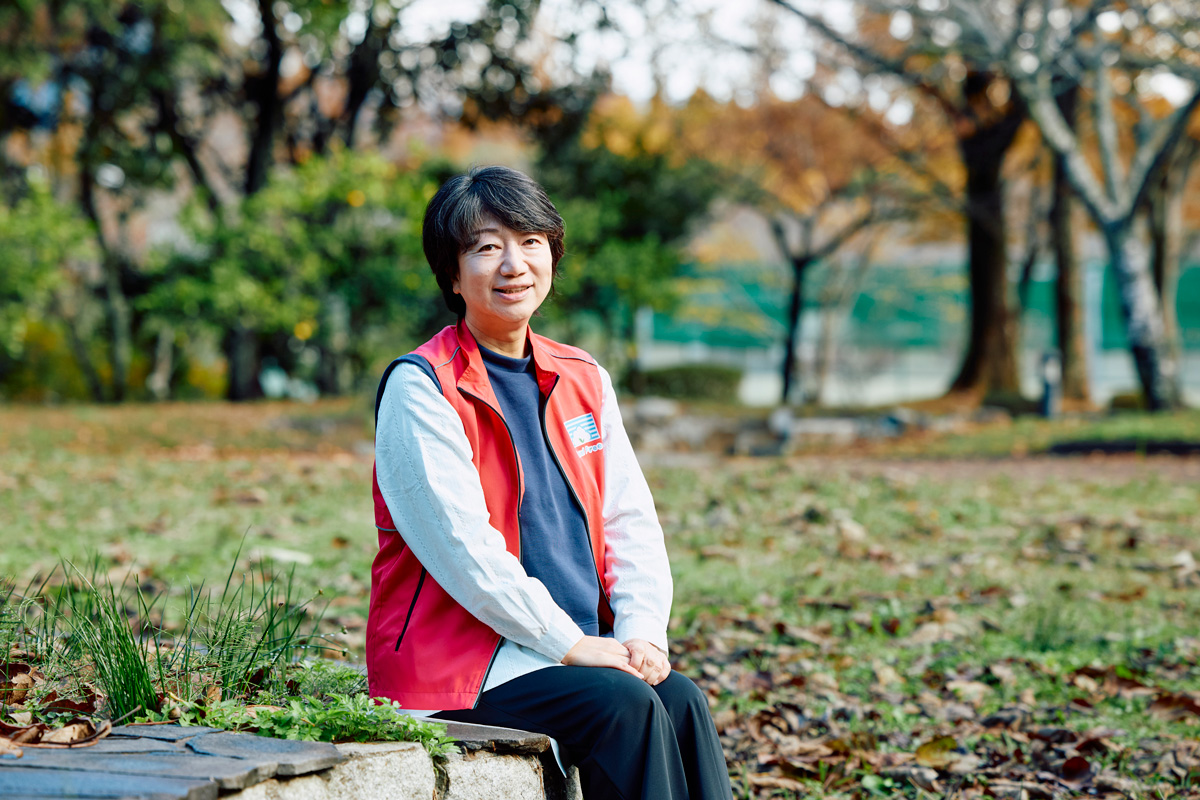
| Date of interview | November 29, 2024 |
|---|---|
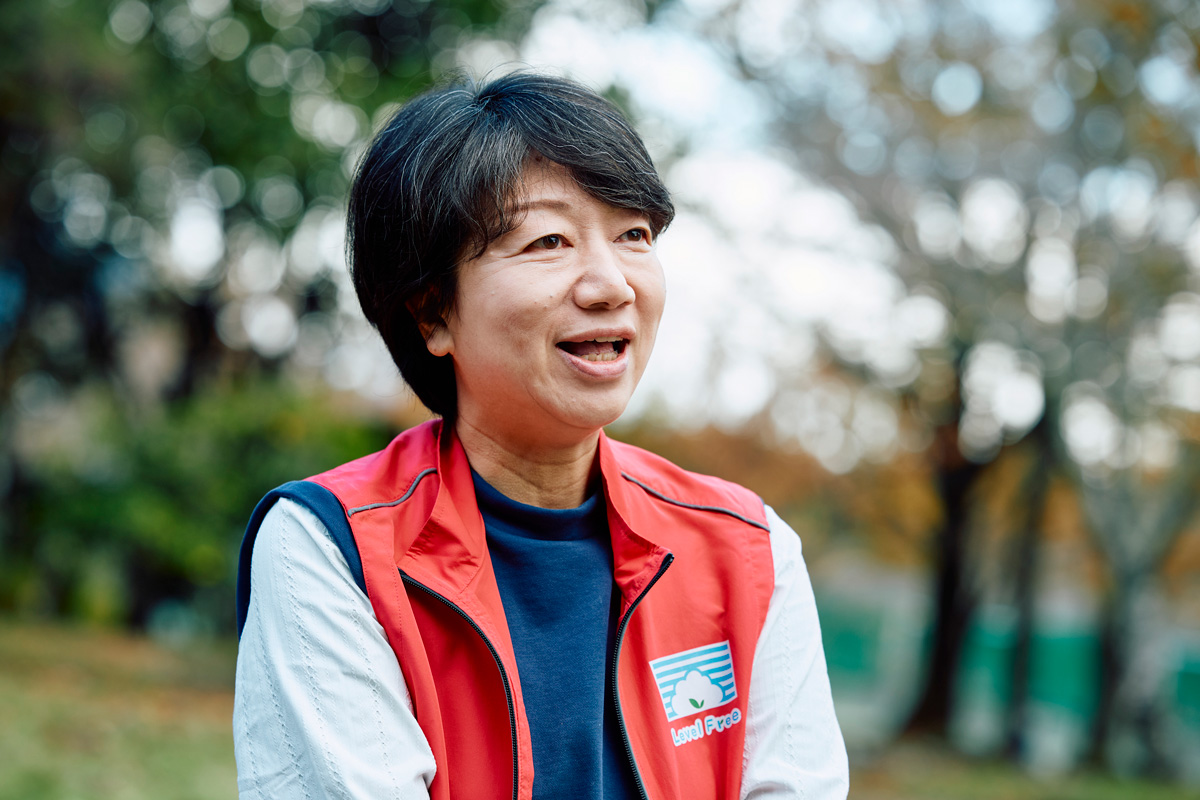
| Interviewee | Kyoko Sakamoto, Chair of Level Free, Certified Weather Forecaster, and Disaster Prevention Expert |
Launching Community-Oriented Initiatives in Response to Disaster Prevention Consultations
Could you explain the overview and the background behind the founding of Level Free?
Previously, I founded a small organization in Yamaguchi Prefecture and conducted weather-related events and disaster prevention activities as a weather forecaster.
One day, a parent of a child with allergies asked me whether evacuation would be difficult in the event of a disaster. This consultation prompted me to launch initiatives that produce allergy-conscious soup kitchens and reconsider the way of evacuation centers.
On a later day, a parent of a child with a developmental disorder shared their concern that their child might get overstimulated and cause problems even if they were to stay at an evacuation center. While learning together with participants about staying in cars at evacuation centers, I became motivated to engage in more community-conscious activities in response to the concerns of people close to me, which eventually led to the establishment of a general incorporated association.
You are a certified weather forecaster and a disaster prevention expert. What made you decide to obtain these certificates?
About two months after I got married and moved to Amagasaki in Hyogo Prefecture, I was affected by the Great Hanshin-Awaji Earthquake. I was in my late 20s at the time. Having just moved there, I did not have any friends. There was nothing I could do, and I was so scared that I cried every day.
The Great Hanshin-Awaji Earthquake is said to have marked the beginning of the volunteer movement in Japan. Although it is now common for many volunteers to rush to help during disasters, this earthquake triggered widespread interest in volunteering, leading to the establishment of voluntary disaster prevention organizations across the country.
Because I wanted to express my gratitude to volunteers and had a long-time interest in weather, I decided to obtain a certification as a weather forecaster. I also became interested in volunteering because of this earthquake.
The Importance of Learning Accurate Information and Building “Self-Help” and “Mutual Aid” Relationships
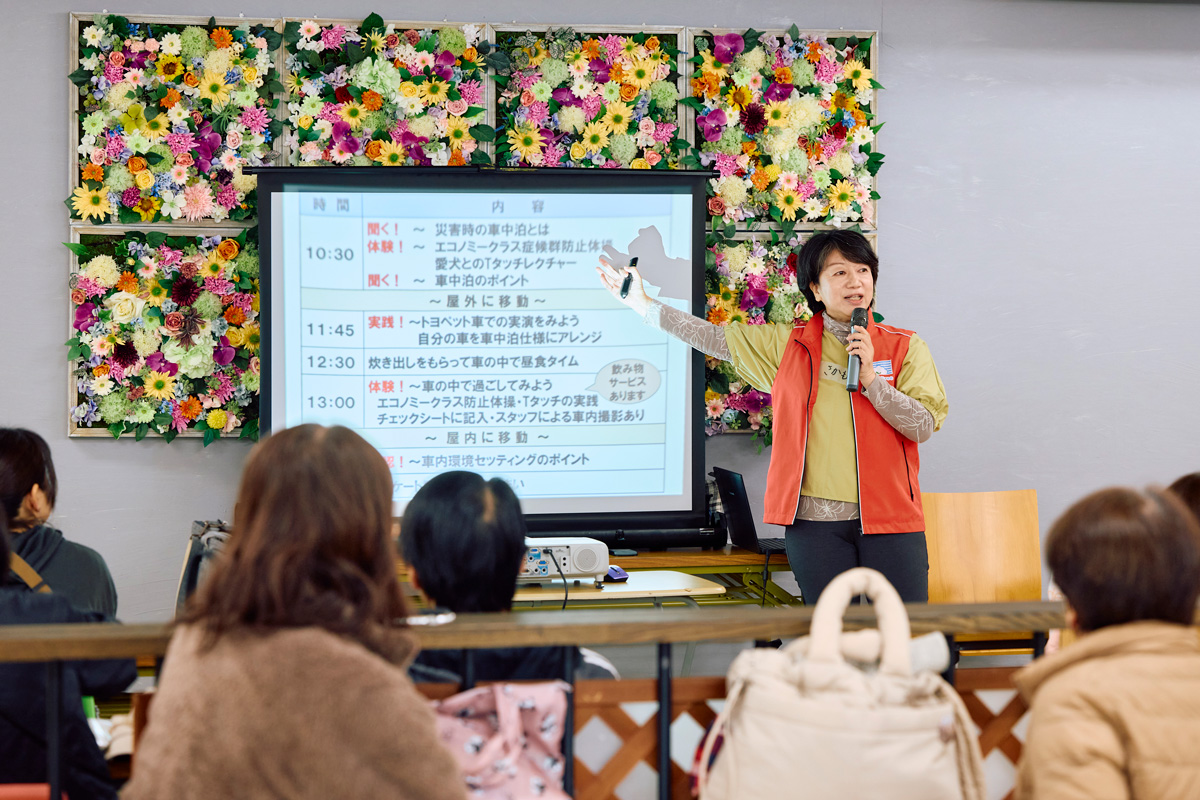
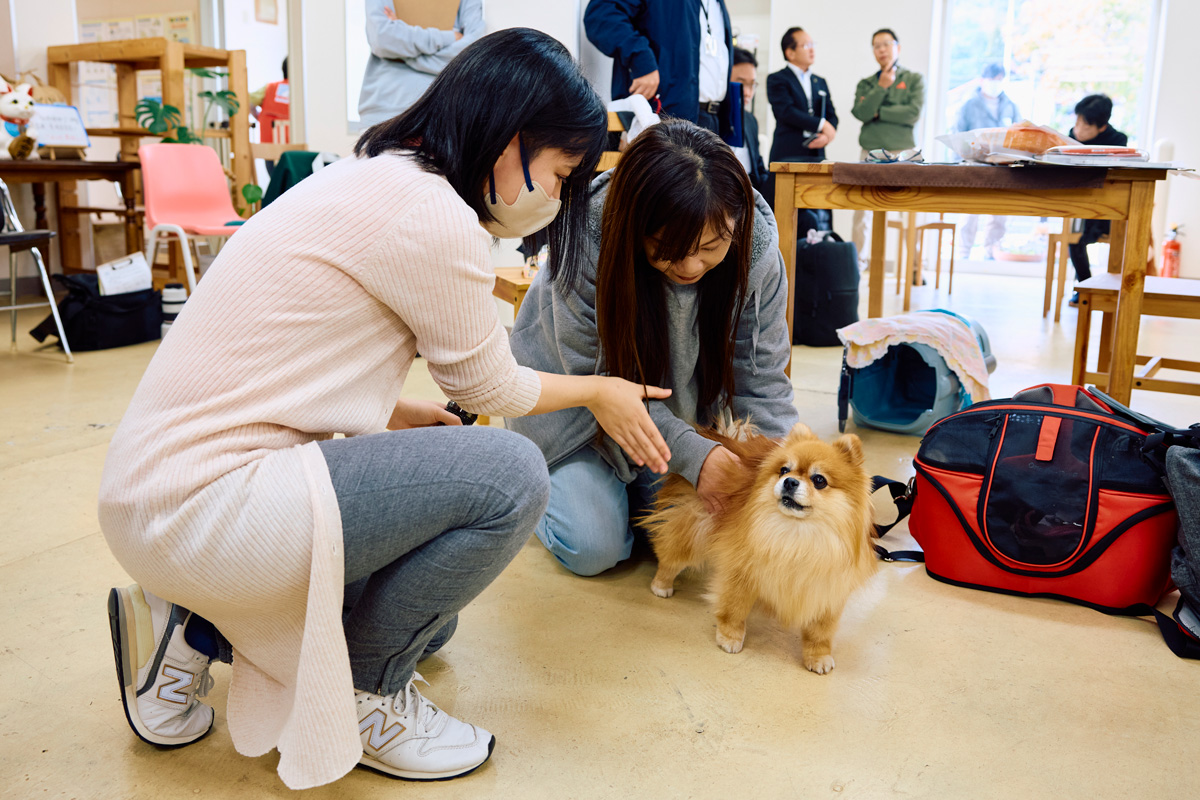
Level Free held the second “Think About Pet Evacuation” event on November 24, 2024. Thinking about pet evacuation during disasters is an important preparation. Did citizen requests prompt you to hold this event?
I decided to hold this event not in response to requests. I simply felt that no one should hesitate to evacuate because they have pets.
The Disaster Preparedness Guideline for Humans and Pets, issued by the Ministry of the Environment, encourages people to evacuate together with their pets. However, some people are sensitive to pets’ smells or cries, and some are allergic. As a result, many evacuation centers are still not prepared to accept pets, depending on the community. In past disasters, some people lost their lives because they worried about their pets after evacuating and returned home to try to rescue them. To prevent an increase in the number of people who hesitate to evacuate because of their pets, there are things that pet owners should learn for themselves. With the aim of providing these people with opportunities to learn how to protect their pets through specific training, I decided to hold this event.
Various people, including representatives from municipalities, attended the event, and I hope this will lead to the future establishment of a framework.
The large number of participants indicates a high level of interest. Staying in cars during disasters seems to be an effective option.
It means only using the parking lots of evacuation centers for staying in cars. This involves risks, so pet owners should be aware of them.
There are many people with specific conditions, such as senior citizens with physical difficulties and those who find it difficult to stay with an unspecified number of people, as well as pets. As cars have become more comfortable, staying in cars could be a new evacuation option that helps pet owners feel more at ease.

Are you holding any other events or awareness-raising activities?
Yes. One of them is an activity that encourages people to think about climate change and the weather. In 2023, we rented the Youth Science Center in Hofu for two weeks and held the “Wakuwaku Disaster Prevention Experience Tour” event there for children. I believe they enjoyed and learned from this hands-on event, which offered various simulation experiences, such as holding a plastic bottle containing the equivalent of 100 millimeters of rainfall per hour collected from a one-square-meter box, generating wind and measuring it with an anemometer used by the Japan Meteorological Agency, and measuring rainfall by pouring water into a rain gauge. We also created a suspended display in which a radiosonde—used to measure temperature, wind direction, and wind speed—was attached to a balloon and made to float in a venue with an atrium ceiling.
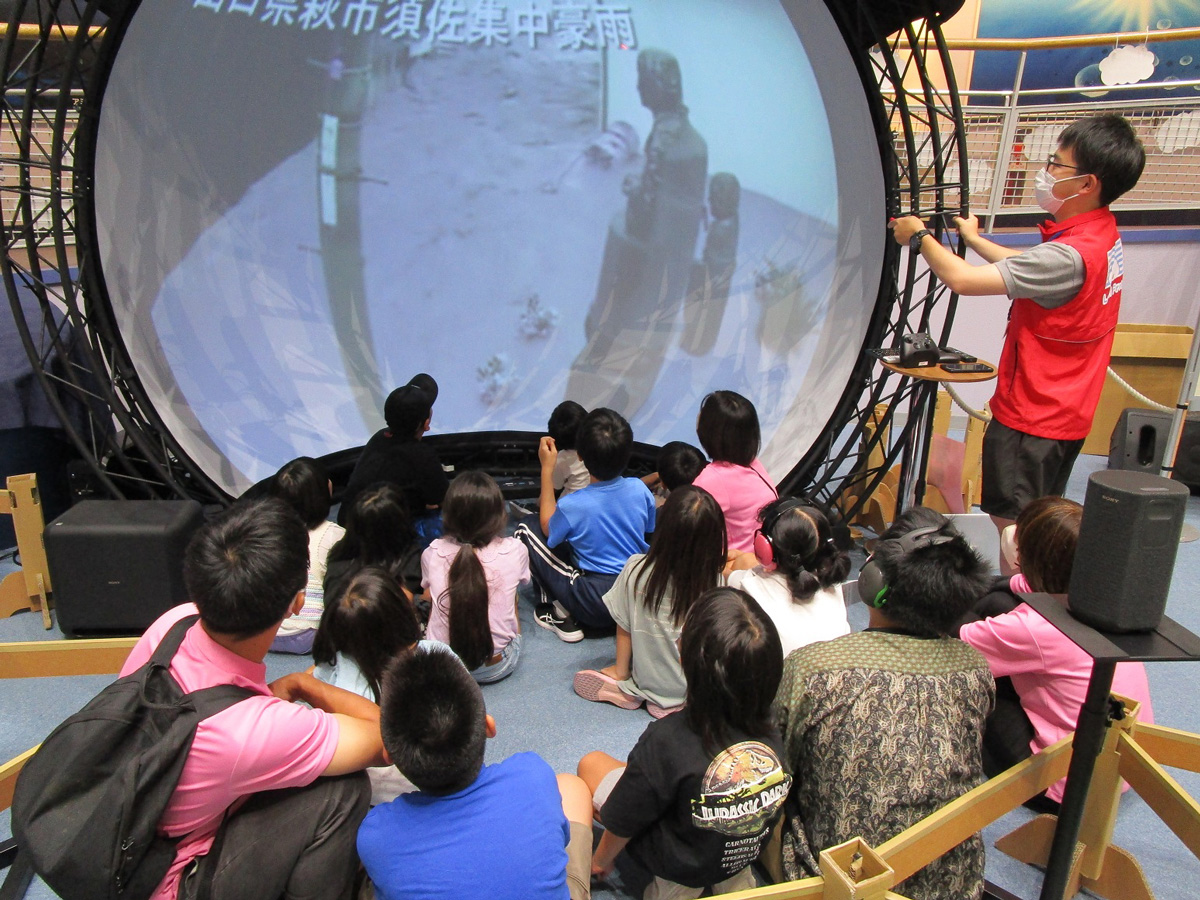
In addition, we exhibited climate change and disaster prevention from various perspectives in collaboration with experts and researchers. For example, we rented a dome virtual reality system owned by Yamaguchi University to help children feel a closer connection to disasters. Using this system, we displayed videos on the left and right screens to compare the Saba River under normal conditions and during heavy rainfall, and exhibited colorized old black-and-white disaster photos to present climate change and disasters from multiple perspectives. These boundaryless collaborations are the distinctive features of our activities.
Another initiative is to help people think about inclusive evacuation centers. The “no one is left behind” initiatives—the principle of the SDGs—are important from the perspectives of disaster prevention and mitigation as well. As disasters have become more severe and widespread, it is essential to create a system in which diverse people can evacuate safely.
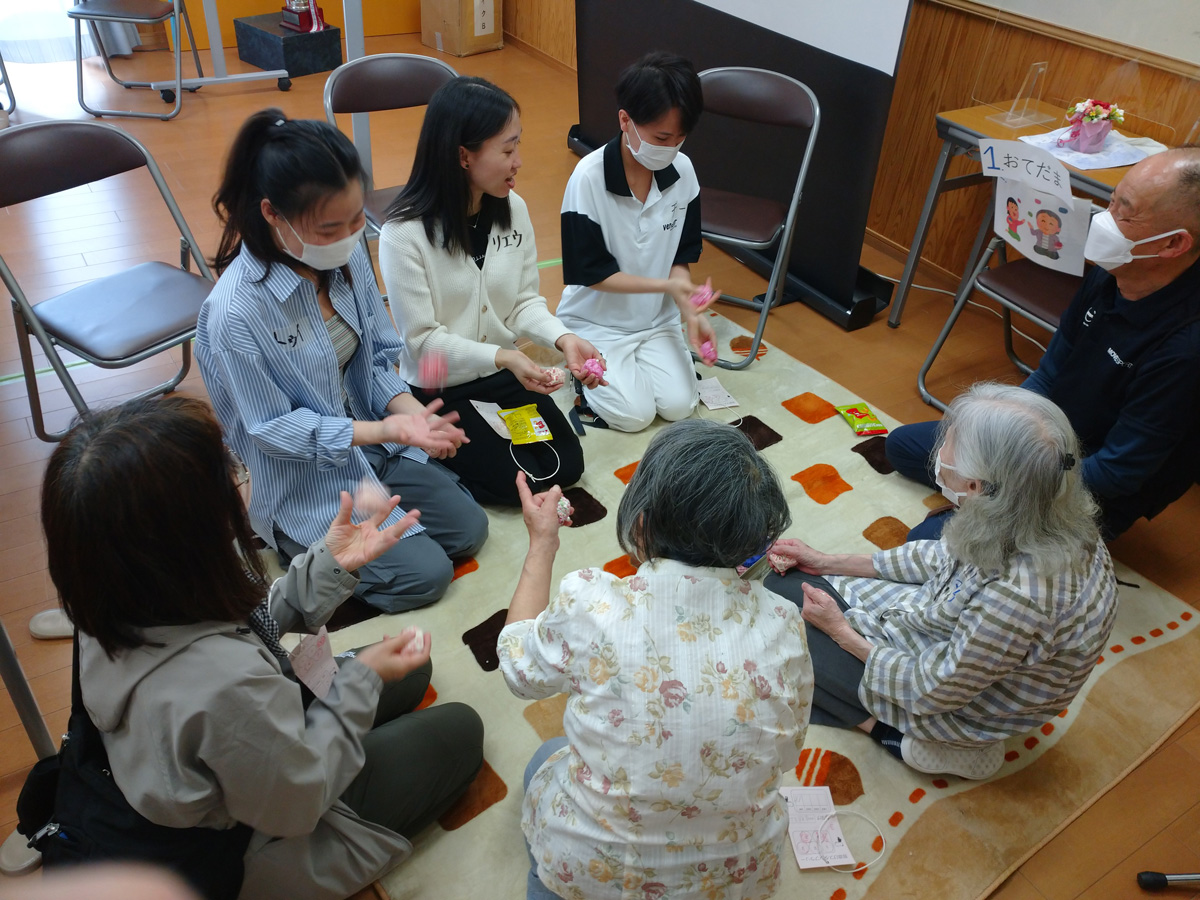
In 2024, we provided disaster prevention training for foreign technical intern trainees to help them engage with local residents. In many cases, local residents are not aware of trainees, who are often preoccupied with commuting between their apartment buildings and workplaces. In cooperation with a local supermarket, we invited about 20 Vietnamese staff members who prepare ready-made dishes to participate in the training.
A perspective of leaving no one behind is indeed important. How did local residents react when engaging with foreign technical intern trainees?
Local residents initially looked anxious. However, through playing traditional Japanese games together and learning about Vietnamese life and language, they soon got along well with the trainees. When I saw local residents accepting the trainees—for example, greeting them in Vietnamese and showing concern for their lives in Japan—I realized that knowing people’s faces, knowing their names, and having talked with them before are the first steps toward local disaster prevention.
This training has been held three times so far. Afterward, local residents continued engagement by inviting them to the summer festival, preparing yukata robes in response to the trainees’ requests, helping them put on the robes, and enjoying the Bon folk dance together. The head of the community association said, “People should help each other, regardless of whether they are Japanese or foreigners.” Hearing this, I felt that this activity would take root in the community as a sustainable initiative. People with diverse backgrounds gather at evacuation centers. They are, in a sense, small societies. If evacuation centers are filled with kindness, that spirit will spread throughout society—not only during disasters, but also in normal times. With such hope in mind, we continue our activities.
Aiming to Foster Children Who Can Learn about Climate Change and Disaster Prevention and Take Action
Climate change not only causes disasters but also intensifies heat waves. As a weather forecaster and disaster prevention expert, how do you view the impact of current climate change?
I believe that the summer of 2024 was the Earth’s final warning to humanity. It means that an unchangeable future awaits us unless we take action now.
While 2023 saw record-breaking temperatures, 2024 surpassed them, with the number of days with temperatures of 30°C or higher in Yamaguchi City tripling compared to the previous year. Heat and rain are two sides of the same coin. Many regions were struck by torrential rains, and warnings and evacuation information were issued even in November. This is abnormal, and it also seems that the summer season is extending. To mitigate the damage caused by climate change and adapt to protect our lives, we should take action by viewing it as a personal issue.
Climate is the natural environment of each region, where cultures and industries develop to support human life. I want everyone to understand that climate—the foundation of our communities—is about to change. Once the climate changes, it may never be restored to its previous state, no matter what actions are taken. I think we are now standing on the brink.
What are Level Free’s future plans?
In 2025, we will focus on climate change. One of our initiatives is to provide students and schoolchildren in the prefecture with fieldwork opportunities that help them experience global warming and climate change, with the hope that they will think about the future environment and take action. We are also planning a participatory concert for local residents that uses bamboo as a collaborative musical event.
In addition, we would like to continue the Children’s Disaster Prevention Expert Training program for as long as possible. When we recruited children to study disaster prevention last year, commissioned by the city, the quotas were quickly filled, and we certified 26 participants as children’s disaster prevention experts. By involving students in our activities, we aim to support the next generation of disaster prevention leaders.
This article was written based on an interview conducted on November 28, 2024.
(Posted on May 20, 2025)
 DISCOVER MORE

