 Asia - Japan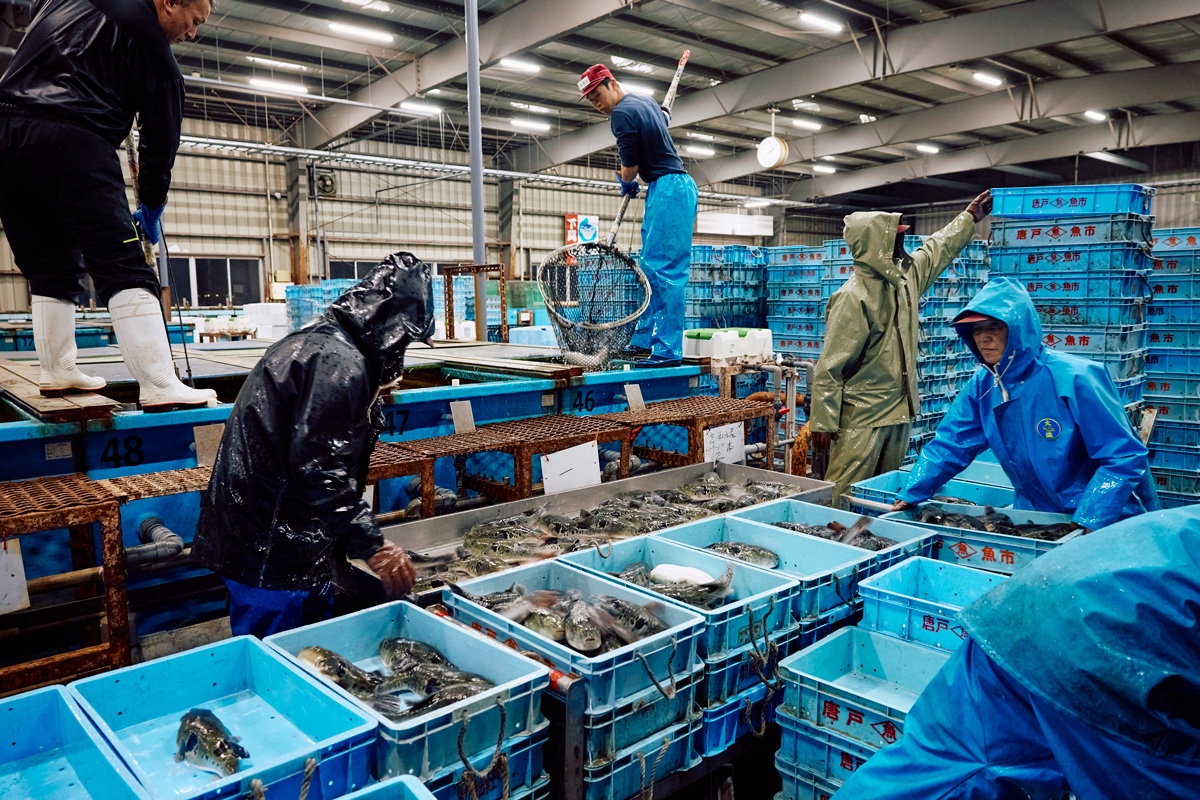
| Date of interview | November 25, 2024 |
|---|---|
| Interviewee | Hirotada Matsuura, General Manager, Sales & Frozen Division, Shimonoseki Karato Fish Market Co., Ltd. |
Gradual Changes Seen in Pufferfish Producing Regions, Including Famous Shimonoseki
We heard that Haedomari Market specializes in pufferfish and boasts the largest market in Japan. What is the history of pufferfish catches in Shimonoseki?
Facing three seas—the Sea of Japan, the Genkai Sea, and the Seto Inland Sea—Shimonoseki has the advantage of being able to source pufferfish (fugu) from a wide range of surrounding waters. Historically, both the prohibition and the subsequent lifting of the ban on eating pufferfish are closely associated with this city.
During Toyotomi Hideyoshi’s military campaign to Korea in the late 16th century, many soldiers reportedly died after consuming pufferfish in Shimonoseki. As a result, the consumption of pufferfish was prohibited.
According to historical accounts, the ban was lifted years later in connection with an episode involving Hirobumi Ito, Japan’s first Prime Minister. While staying at Shunpanro, a traditional inn in Shimonoseki, he was served fugu sashimi when stormy weather had prevented other fish from being procured. At the time, serving pufferfish was strictly forbidden and subject to severe punishment, reportedly even by beheading. The proprietress is said to have served it fully aware of the potential consequences. Deeply impressed by its taste, Ito reportedly remarked that there was no reason to prohibit such a delicacy, which subsequently led to the lifting of the ban.
With its vast lands, Shimonoseki allows for the efficient construction or leasing of processing factories and has a long-standing tradition of skills in handling pufferfish. Since it is possible to remove poisonous parts in large quantities, pufferfish are brought to Shimonoseki from all over Japan.
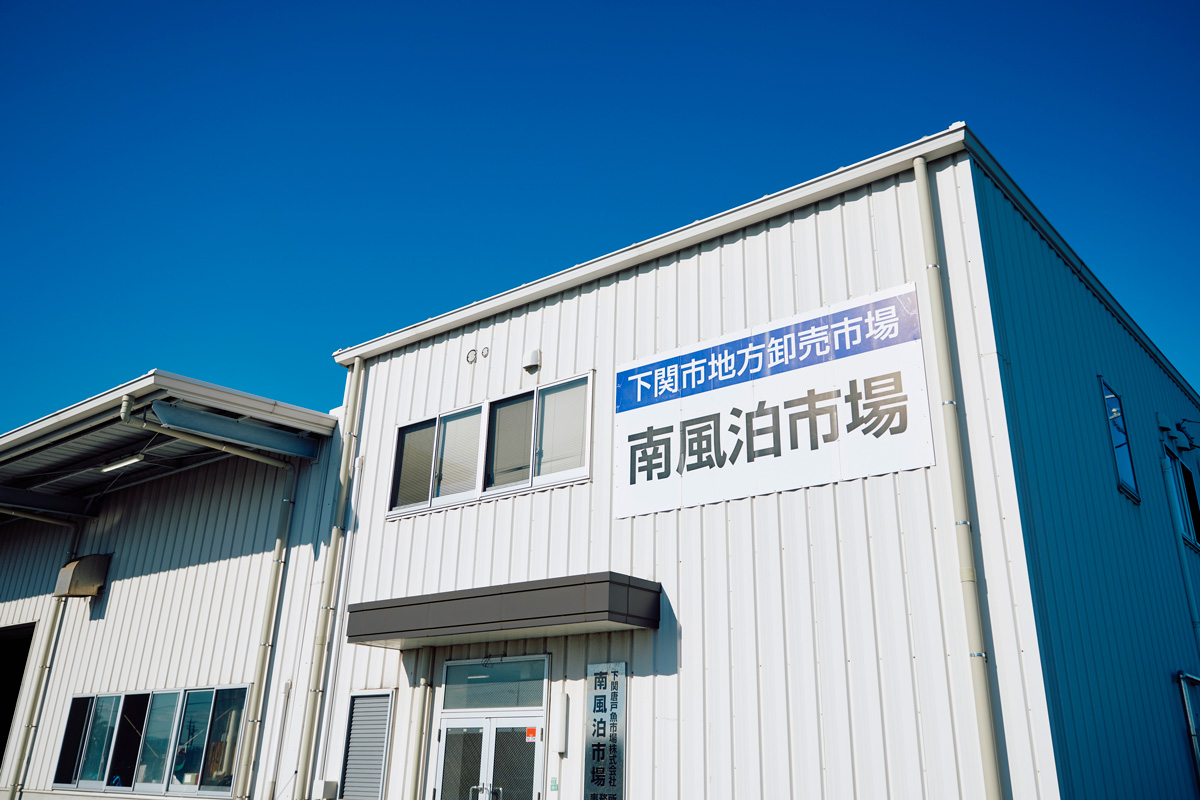
What are the current catches of tiger pufferfish at Haedomari Market?
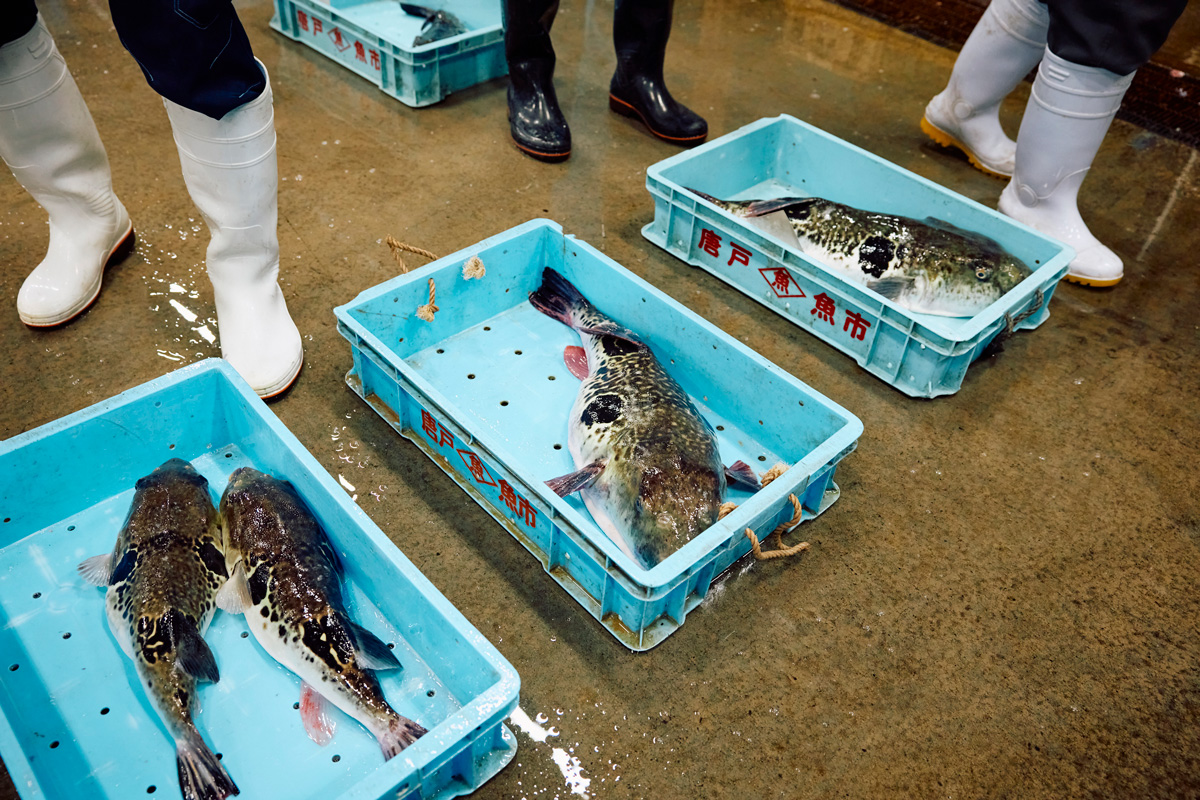
At most, 5 to 6 tons of wild tiger pufferfish are caught here per day. The peak period was about 30 years ago, when approximately 2,000 tons were handled annually. It is now around 100 tons per year.
Do you think it is due to climate change?
I think so. In regions outside Yamaguchi Prefecture, tiger pufferfish began to appear in Ise Bay gradually around 1990, and since then, large catches have occurred roughly on a ten‑year cycle. In 2024, the fishing season opened in October. Thirty fishing boats from each of the three Tokai prefectures—Shizuoka, Mie, and Aichi— went out to sea, catching 3 to 5 tons at each harbor per trip, for a total catch of approximately 9 to 15 tons.
The catches in Ise Bay are about the same as those at Haedomari Market.
Correct. In recent years, the catches of tiger pufferfish in Chiba, Fukushima, and Miyagi prefectures have been on the rise. In particular, catches in Fukushima have only started over the past three or four years. Most of them are shipped to Tokyo and Osaka, but they sometimes arrive in Shimonoseki when local catches are low.
We hear that pufferfish can now be caught even in Hokkaido.
The pufferfish species caught in Hokkaido are the purple puffer, which is slightly smaller than the tiger puffer. They start swimming north in the Sea of Japan in April and can be caught between September and December.
The differences from the tiger puffer lie not only in size but also in the parts that are edible. The edible parts of the tiger puffer include the skin, flesh, and milt, while the purple puffer has poison even in its skin. This means the fins are also not edible.
In Hokkaido and the Hokuriku region, most pufferfish are caught using fixed nets or trawls. The fish are transported after being killed while still alive using the ikejime method or frozen at harbors. Pufferfish caught by fishing boats from Hagi can be sold alive, which is a major advantage. This is because they can be served raw or seared.
Only pufferfish that are safe to eat raw are those freshly caught by the Hagi Fleet from Yamaguchi. Pufferfish that were killed while still alive or frozen are generally intended for cooking.
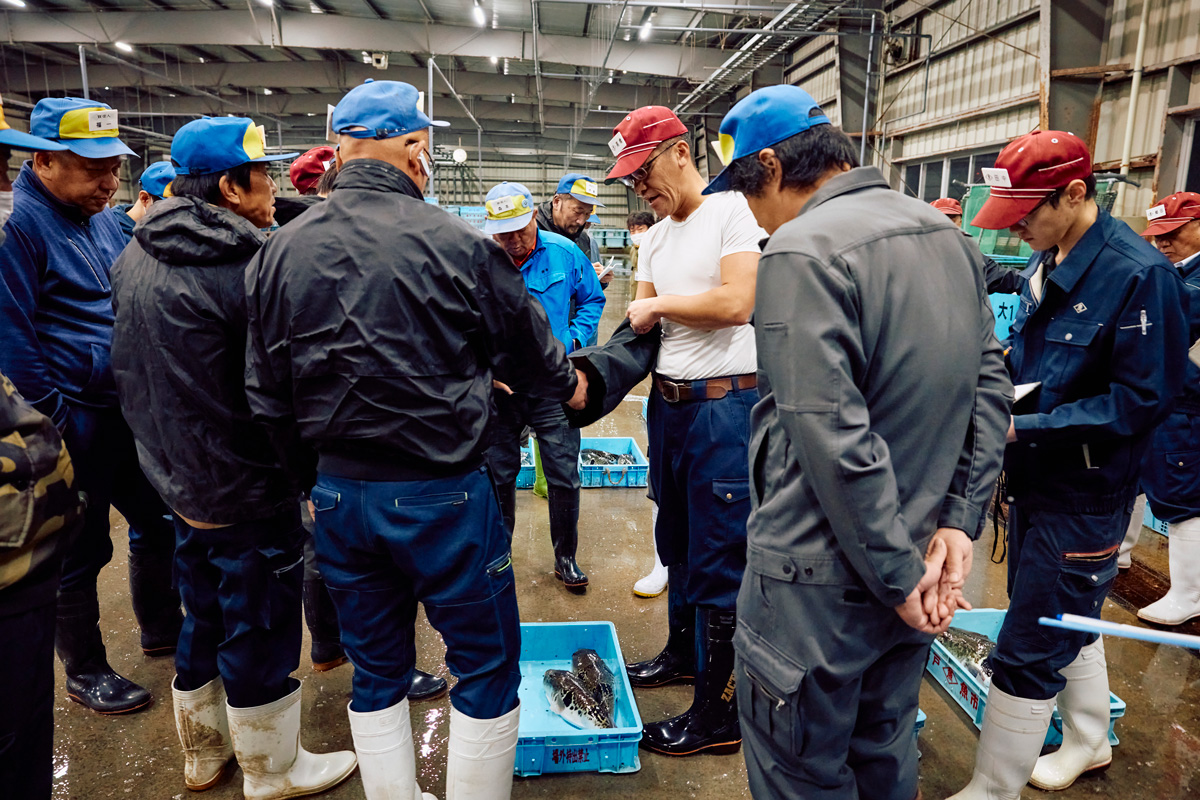
Shimonoseki Is a Place Where Pufferfish Are Brought from All Over Japan Because of Its Most Advanced Technique for Removing Poisonous Parts
When did pufferfish farming start?
About 30 years ago, catches were at their peak. As they gradually began to decline, farming was introduced. Haedomari Market handles about 1,000 to 1,200 tons of farmed tiger pufferfish annually, with a ratio of farmed to wild of roughly 9 to 1.
Meanwhile, farmed ones do not sell well unless the average price of wild ones is high. As wild tiger pufferfish caught in Ise Bay are sold at lower prices than farmed ones in Shimonoseki, the sales of farmed fish have remained sluggish.
Wild tiger pufferfish in Shimonoseki are so pricey that they are mainly sold to restaurants in Tokyo and Osaka, and therefore do not sell in large quantities. Wild ones are handled by some pufferfish chain restaurants, but prices do not rise significantly because they are sold at prices that are roughly predetermined.
The reason fewer boats fish in Hagi, Yamaguchi, is that fishing is no longer profitable. There are fewer pufferfish to catch, and prices do not rise even when they are caught, resulting in a decrease in the number of fishing boats.
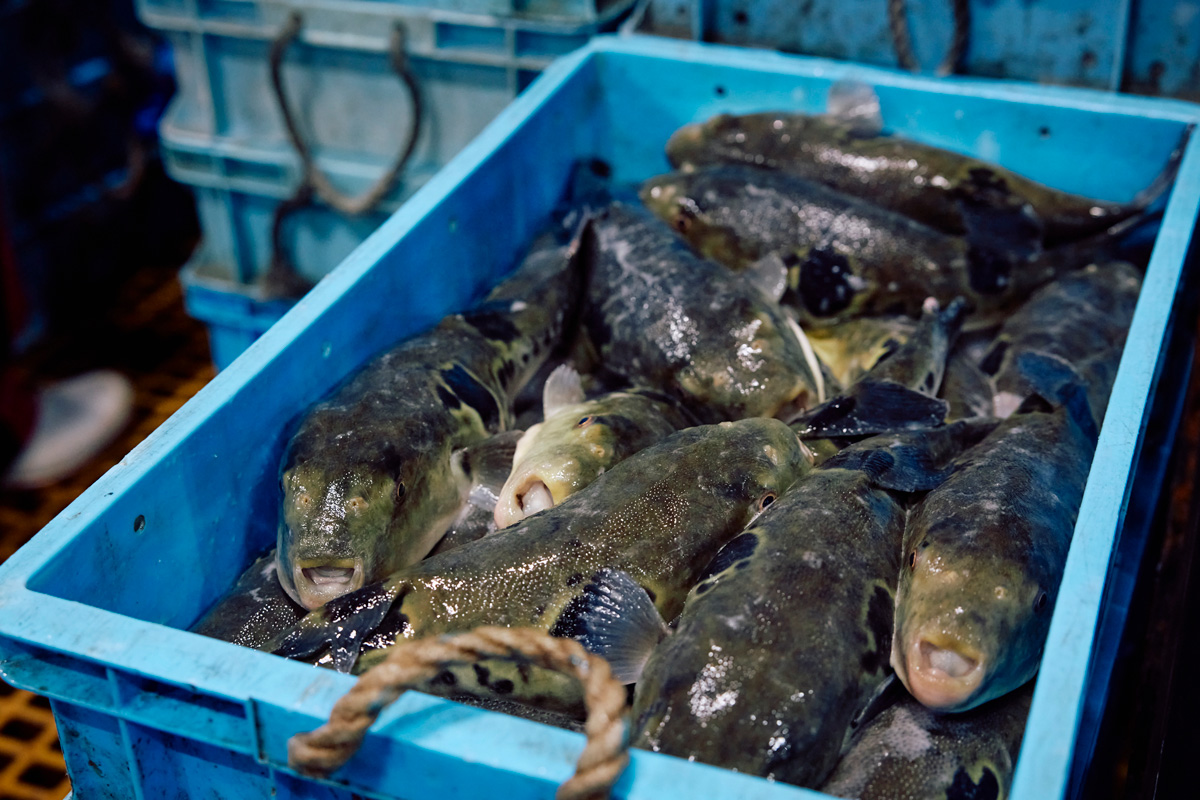
We found fish tanks at Haedomari Market. Are pufferfish farmed there?
Pufferfish are farmed from a young age along the coasts of Kyushu and are transported by truck to Shimonoseki. Mostly from Nagasaki. They are selected here and delivered to buyers, then either processed and supplied to restaurants or handed over to auctioneers and sold. Pufferfish, including farmed ones, are brought to Shimonoseki because the city has the most advanced technique in Japan for removing poisonous parts. The final week of the year is the busiest period, during which each major wholesaler handles about 4,000 to 5,000 pufferfish per day, totaling around 50,000. Since the first catch in Ise Bay 40 years ago, the skills of pufferfish processors there have improved. Some people came to Shimonoseki to learn processing techniques, while we dispatched our processors to local cities.
Have shipments ever been delayed during the busiest season due to high water temperatures?
The pufferfish season starts around September 20 every year, but temperatures are still high. Hot weather prevents pufferfish from rising from deeper waters to feed, failing to grow large enough for shipment.
In addition, pufferfish are mainly used for hot pot dishes, so they do not sell well unless temperatures are low.
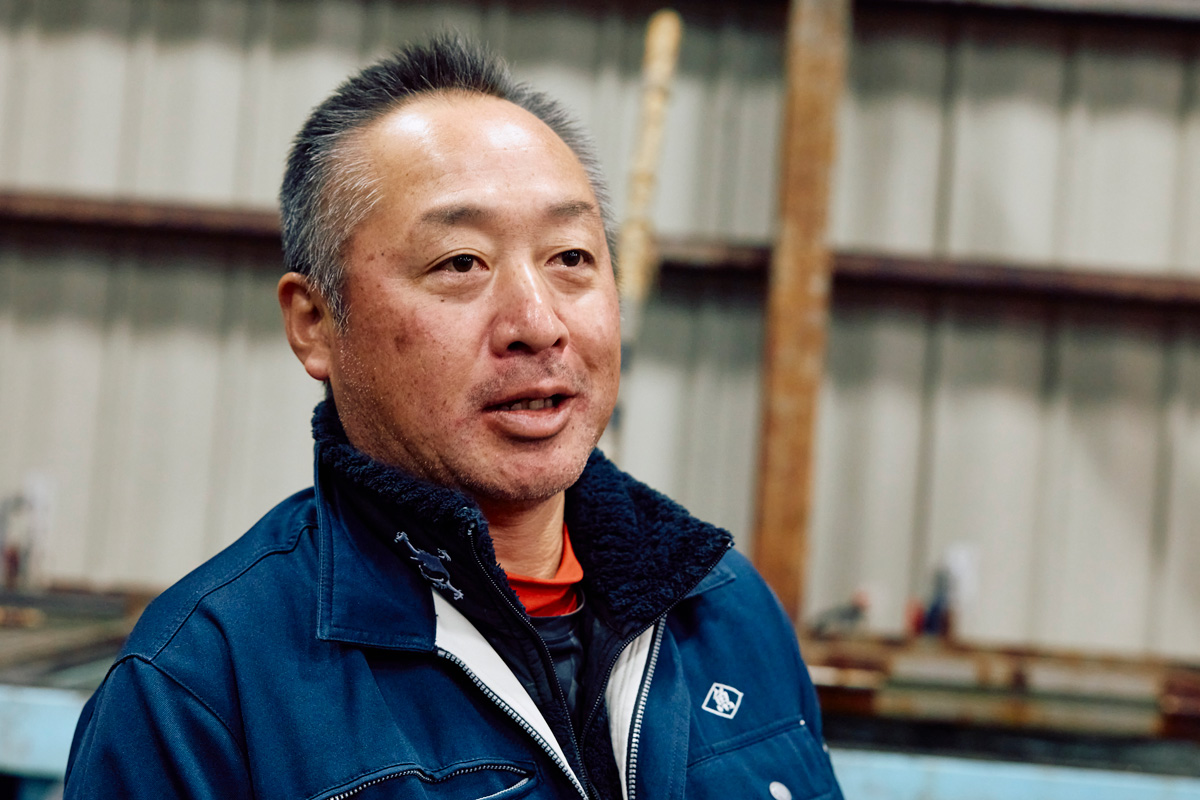
A Growing Effort to Promote a New Way of Eating Pufferfish to Boost Consumption
Even when pufferfish are brought to Shimonoseki from all over Japan, there is still the dilemma that they cannot be sold at high prices if consumption is low.
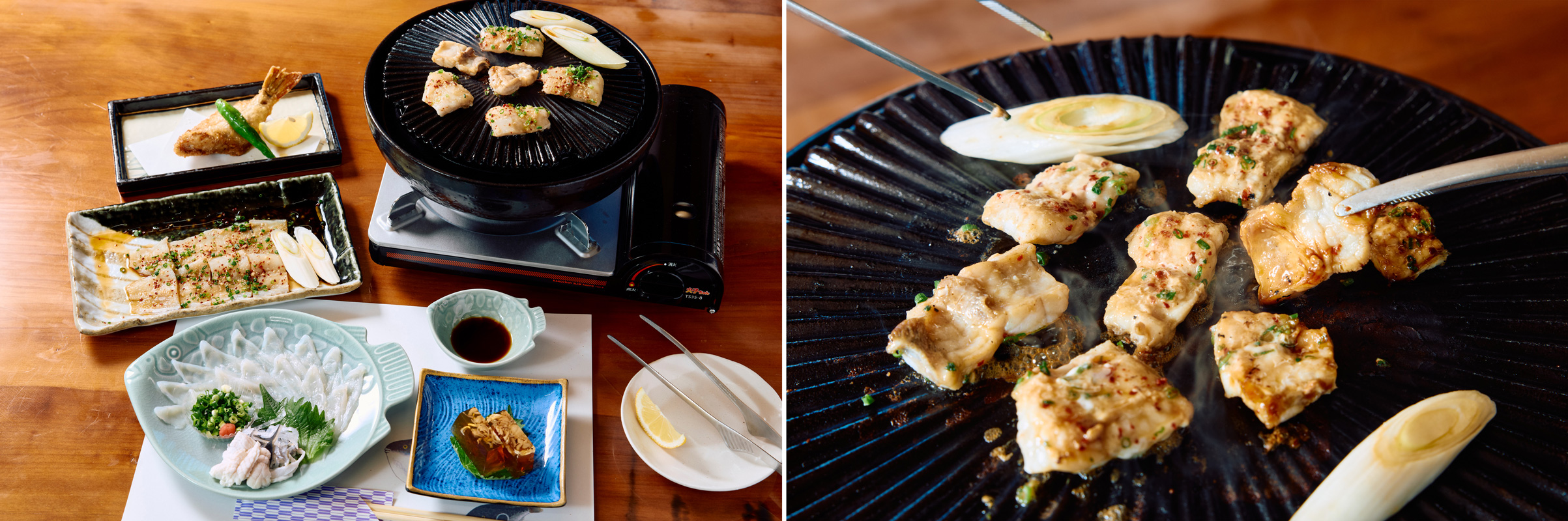
That’s right. However, as many foreign visitors come to Shimonoseki due to the weak yen, more restaurants have begun serving pufferfish even in summer. Raw pufferfish is considered a high-end dish, but grilled pufferfish has recently been introduced in Shimonoseki as a new way of enjoying it.
We thought pufferfish hot pot was the only dish other than being served raw, so we were surprised to learn about the new eating method.
Oh, really. Near Nanfudomari (Haedomari) Market, there is also a restaurant where visitors can enjoy a pufferfish course meal that includes grilled fugu. Using a pot similar to those for Mongolian-style barbecue (jingisukan), diners grill the pufferfish themselves. The course is reasonably priced and has proven popular not only with international visitors but also with younger customers.
Thank you for your information. Do you have any new initiatives in mind?
Fishing boats in Yamaguchi cannot go to fishing grounds in other prefectures. Therefore, I think fish markets and wholesalers in Shimonoseki are likely to establish processing facilities at ports for pufferfish. In fact, some major wholesalers have already gone to Hokkaido and the Tohoku region to begin negotiations. Removing the inedible parts in Hokkaido seems to be costly, while it is minimal in Shimonoseki. If this cost issue is resolved, locally processed pufferfish can be shipped to Shimonoseki.
Currently, purple pufferfish caught in Hokkaido are frozen immediately and shipped to Shimonoseki. They are thawed, processed, refrozen there, and then transferred to Osaka and Tokyo. Even when frozen, pufferfish remain high-quality if processed raw before freezing. If processing factories are built at ports nationwide and pufferfish are processed locally, they could be delivered to Shimonoseki at a higher quality. I would like to see it coming.
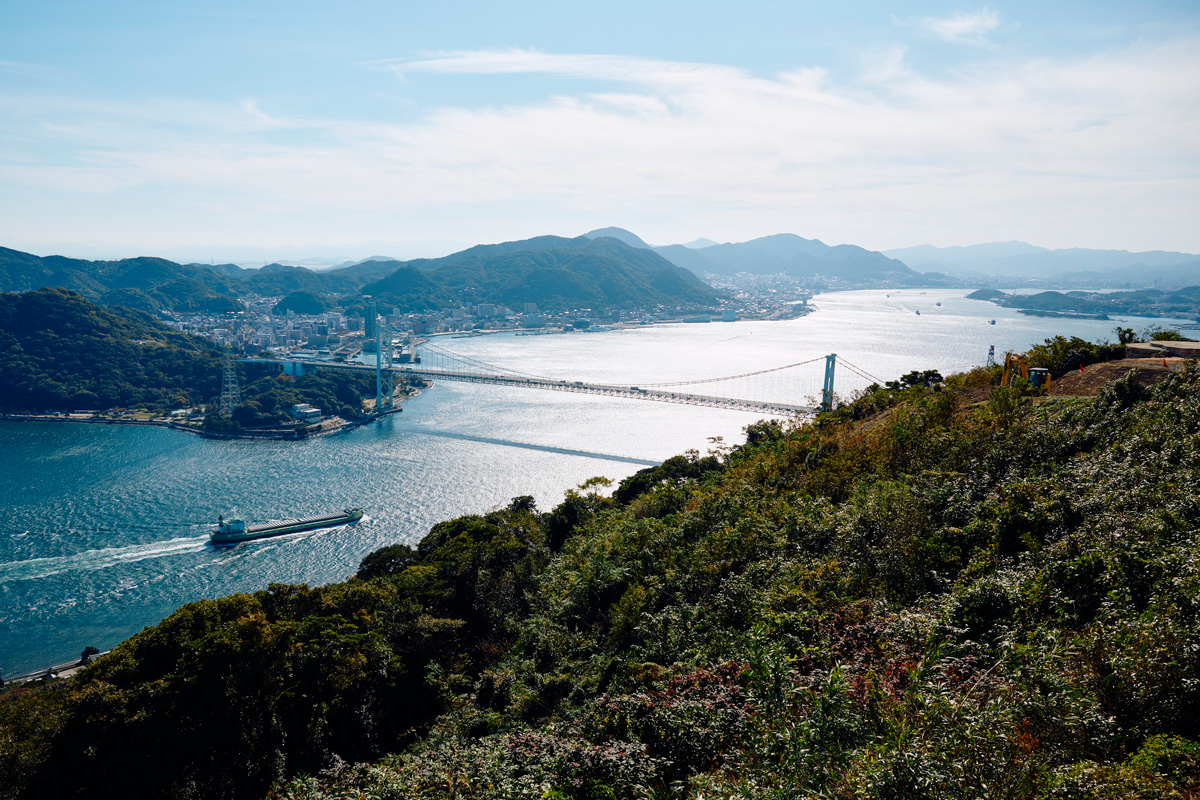
This article was written based on an interview conducted on November 25, 2024.
(Posted on April 25, 2025)
 DISCOVER MORE

