 Asia - Japan
| Date of interview | November 24, 2024 |
|---|---|
| Interviewee | Yasutaka Suetomo, Director, Iwakuni City Micro‑Life Museum |
A Facility Where Visitors Can Learn the Ecology of Aquatic Microorganisms and the Importance of Life Through the Microscope
Please tell us about the details of the Iwakuni City Micro‑Life Museum.
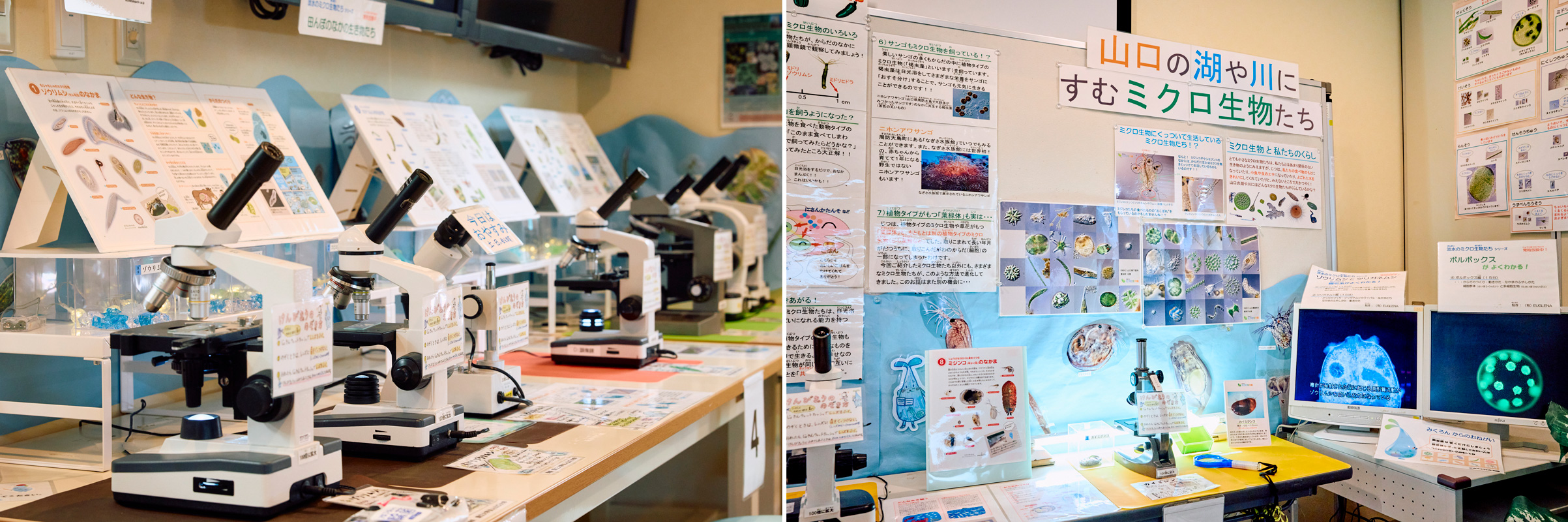
This museum allows for the observation of microorganisms featured in science textbooks, such as Euglena and Paramecium, through a total of 15 microscopes. Because it is located in front of the coast, visitors can also observe various tiny organisms collected from the seawater on the same day.
Featuring videos recorded through high-performance microscopes and panels, both of which showcase the unique movements and ecology of microorganisms, as well as special exhibitions in collaboration with universities and research institutes, this is a place where both children and adults can enjoy learning.
Why was this museum founded?
When the Shiokaze Park “Minato Oasis Yuu” was founded for storm surge protection and regional development, the idea of establishing a “protozoa zoo” was proposed in cooperation with former Yuu Town, Yamaguchi University, and the Japan Society of Protistology.
While aquariums and zoos require significant maintenance costs to keep animals, microorganisms observed through microscopes can be maintained at low costs. We currently have over 20 species, but their total maintenance cost is roughly equivalent to that of a single large dog. I heard that the initial idea gradually took shape in a cost-effective manner through repeated social experiments into a place where visitors could learn about the wonders of living organisms and the importance of life.
2025 marks the 20th anniversary. I was a Ph.D. student at the time. Impressed by the interesting job description— “passing down the appeal and fun of science to younger generations by taking advantage of the attractions of microorganisms” —which is different from typical research jobs, I applied for the position and was hired. In college, I was engaged in research and related studies aimed at elucidating the unique living mechanisms of microorganisms and was able to earn my degree, as the museum allowed me to continue my research during my days off and at night.
Who are the primary visitors to the museum?
Families, mainly. Since this museum is free of charge, visitors include a variety of people, from those who just stop by the beach to those who want to see tiny creatures. I sometimes hear children exclaim, “Cute!” and “Ugly!”
During summer vacation, we offer programs such as a lesson where children can bring interesting water samples—such as seawater they swam in—, observe the microorganisms through microscopes, and use their findings for independent research. We also hold a science class where children can learn about the wonders of microorganisms. Many programs are available for free, and I hope this place will serve as a gateway to science by making children react like, “I did not know this kind of creature existed!”
We are also engaged in a wide range of businesses, including the development of science and environmental learning materials for teachers and students, which are used in classes and for independent research, as well as the supervision of publications.

Proliferation of Blue-Green Algae Producers in Iwakuni Lakes Mainly Driven by Rising Water Temperatures
We heard the museum also conducts research and studies on aquatic organisms. What exactly do you do?
This museum is primarily focused on education, so our activities are conducted on an irregular basis. Even so, we not only investigate and document the water environment of lakes and coastal areas in Iwakuni City, but also use the collected data for classes, exhibitions, and the development of educational materials. There is a popular program that is offered about 50 times a year for a wide range of age groups, from kindergarten to high school students.
In 2013, we also conducted research on the water systems of the Nishiki and Shimata rivers in cooperation with Yamaguchi Prefecture. It was designed to investigate what organisms are present throughout the year from upstream to downstream—such as microorganisms and the water bugs that feed on them—and to convert the findings into data.
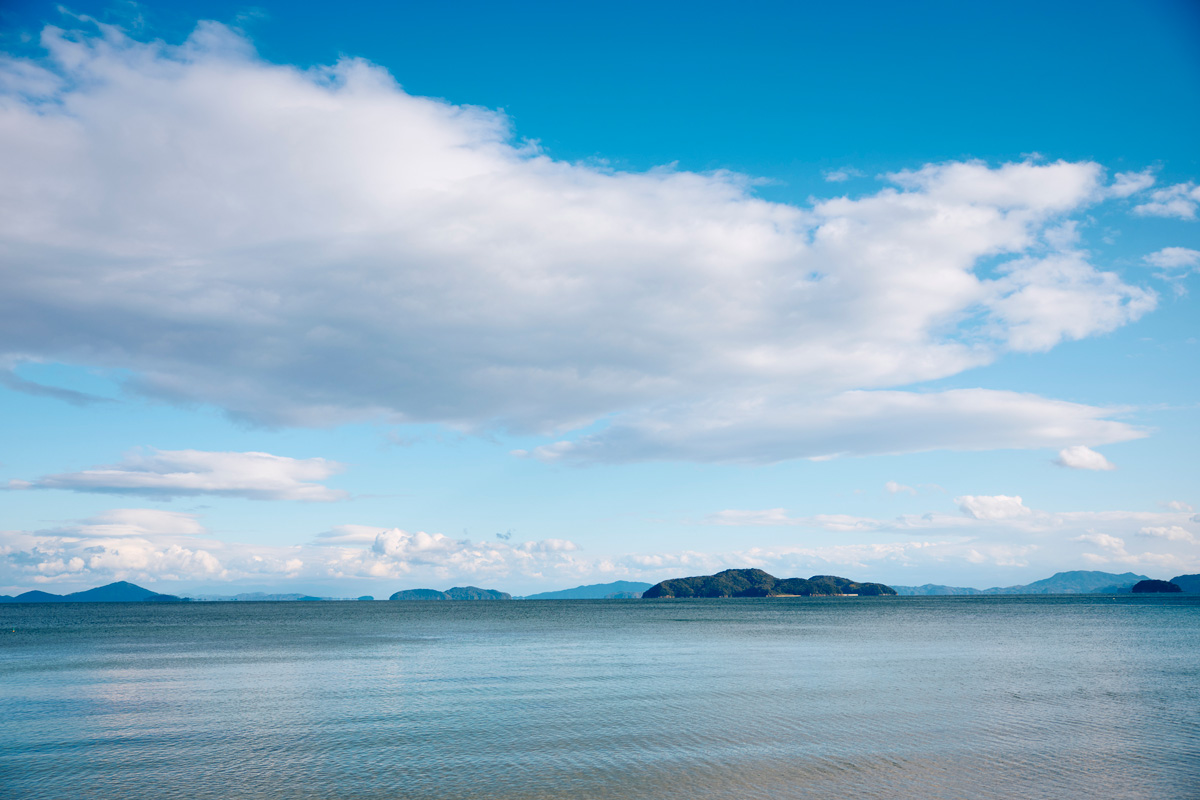
With the occasional emergence of plankton that can cause red tides and shellfish poisoning off the coast in front of the museum, we also help monitor whether their levels reach alert or warning thresholds.
We understand that the impact of climate change includes higher water temperatures in lakes across Iwakuni, especially in dam reservoirs, and an increase in cyanobacteria. Could you provide more details?
There is not enough information to confirm an increase, but the phenomenon has indeed been occurring more frequently.
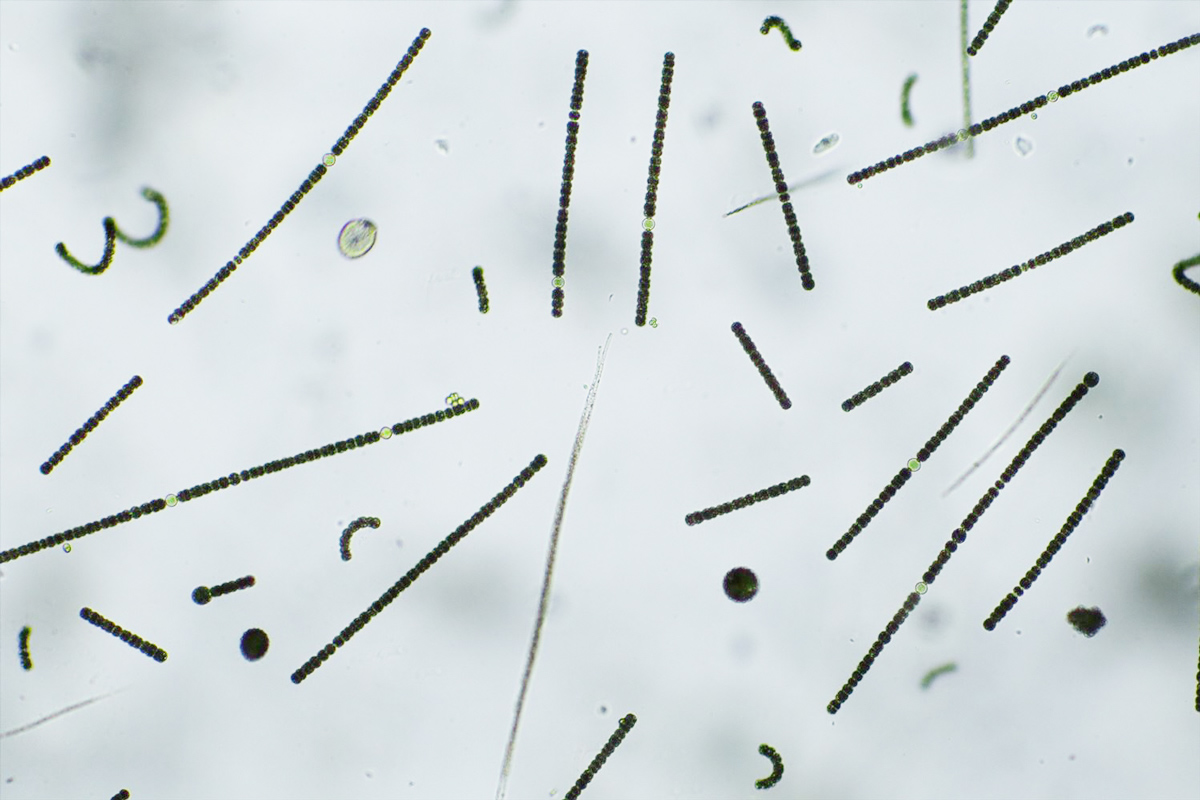
Cyanobacteria are prokaryotes. As the name suggests, they are a type of bacteria. Some cyanobacteria proliferate, covering the entire surface of the lake and even producing blue-green algae.
The major blue-green algae producers are the genera Microcystis and Anabaena. They can grow to several million cells per milliliter. When they cover the entire surface of the water, they block the wavelengths of light needed for photosynthesis, which is essential for the survival of phytoplankton, and prevent light from penetrating deeper.
This gradually reduces phytoplankton other than the blue-green algae producers, allowing the algae producers to dominate and significantly disrupt the balance of the lake’s ecosystem. At present, there is no need for serious concern in Japan, but overseas, there have been reports of damage caused by blue-green algae producers that produce liver toxins.
However, some blue-green algae producers are eaten by fish, so their existence is not necessarily harmful. The real issue is that they can disrupt the balance of the ecosystem.
Do you think high water temperatures are causing an increase in blue-green algae producers?
They could be one of the contributing factors. Blue-green algae are likely to form at water temperatures of 20°C or higher. At over 30°C, phytoplankton other than the blue-green algae producers are reduced, allowing the algae producers to dominate. Most phytoplankton do not tolerate high water temperatures. Even among zooplankton that eat phytoplankton, those that prefer blue-green algae producers may become dominant, disrupting the balance.
We regularly monitor the Nakayamagawa Dam Reservoir, which is managed by Yamaguchi, and here are some specific figures. In 2013, the number of colonies was 48,000 per liter in July, but it dropped to 24,000 per liter in September, and none were detected in November. In most years, the number decreases as water temperatures drop in autumn.
However, in the past one to two years, blue-green algae producers have occurred frequently even in autumn. For example, on November 17, 2024, 48,000 colonies per liter were observed, the same level as in July 2013. On that day, the air temperature was 19.4°C, and the water temperature was 20.0°C. For your information, the air temperature at the time of measurement was 11.0°C, and the water temperature at the time of measurement was 13.0°C in November 2013, indicating that both temperatures were significantly higher on November 17, 2024.
Recent years have given us the impression that autumn has arrived one month later. Through this monitoring, we found that shallow water environments like dam reservoirs, which are more sensitive to air temperature, exhibit a similar trend.
Some Plankton Are Toxic to Fish and Shellfish. Doing Your Own Research Helps You Adapt
Are there any effective measures to maintain water quality?
The most extensive approach could be the installation of diffused aeration and circulation systems in a dam reservoir to circulate the water through aeration. Water circulation prevents blue-green algae from staying on the surface and reduces the likelihood of their formation. However, this is costly.
Other approaches include installing partition fences at the river inflow to block the supply of nutrient salts, which cause the proliferation of blue-green algae, and applying light-blocking sheets or nets to inhibit growth by limiting photosynthesis. However, the latter may be difficult to implement because of the large size of the dam reservoir, though it has been introduced in some irrigation ponds. Unfortunately, this approach prevents the proliferation of phytoplankton other than the blue-green algae producers, so it should be considered only as a temporary measure.
It is also possible to lower the water level of the reservoir. Lowering the water level reduces the water residence time in the lake, thereby limiting algae proliferation.
Vacuuming blue-green algae producers is also an option, but it is not cost-effective in large lakes and only works in irrigation ponds.

What are the causes of blue-green algae blooms other than rising water temperatures?
Blue-green algae tend to grow during the rainy season, when nutrient salts are washed into the water. This occurs as prolonged rainfall carries substances dissolved from upstream soils into the water. Therefore, caution is needed, especially when temperatures rise after the rainy season.
Are there concerns about microorganisms other than blue-green algae that could become significant issues due to climate change?
In recent years, winter ocean temperatures (daily average) in the western part of the Seto Inland Sea, including Hiroshima Bay, have fallen below 10°C less frequently. The average water temperature has also increased by nearly 1°C over the past 30 years. Some concern that rising water temperatures may promote the establishment and proliferation of subtropical and harmful plankton.
If plankton species toxic to fish and shellfish become common in the Seto Inland Sea, caught fish will need to be checked for toxins before being shipped.
Species responsible for shellfish poisoning are already seen throughout the Seto Inland Sea. Municipalities, such as the prefectural government, regularly monitor plankton levels and issue a shellfish poisoning alert when thresholds are exceeded. If plankton species toxic to fish and shellfish become established, additional monitoring or precautionary advisories may be required.
You mean there is no need to panic, and each of us should proactively check to ensure safety. This can also be a form of adaptation.
Correct. Ultimately, protecting ourselves is essential. For example, red tides, which are taught in science and social studies in elementary and junior high schools, are so well-known that people can picture them just from the name. Similarly, people should be aware of shellfish poisoning, including knowledge such as “Do not dig clams when an alert is issued” and “Shellfish can cause food poisoning even if cooked.” With regard to blue-green algae, the more people understand its formulation mechanisms, the more easily and effectively regional measures can be implemented. I would also like to actively share information through classes, events, and the development of educational materials.
This article was written based on an interview conducted on November 24, 2024.
(Posted on April 25, 2025)
 DISCOVER MORE

