 Asia - Japan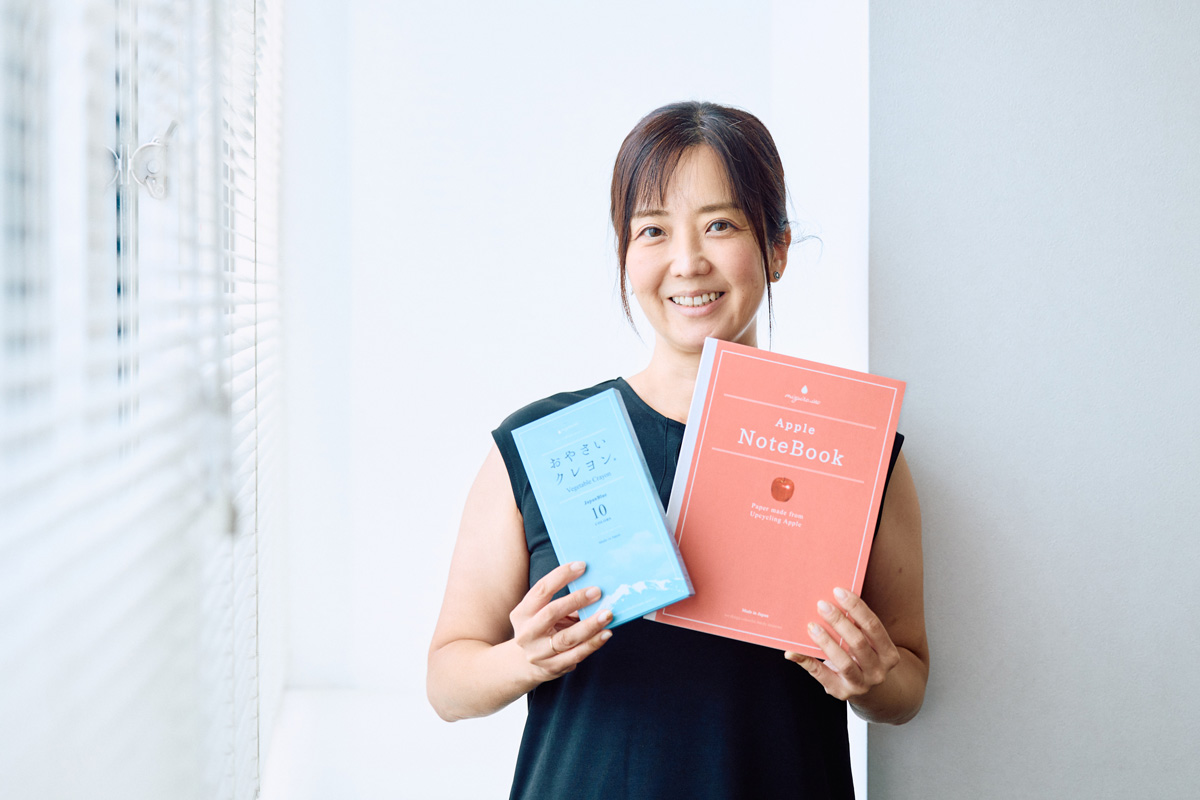
| Date of interview | 2024/7/25 |
|---|---|
| Interviewee | mizuiro Inc. CEO, Naoko Kimura |
In Japan today, we have access to a wide variety of food throughout the year. However, this convenience is accompanied by the social issue of massive food waste. Meanwhile, in the production sector, issues like climate change-induced heat damage are increasingly affecting crop quality. In response to these challenges, there is a growing movement to repurpose food waste and crops that would otherwise be discarded, giving them new value. This effort supports both climate change mitigation and adaptation, while also helping to protect agricultural producers. Here are four examples of such initiatives:
- Vol. 54 fabula Inc.: Transforming food waste to enrich human life again
- Vol. 55 LOVST TOKYO Inc.: Apple leather, creating a kinder world through fashion
- Vol. 56 Igarashi Paper Co., Ltd.: A new traditional craft using discarded vegetables and fruits as part of the raw material
- Vol. 57 mizuiro Inc.: Fun crayons for children to learn with, in the natural colors of vegetables and fruits
What are vegetable crayons?
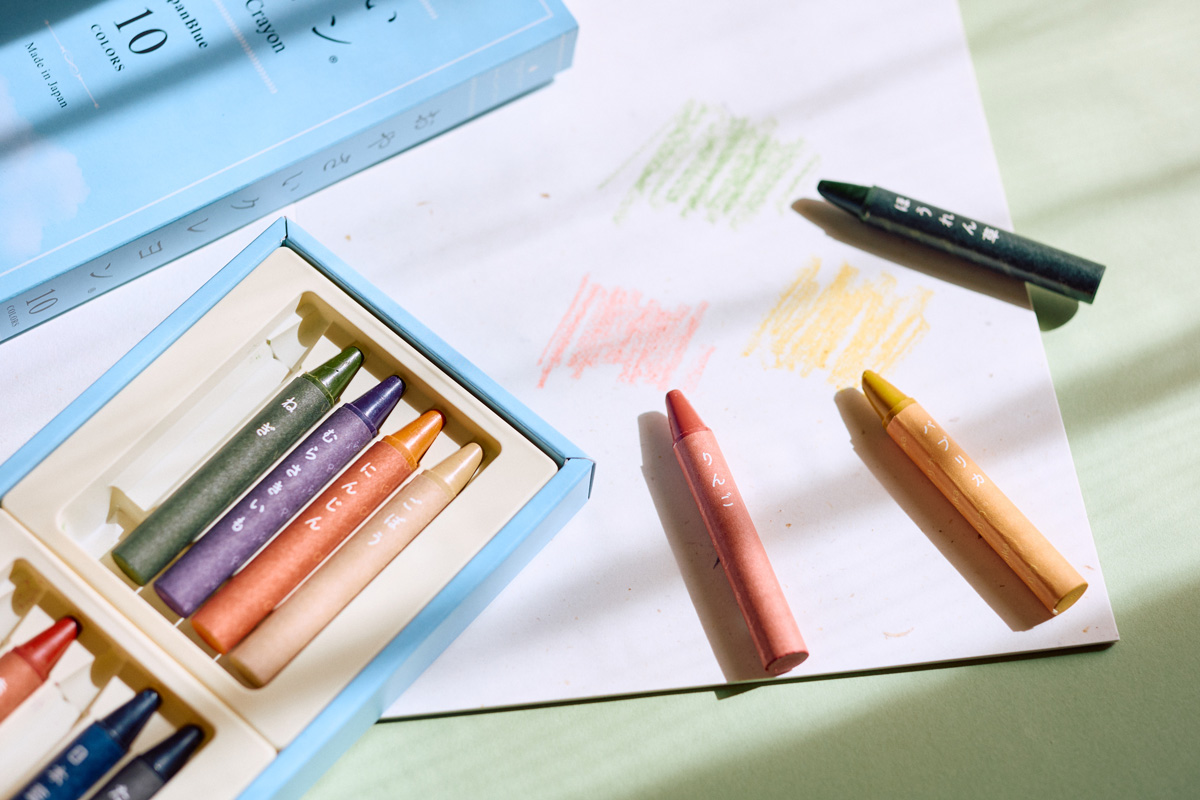
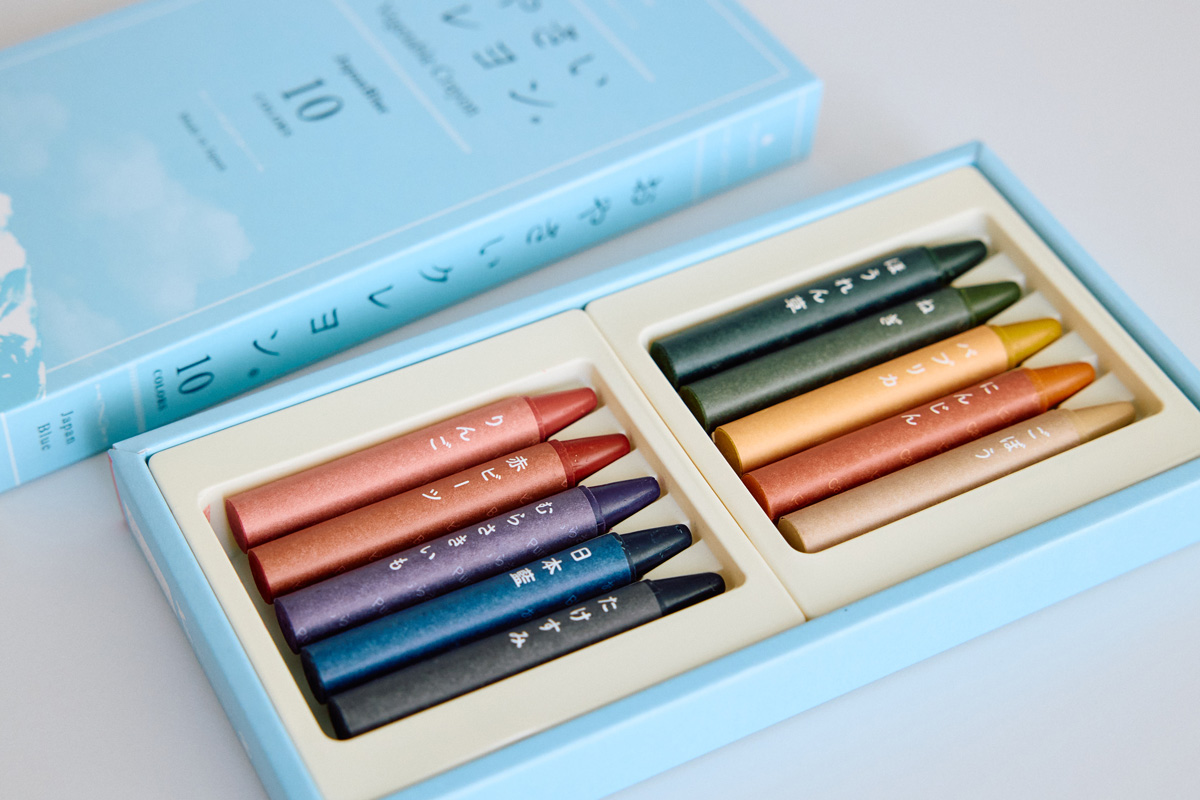
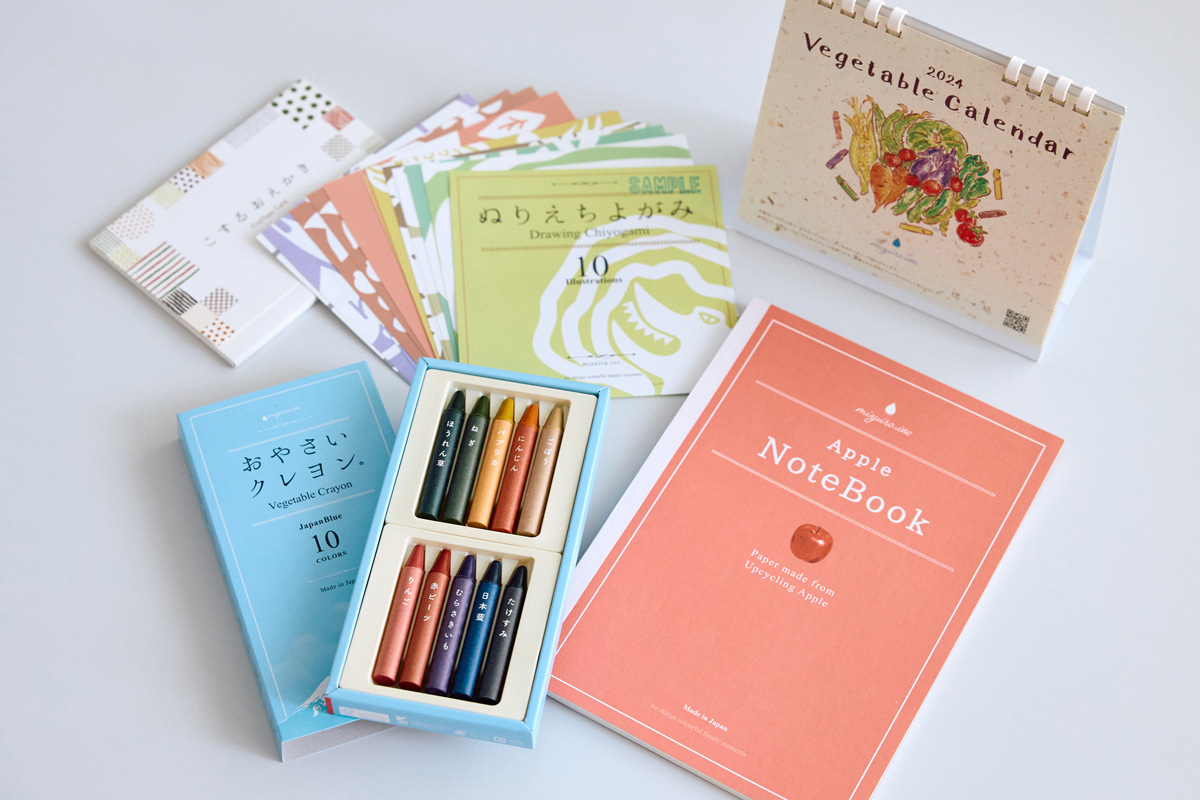
Vegetable crayons are made from rice oil and rice wax, which are extracted from rice bran, and pigments sourced from discarded vegetables and crops.
I am from Aomori Prefecture, and while working as a freelance designer, I also had an interest in product design. The idea for the vegetable crayons came to me in 2011. I thought, “Could I create a product with a unique twist using local specialties from my hometown, from a designer’s perspective?”
At that time, my daughter was in second or third grade, and I wanted to create something we could enjoy together. That’s when I came up with the idea, “How about drawing pictures with the colors of vegetables?” It started as a hobby.
What steps did you take to get started?
Initially, the idea was to “draw pictures with vegetables,” so I considered using paints instead of crayons. However, while anyone can squeeze juice and apply it with a brush, when it comes to turning it into a product for distribution, considerations like spoilage and degradation become important. After exploring this, I realized that it’s not such a simple task.
At that point, I started considering other art supplies, like colored pencils or crayons. For colored pencils, there is a process of baking the core, but to do that, vegetables and fruits would need to be baked at a high temperature, which seemed difficult. So, I researched what crayons are made of, and discovered that they are made of wax and pigments. To test if I could replace the pigments with vegetables, I melted some wax and added juice to it, and when I tested it, the colors turned out much better than I had expected.
It started as your own experiment, then?
Yes. Since it started as a hobby, I didn’t think too deeply about it at first. However, when I attended an industry exchange event, I shared my idea with the people around me. Then, by chance, someone from the Sixth-Industry Support Center was there, and they said, “This is an interesting idea; why not try turning it into a business?” They also mentioned there were subsidies available, so I visited the center a few times, applied for the subsidy, and got approved. This is how the process of making the crayons became more serious
How did you come to work with the factory that manufactures the crayons?
I found the factory by myself. I made a list of factories that are part of the Japan Crayon Industry Cooperative, and I happened to find a video on YouTube about how crayons are made by a factory in Nagoya. It was a video from 11-12 years ago, and I thought that if they were posting videos like that, they might be open to new ideas. So, I called them.
The person who answered the phone is still in charge now, and at the time, when I said I wanted to make crayons from vegetables in Aomori, they didn’t quite understand what I meant (laughs). But after explaining it in more detail, they agreed to help.
Once you obtain discarded vegetables, what process do you follow to make the crayons?
First, the discarded vegetables collected during harvest are powdered. This way, they can be stored for several years.
Next, we blend the vegetable powder with rice wax and rice oil, and pour the mixture into molds to cool and form the crayons.
Some producers who have drying equipment dry the vegetables before giving them to us. If they don’t, we collect them and take them to our processing plant where we dry and powder them all at once.
The Vegetable Crayon has 10 colors, but have the color variations remained the same since the beginning?
The current color variations are slightly different from the original ones because some vegetables and fruits are no longer available for production. For example, we initially received the pulp from Aomori-grown black currants, but due to a lack of successors to maintain the fields, we can no longer use them in the crayons.
Now, we receive discarded materials from larger factories rather than individuals, and not only from Aomori Prefecture.
The color composition of the crayons was something I struggled with at first. Since the base is vegetables, the colors ended up being biased towards green and yellow. I wondered if crayons with such hard-to-use color combinations would be okay, but then I realized that there are no blue vegetables in nature. So I decided it was okay to use the natural colors of vegetables as they are.
Do you work with several food processing companies?
Yes. Initially, I consulted with the Agriculture, Forestry and Fisheries Department of Aomori Prefecture, and the connections they introduced me to helped me get started. Now, I sometimes ask local agricultural cooperatives for introductions. Our company also handles OEM (Original Equipment Manufacturing) orders, so depending on the project, customers may request products from specific regions.
Additionally, we sometimes collaborate with food manufacturers to create crayons using the by-products of food as part of their PR efforts for recycling. Recently, the balance between our own products and OEM orders has been about 50/50.
More companies are paying attention to your crayons with a story behind them.
Yes, a life insurance company once contributed existing vegetable crayons to children across their branches nationwide for three years as a form of social contribution. It was wonderful that so many children received the crayons. It was a large-scale project, and we produced a significant amount of crayons. As a result, a lot of discarded vegetables and by-products were put to good use.
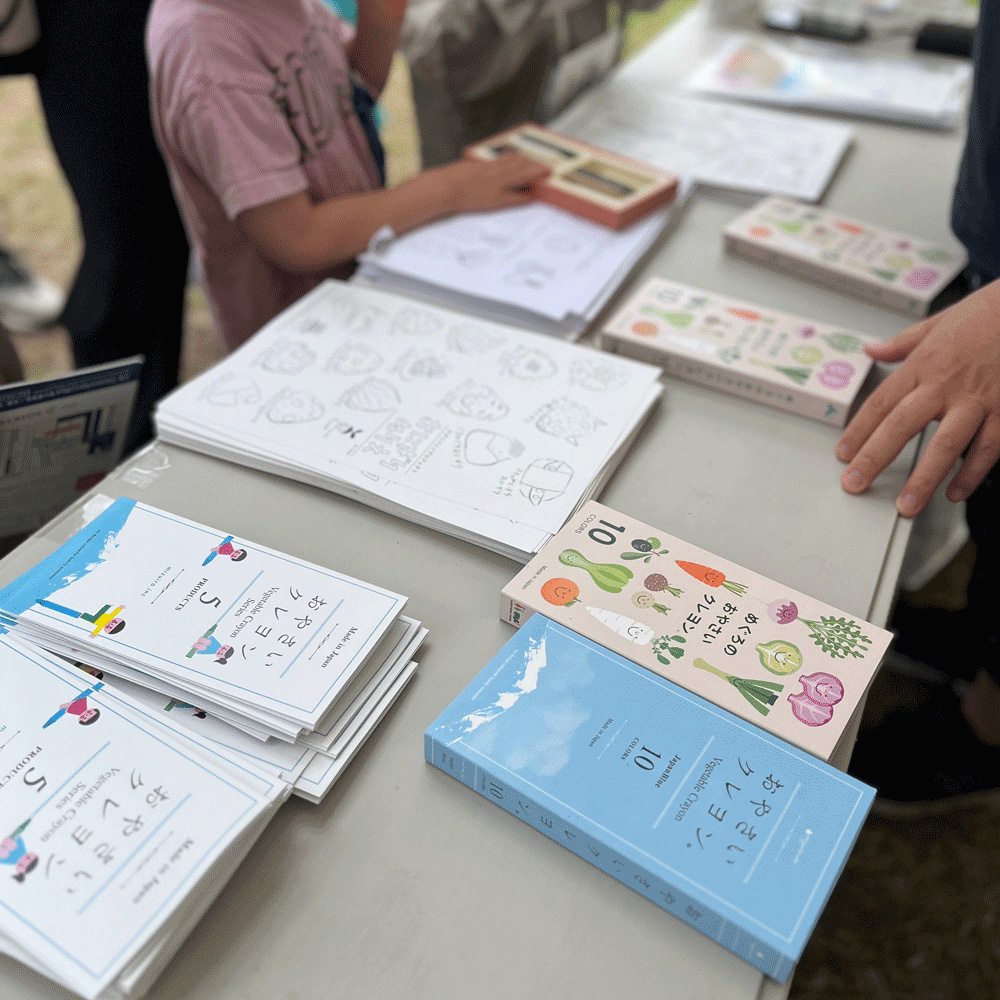
Awareness of vegetable crayons is growing, and workshops are being held frequently.
There is high demand for workshops. Sometimes they are simple coloring sessions, but we also have workshops like candle-making, where crayon shavings are used to color transparent gel, or drawing on fabric dyed with vegetable colors using the vegetable crayons. We often collaborate with companies to plan these events.
Many children probably participate, but is there something you want to convey to a broader audience through these workshops?
The crayons themselves are just regular crayons, but I hope they leave a warm memory of the time spent using them, rather than just being a product to buy and use. It might be difficult for young children to understand that the crayons are made from vegetables, but through play, they will gradually learn. Later on, when they grow up, they might recall, “I think my parents wanted to teach me the importance of food through crayons,” and that memory might contribute to a broader awareness in society. I believe that education about the growing issue of food waste can only change through small, cumulative efforts like this.
What are your plans for the future?
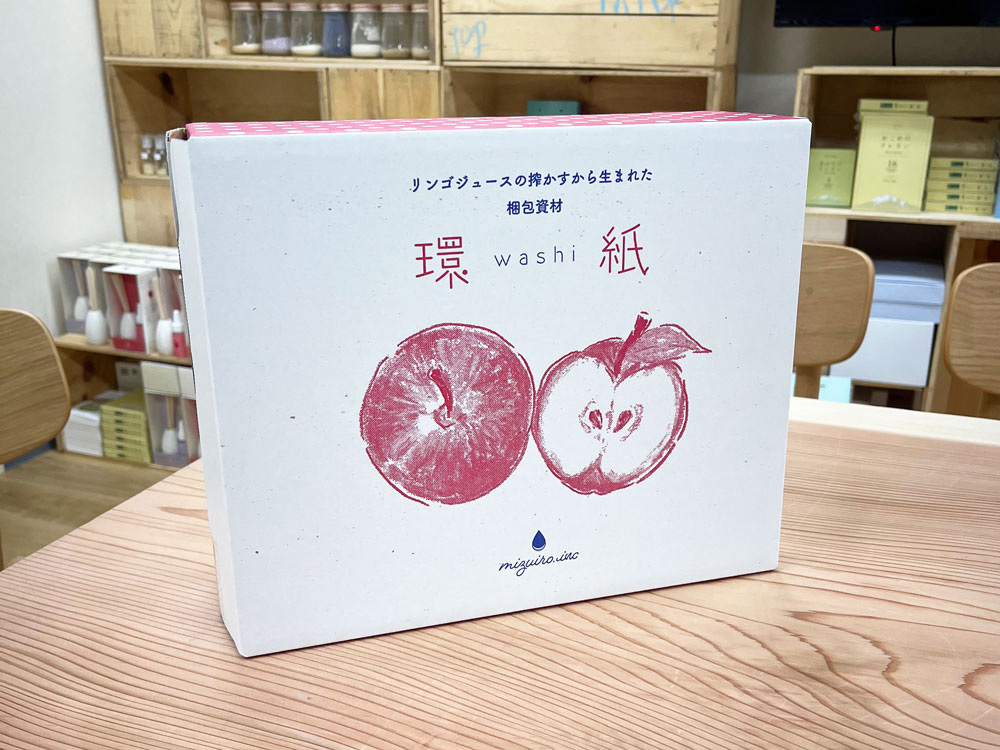
Currently, we are trying to create apple juice cartons from the by-products of Aomori-grown apple juice. If this becomes a reality, we will be able to produce a large number of cartons, creating a recycling system where apple juice is shipped in cartons made with apple by-products.
Each crayon contains a small amount of vegetable material, but over the past 10 years, I believe we’ve achieved some meaningful results. In the past decade, the concept of upcycling has become more widespread, and new products are being created everywhere. Perhaps we were part of the initial spark that helped this movement grow. In that sense, I now realize how important it is to continue these efforts.
This article was written based on an interview conducted on June 25, 2024.
(Posted on November 28, 2024)
 DISCOVER MORE

