 Asia - Japan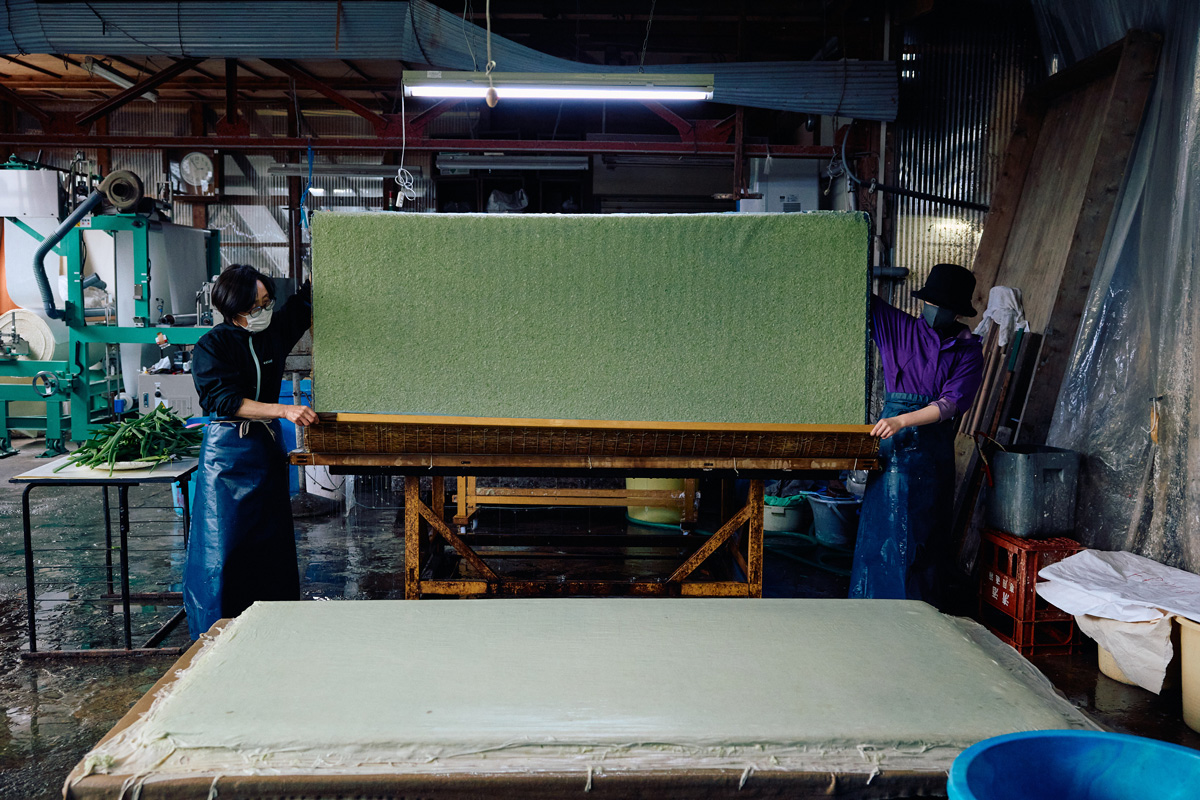
| Date of interview | July 23, 2024 |
|---|---|
| Interviewee | Igarashi Paper Co., Ltd. Traditional Craftsman: Masami Igarashi Best Agrifoods Co., Ltd. Executive Officer & Business Division Manager: Takefumi Nomura |
In Japan today, we have access to a wide variety of food throughout the year. However, this convenience is accompanied by the social issue of massive food waste. Meanwhile, in the production sector, issues like climate change-induced heat damage are increasingly affecting crop quality. In response to these challenges, there is a growing movement to repurpose food waste and crops that would otherwise be discarded, giving them new value. This effort supports both climate change mitigation and adaptation, while also helping to protect agricultural producers. Here are four examples of such initiatives:
- Vol. 54 fabula Inc.: Transforming food waste to enrich human life again
- Vol. 55 LOVST TOKYO Inc.: Apple leather, creating a kinder world through fashion
- Vol. 56 Igarashi Paper Co., Ltd.: A new traditional craft using discarded vegetables and fruits as part of the raw material
- Vol. 57 mizuiro Inc.: Fun crayons for children to learn with, in the natural colors of vegetables and fruits
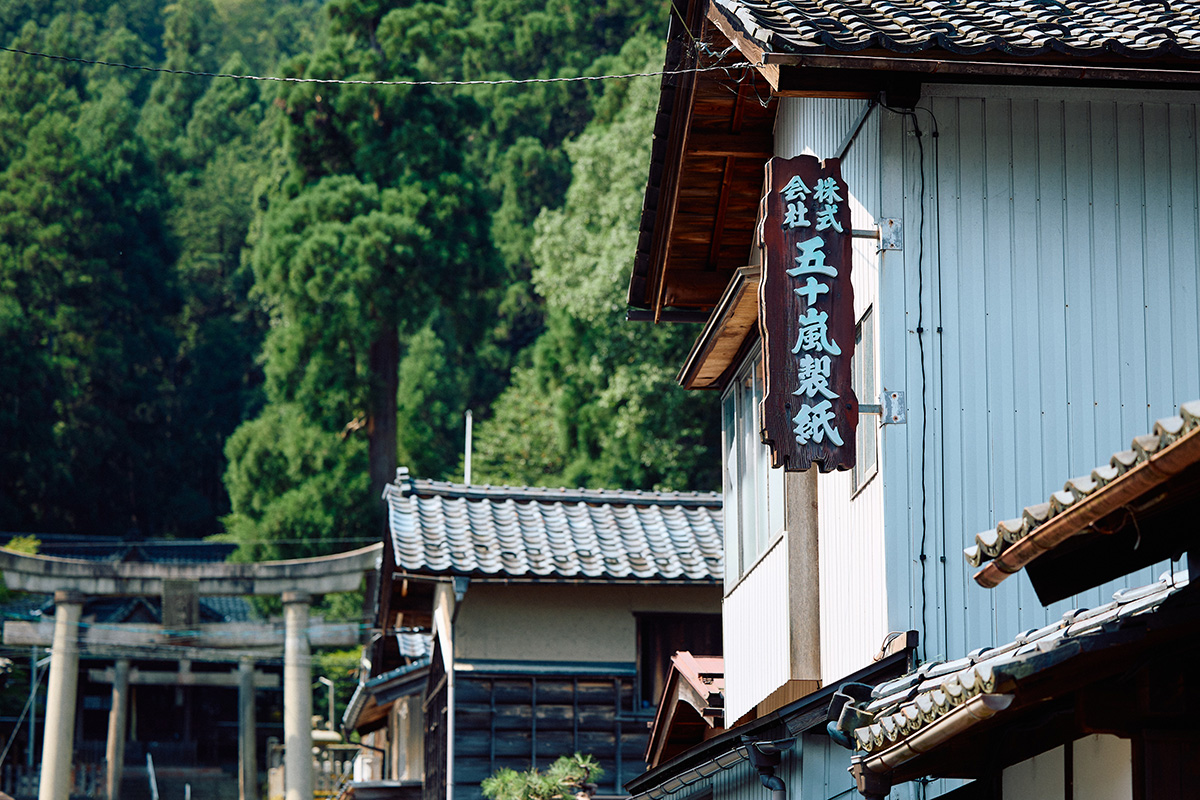
Igarashi Paper Co., Ltd. has been weaving the history of Echizen Washi for over 100 years, since 1919. First, could you explain the characteristics of Echizen Washi?
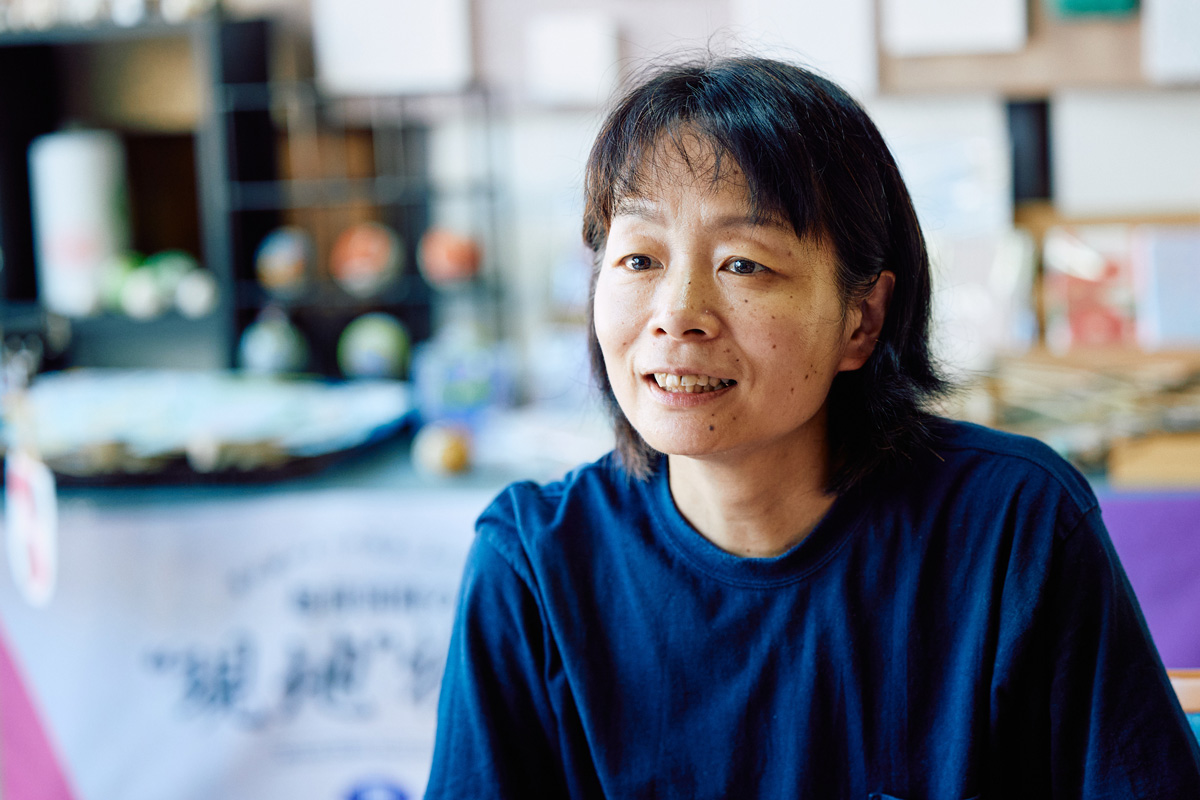
Ms. Igarashi: It’s hard to explain because it incorporates a variety of techniques and methods. The famous “Housho” paper, which is used for official documents, is made from Echizen Washi, and it’s said that the first Japanese currency was also made from this paper. Echizen is one of the oldest paper-making regions in Japan.
Echizen Washi is unique because it can be made into smooth, silky paper that’s great for writing, as well as sturdy, rough paper. The types of raw materials used are chosen according to the purpose of the paper, and it can be made into a wide range of different types of paper.
The main materials used are Kozo (mulberry), Mitsumata, and Gampi plants, right?
Ms. Igarashi: Yes, that’s right. Sometimes hemp is also used.
In some cases, paper is made purely from Kozo, while in others, a mix of Kozo, Mitsumata, and hemp is used, depending on the customer’s request. Gampi is a very high-quality material and is often used in its pure form. It has a beautiful sound when touched, a glossy sheen, and the writing feel is exceptional.
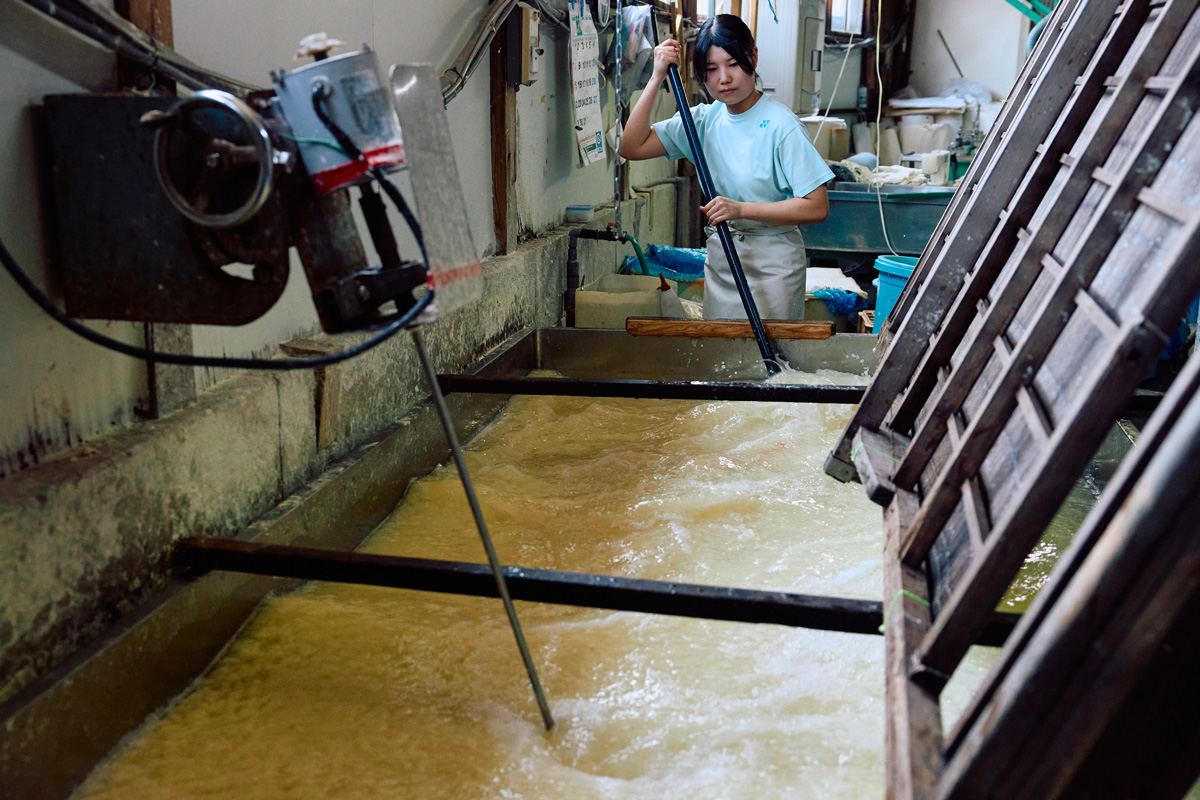
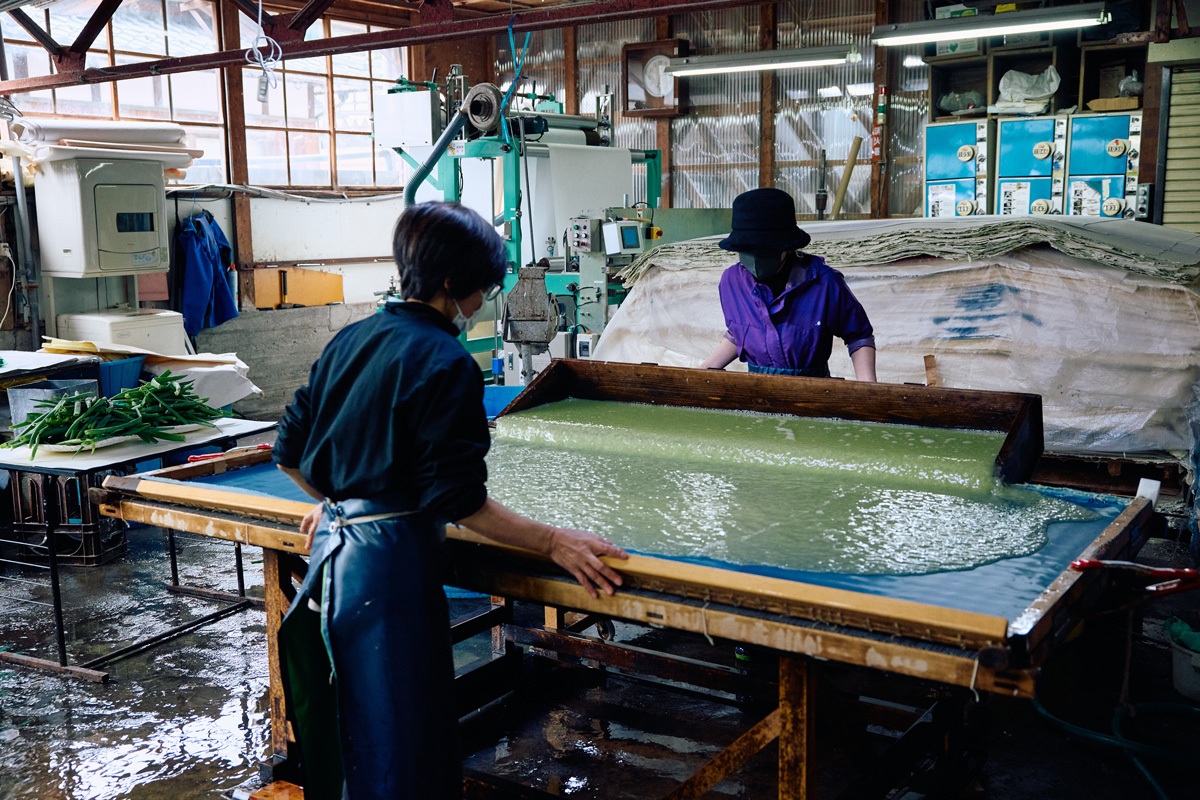
The part of the plant used is the bark of the stem. First, the stems are cut, steamed, and the bark is peeled off. After the bark is peeled, it is boiled and softened, then pounded to break the fibers down. These fibers are dissolved in water, and finally, a substance called “Neri” is mixed in to make the paper.
Neri is a sticky liquid that is produced when the root of the yellow hibiscus (Althaea) plant is crushed and soaked in water. This creates a viscous solution that is added to the water used for making paper. The yellow hibiscus is an essential ingredient in Japanese paper-making. The harvest of these materials has significantly decreased in recent years. The main reason is the aging of the producers and the lack of successors. Especially for Gampi, it’s very difficult to cultivate. While the plant grows abundantly in the mountains, the problem is that the presence of bears has made it difficult to collect.
To address this, in Echizen, we’ve been gathering wash artisans for the past 10 years to invite plant experts and explore cultivation methods. However, it’s still a challenging task.

“Food Paper” uses discarded vegetables and fruits as alternatives to traditional paper-making materials, which is a groundbreaking approach. What made you focus on food waste in the first place?
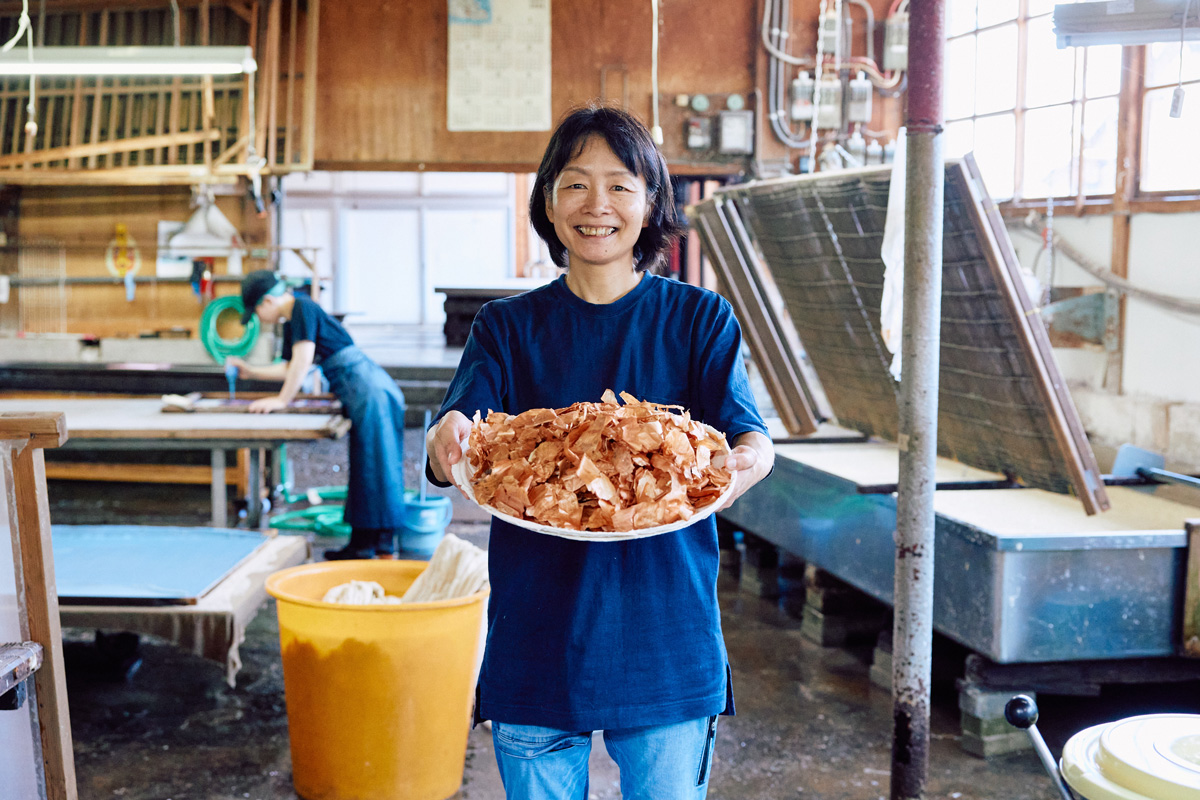
Ms. Igarashi: My son was doing a research project for his summer vacation, where he was experimenting with turning common foods and plants into paper. The trigger for this was a TV feature on banana paper (paper made from fibers extracted from banana stems). After seeing that, he thought it might be something he could try.
Suddenly, he asked to borrow paper-making tools, and I taught him the process. Honestly, at first, I didn’t think it would work, but even if it didn’t, at least he’d have some results. But when we saw the outcome, it actually turned out quite well, and I was surprised. This happened when he was in fourth grade.
In fifth grade, he did an experiment using a microscope to observe the differences in fibers and water absorption. By sixth grade, he was studying paper strength and writing feel. He continued his research into middle school, and in his third year, he said, “I want to make paper that can serve as a salt supplement or be dissolved in hot water to make a soup, something that could be eaten in emergencies.” However, due to various reasons, that idea has not been realized yet.
What led you to turn your son’s “Food Paper” project into an actual product?
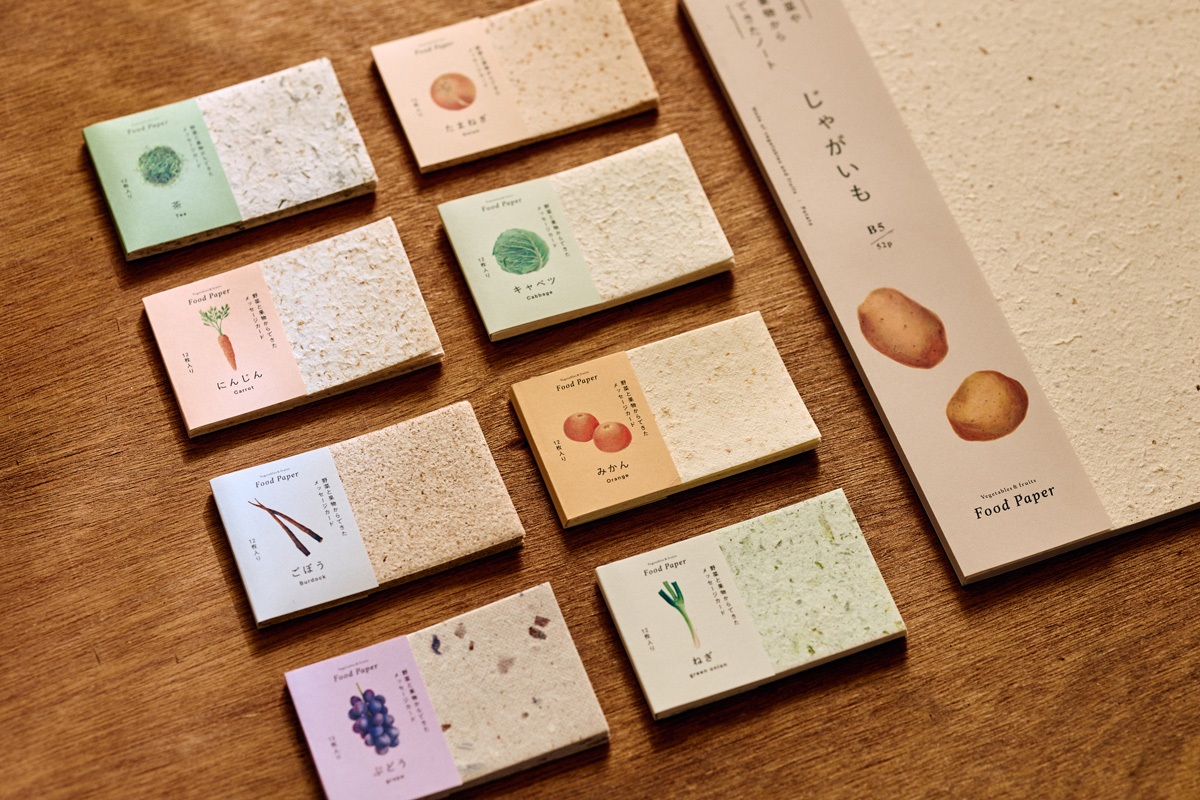
Ms. Igarashi: In 2019, I took part in a “Management and Branding Course” organized by Fukui Prefecture, where I learned about branding and product development for nearly a year. During the course, we were asked to create a brand for a final presentation. While discussing this with a designer I knew, we realized that we first needed to address the shortage of raw materials for traditional Japanese paper. That’s when I remembered my son’s research. So, we decided to brand his project. Initially, we made easy-to-access stationery items like notebooks and cards and managed to shape them into a product.
At the time, I was juggling a lot of things, so I didn’t have much time to talk with my son. After the release, I realized that I hadn’t reported to him about it (laughs). When I did, he was happy to hear about it.
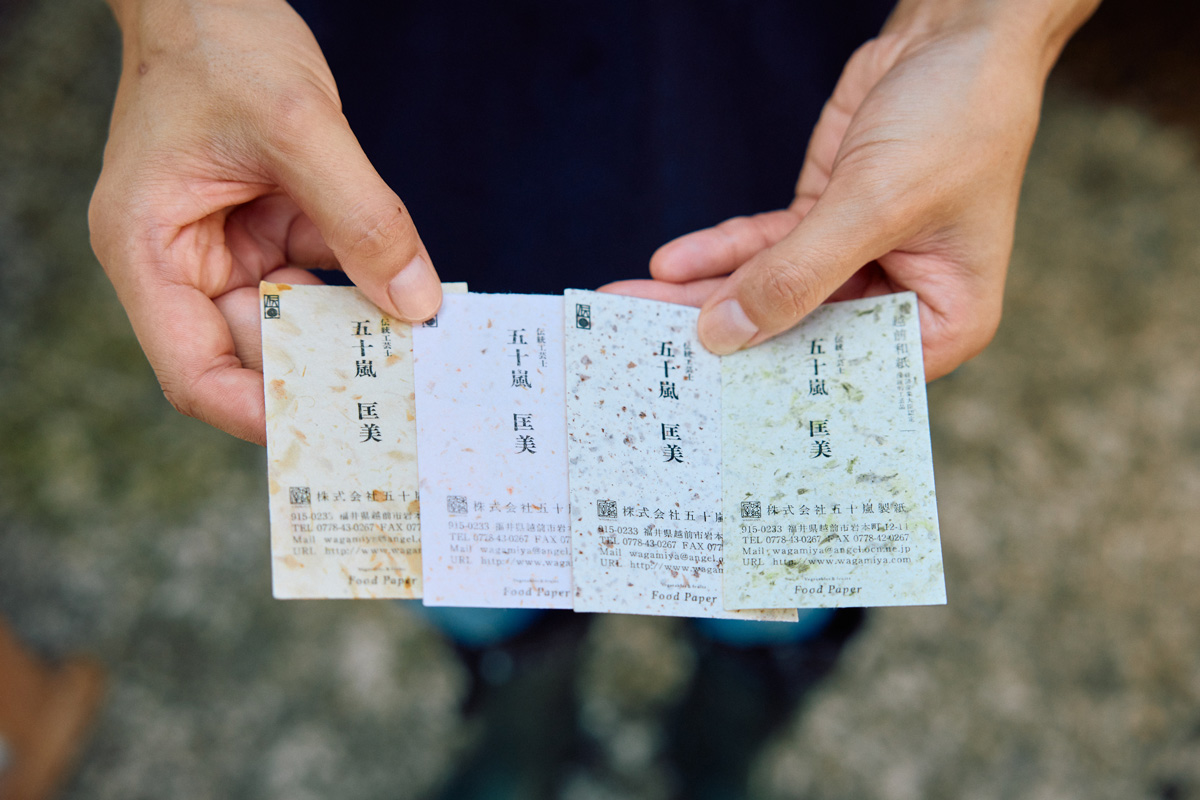
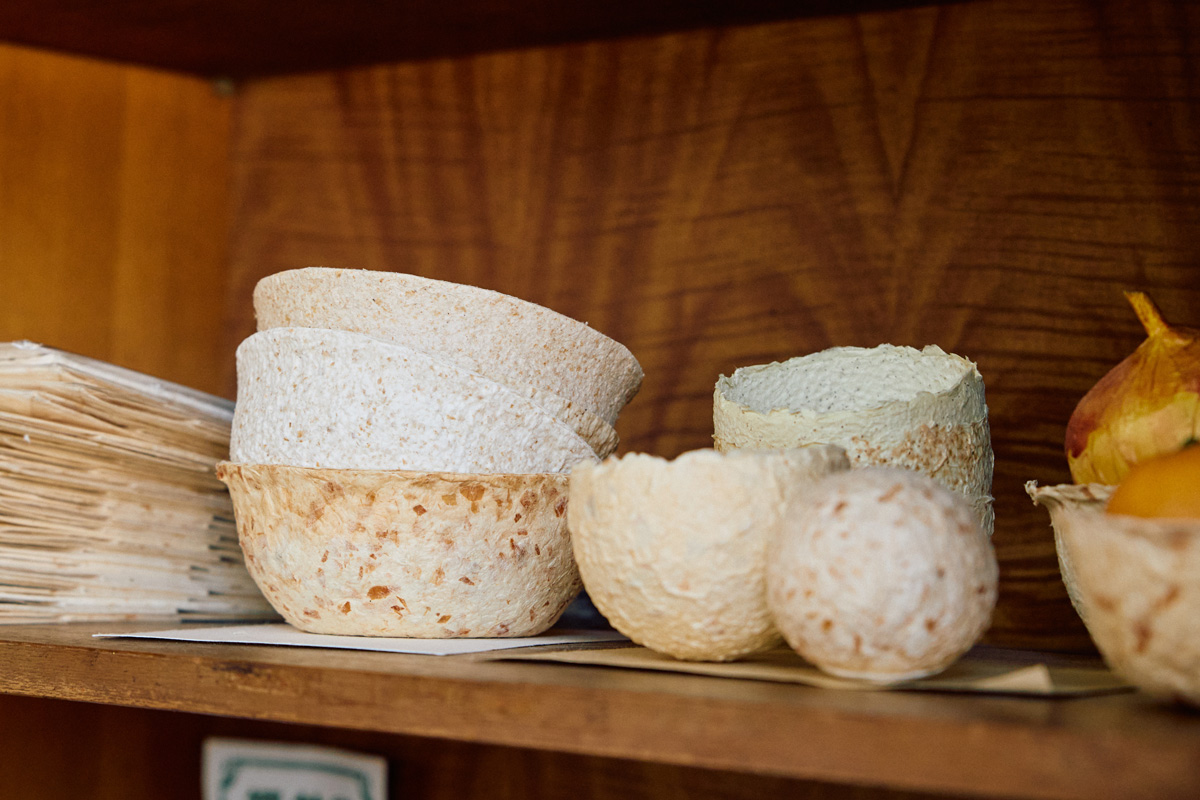
How do you source the discarded crops that are used in Food Paper?
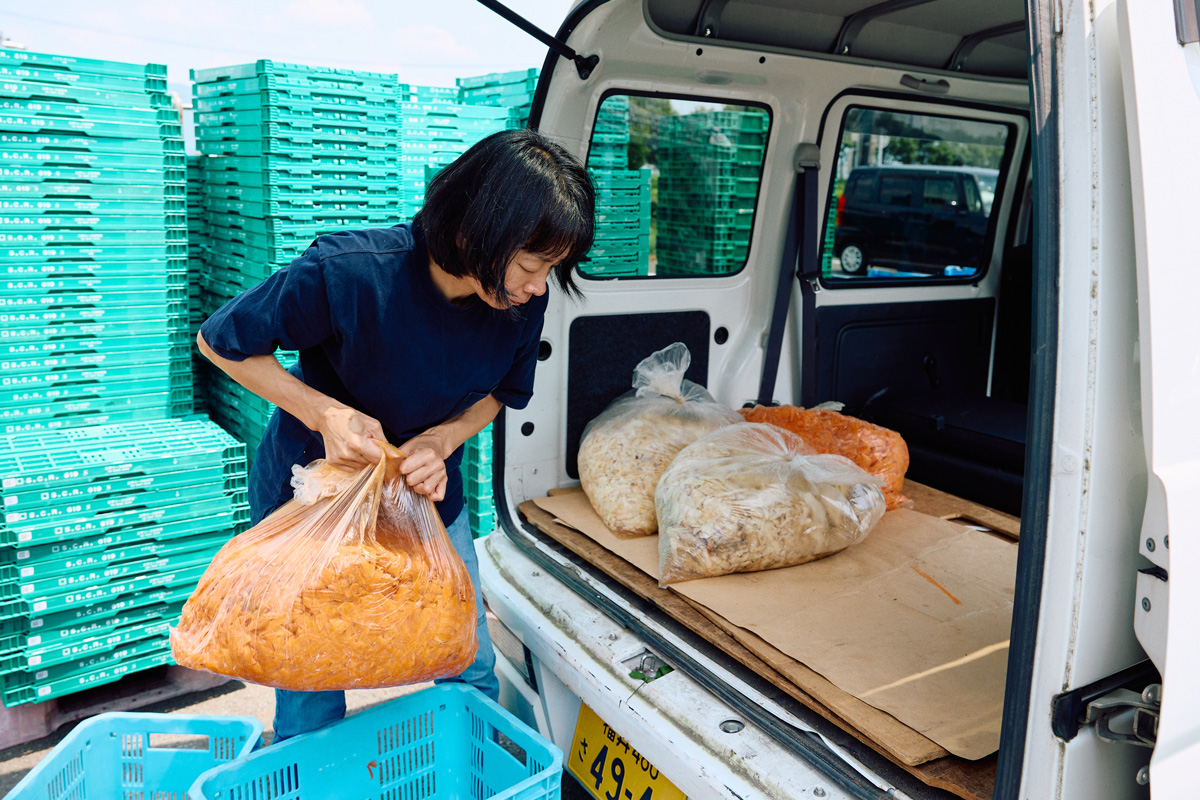
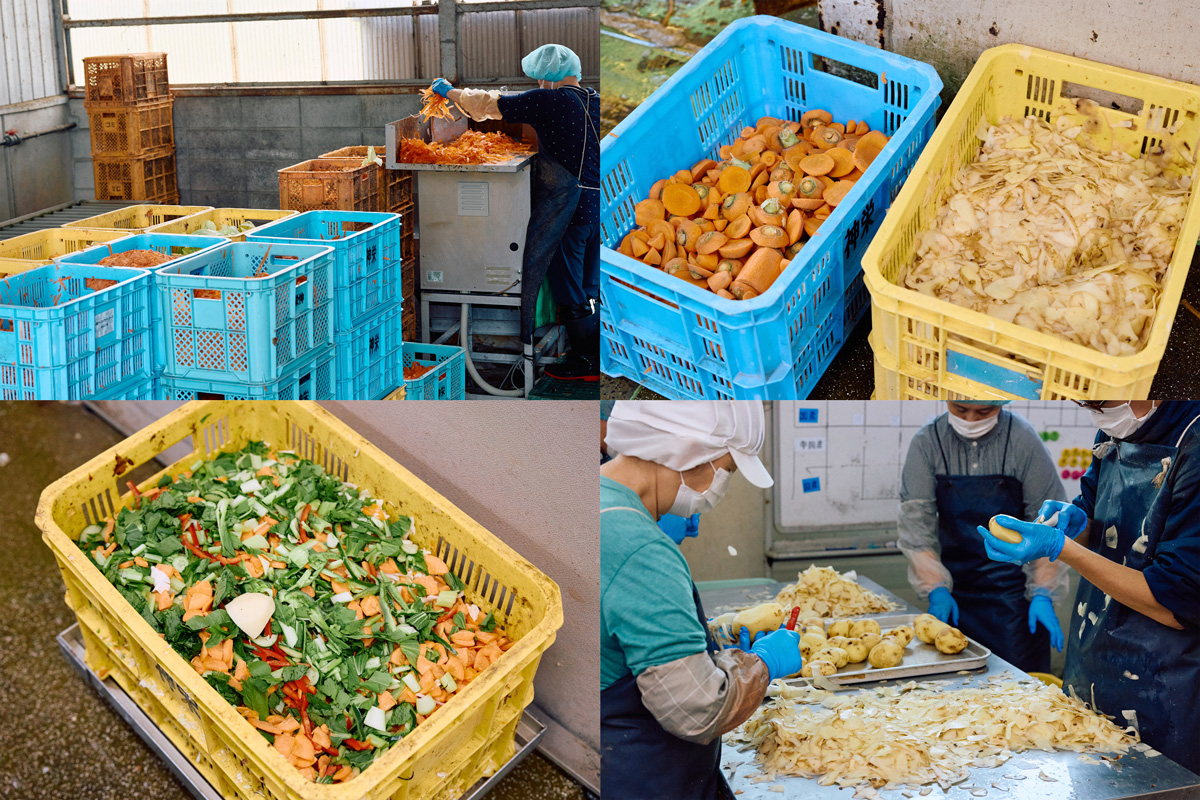
Ms. Igarashi: Most of the time, we receive the byproducts from cut vegetable factories. These factories supply to large chain restaurants, hospitals, schools, and so on, and produce hundreds of kilograms of waste daily. From these factories, we get vegetable skins like onions, carrots, and potatoes. We also receive vegetables with poor yields from producers through JA (Japan Agricultural Cooperatives).
At first, I didn’t know where to get discarded vegetables, so I took brochures and visited supermarkets or called around. Eventually, thanks to a newspaper feature about us, the president of a cut vegetable factory reached out, and we were able to start receiving their waste products.
From what I learned, they were really struggling with it. For example, they’d take the skins of carrots to a nearby horse stable, but there was so much waste produced every day that it was too much to feed the horses. So, they were happy to give it to us. We’re grateful for the kindness of everyone involved in making this possible.
When combining traditional paper-making materials with food waste, how much can the use of raw materials be reduced?
Ms. Igarashi: Actually, my son initially made paper using 100% food waste. However, when it came to selling the product, the strength was an issue. So, we decided that we needed to mix in some Kozo (the traditional paper-making material).
The ratio of Kozo depends on the type of food used, but we’ve been able to incorporate up to 50% food waste. Even though it’s only half, it’s significant that we’ve managed to reduce the amount of Kozo used.
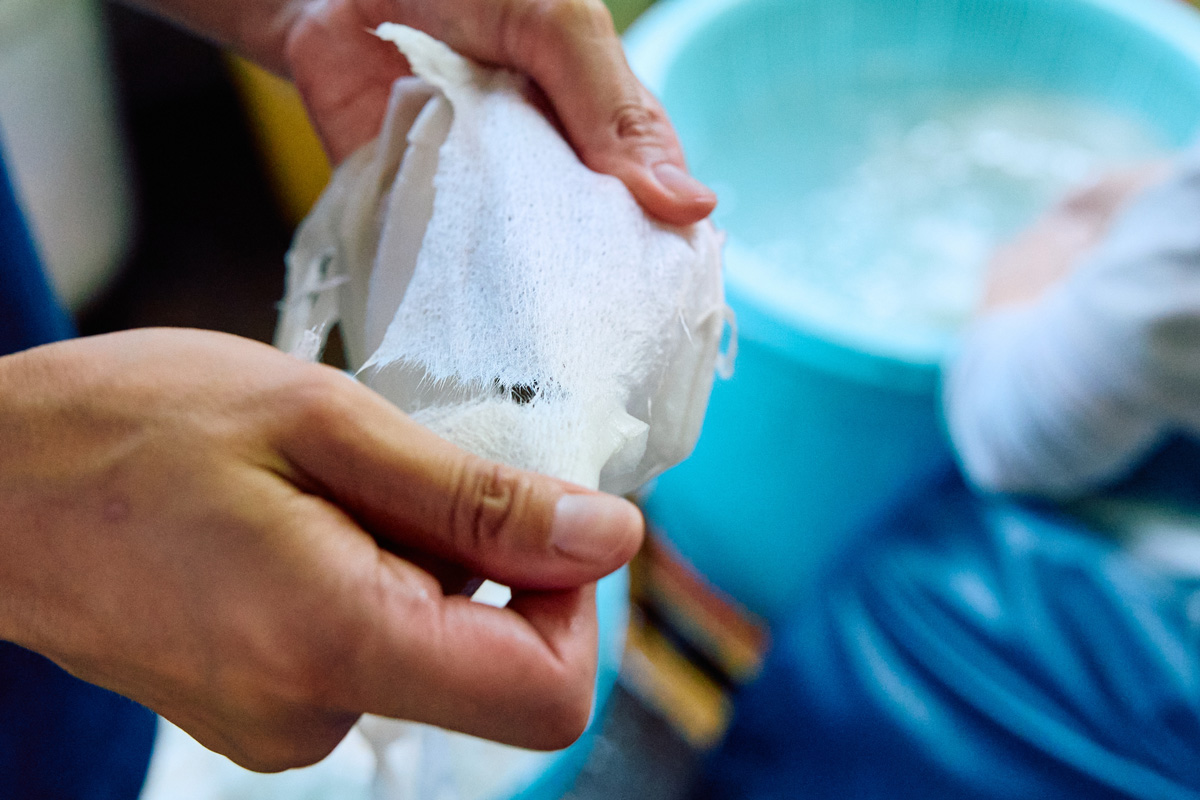
Do you store the leftover materials by drying them or in another way?
Ms. Igarashi: Most of the time, we make the paper right away after receiving the materials. However, for onions, burdock, and potatoes, we dry them all at once on sunny days and rehydrate them with water when we need to use them.
One of the suppliers of food waste is Best Agri Foods’ Fukui Factory. Can you tell us how you first connected with them?
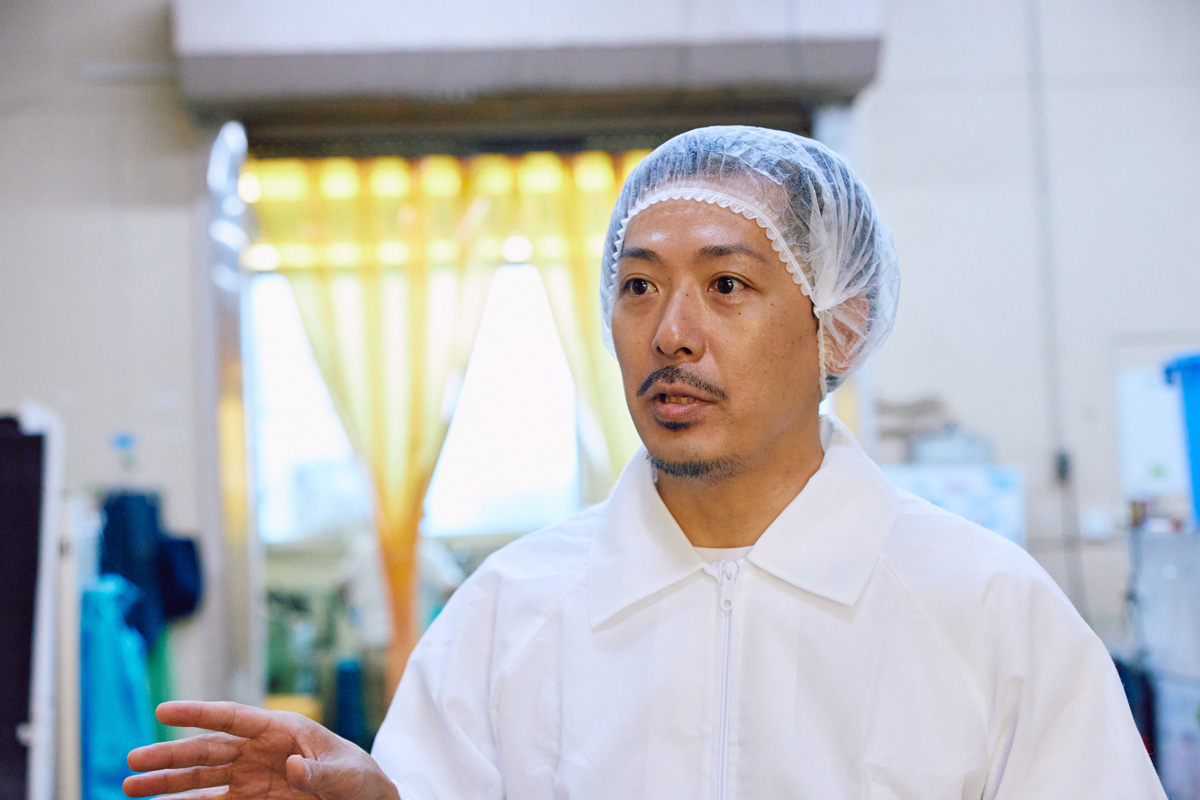
Mr. Nomura: Our company president heard about Ms. Igarashi from an acquaintance and thought it was a wonderful initiative. They contacted us directly via email to discuss it.
We’ve been dealing with the problem of how to dispose of the byproducts at our Fukui factory, which produces 500 kilograms daily, and at our Kanazawa factory, where it reaches 1 ton. We were considering various solutions, such as returning the peeled skins to producers for composting, or making animal feed for farms. During this process, we came across Ms. Igarashi’s work, and we thought it was a great opportunity to collaborate, so we decided to offer our support.
How much waste do you typically provide to Ms. Igarashi each month?
Mr. Nomura: We provide waste once a month or once every two months. On some days, the truck is packed full. The contents vary depending on the type of waste—onions one day, potatoes another—but we always inform her in advance about what they need.
What do you think of Ms. Igarashi’s efforts?
Mr. Nomura: At first, I was amazed that something like this could be done. It was incredible to hear that it was started by her son, and after learning the full story, our president became very interested. It felt like a way for us to contribute to society, and we were excited to be involved.
While we have been working on initiatives like recycling waste for compost or animal feed, the sheer volume of waste is overwhelming. So, we’ve set up a lab within our company to dry vegetable peels and develop products like medicinal teas blended with herbs. We’re planning to continue focusing on product development moving forward.
In a time when it’s becoming harder to obtain traditional washi materials, it’s so important to carry on the craft by using alternatives like food waste. Moreover, it’s great that there are people who are happy to receive the discarded crops. Could you share your future plans, Ms. Igarashi?
Ms. Igarashi: Our company originally focused on producing fusuma paper and wallpaper. However, due to changes in housing environments, the demand for washi paper has been declining. While it’s important for the business to remain viable, I’ve been aware that as fewer paper-making workshops exist, the washi industry could face serious problems if we don’t act now. That’s why I’ve been considering alternative approaches, such as attending lectures sponsored by the prefecture.
Thanks to Food Paper, we’ve been able to create products that meet market demands. In the future, I hope to expand awareness of Food Paper and receive large orders, to the point where we hear “There is no longer any food waste left for paper-making.” That would be ideal.
I also hope that Food Paper will help grow the number of washi enthusiasts. As I mentioned before, there are various techniques and methods in Echizen washi, and if we stop practicing them, unique ways of making washi could be lost. That would be a sad outcome, so I want to do my best to pass on the tradition to the next generation.
This article was written based on an interview conducted on June 23, 2024.
(Posted on November 20, 2024)
 DISCOVER MORE

